Paying by phone credit at a UK mobile casino in 2026: how the method works, who offers it, and what the licence obliges
 Available in GB
Phone-credit deposits sit in an awkward place. A reader searching for a casino they can fund from a mobile bill is rarely a reader who wants to gamble on credit — the very thing the Gambling Commission banned in April 2020 — they want a deposit method that does not need a bank card in hand. That distinction matters: paying by phone credit is a deposit route, not a credit extension, and the £10 daily ceiling most UK networks apply to a single transaction keeps it firmly in impulse-deposit territory. The brands that accept it route the payment through Payforit or Boku, two of the carrier-billing schemes that have handled UK mobile commerce for nearly two decades. The licensed brands that surface for this query all run on Gambling Commission remote casino licences, and the relevant test for any reader is the same one that applies to every other deposit method at a UK-licensed site: is the brand on the public register, and is the licence active.
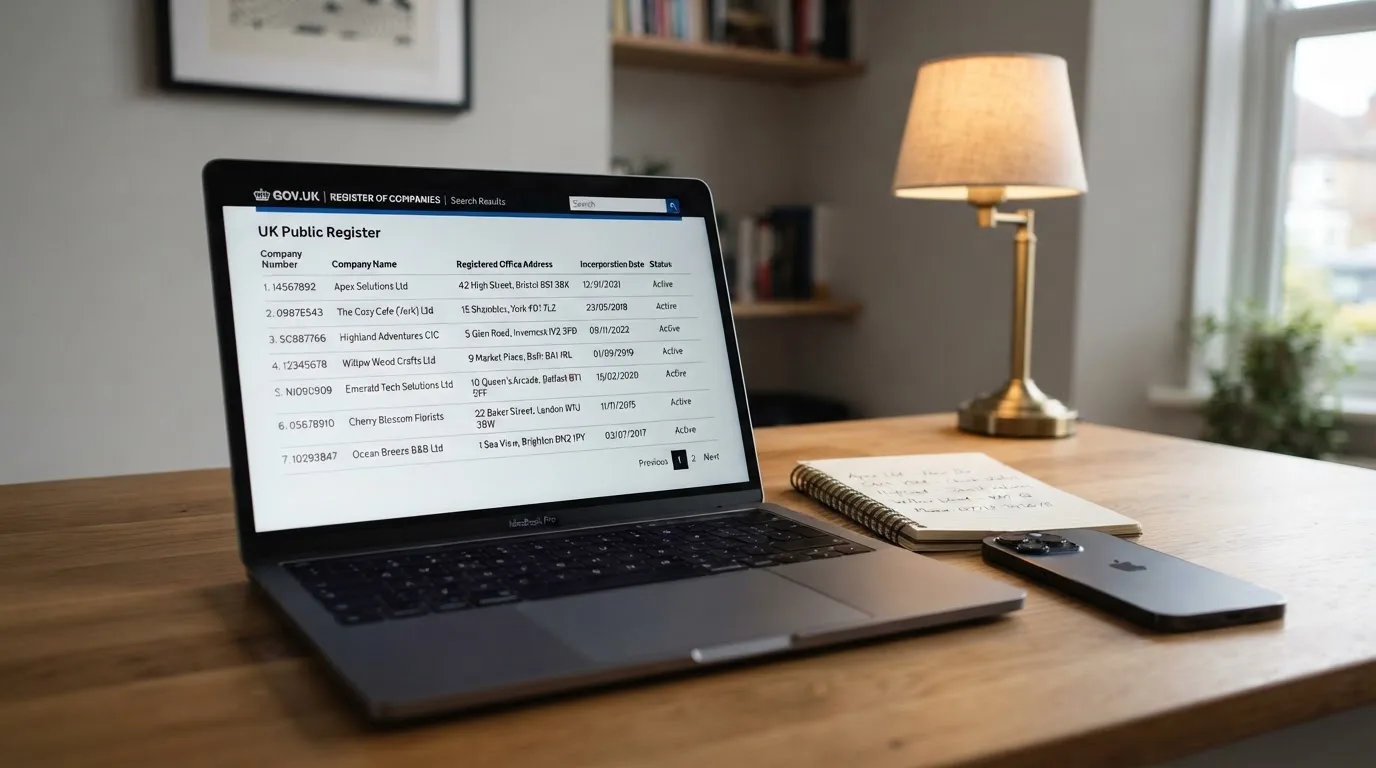
This page works through what paying by phone credit actually does at a UK-licensed mobile casino, where the method sits in the wider deposit landscape, and what the licence obliges an operator to do before a phone-credit deposit reaches a casino account. The comparison that follows covers the brands the Gambling Commission’s public register records as active or white-label domains on a GB remote casino operating licence, in the order the register and the topic place them.
Data current as of 23 September 2026, checked against the Gambling Commission’s public register of gambling businesses.
Table of Contents
- How a phone-credit deposit reaches a casino account
- Where phone-credit deposits sit in the wider UK deposit landscape
- The licence that covers a UK casino accepting phone-credit deposits
- The rules a UK licence puts around a phone-credit deposit
- What the Gambling Commission’s register records about the brands in this comparison
- How the brands compare as venues for a phone-credit deposit
- The limits of a phone-credit deposit in practice
- What happens if a casino accepting phone credit is not on the register
- Safer gambling at a phone-credit casino
- What the comparison leaves for the reader to check
- Frequently asked questions
How a phone-credit deposit reaches a casino account
The mechanic is straightforward in principle: instead of a card being charged, the deposit is added to the customer’s mobile phone bill or, for pay-as-you-go customers, deducted from the existing airtime credit. Two schemes handle the bulk of UK mobile-billed gambling deposits, and the second has its roots in the first. Payforit launched in 2007 after work started by the UK founders of the SimPay consortium in 2005; SimPay itself, founded as the Mobile Payment Services Association in February 2003 by four major carriers and rebranded SimPay in June 2003, ceased activity in June 2005. Payforit carries the legacy forward into the merchant-facing scheme most UK networks still support. Boku, founded in 2009 and headquartered in London, processes payments by billing transactions directly to a customer’s mobile phone account, and states it supports more than 200 local payment methods across more than 40 markets — though the route into UK gambling is the slice that matters here.
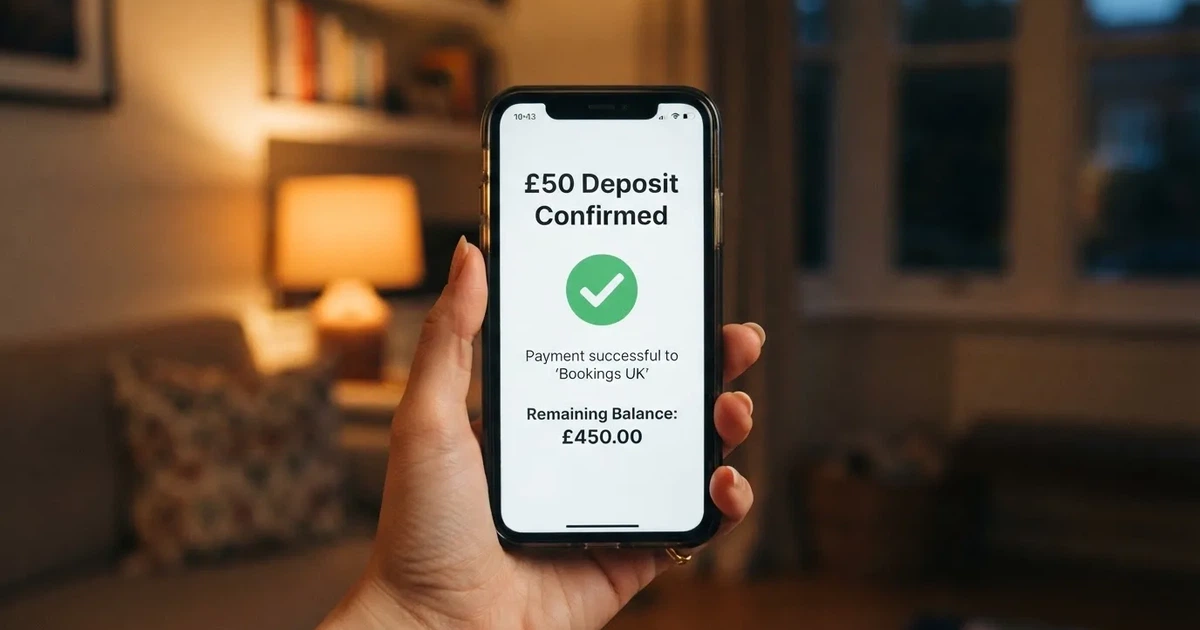
What the customer sees on a phone is a confirmation screen. The casino sends the deposit value to the carrier-billing service; the service texts the customer a one-time PIN; the customer enters the PIN to confirm; the deposit is credited to the casino account. The settlement speed on the deposit side is the same as the network round-trip — a few seconds, in practice, for a successful confirmation. There is no card detail to enter, no app store intermediary, and no bank login to navigate, which is the entire point of the route for a customer who does not want a card on the casino site.
There is a ceiling on how much one transaction can move. UK networks and the Payforit and Boku schemes typically apply a per-transaction limit around £10 — a figure set by the carrier-billing scheme rather than the casino — and that limit is the reason the method is treated as a small-ticket deposit rather than a bankroll-loading route. Premium-rate phone-paid services in the UK are regulated for the day-to-day by Ofcom, following the transfer from the Phone-paid Services Authority on 1 February 2025. Premium-rate numbers carry a two-part charge: an access charge set by the caller’s phone company and a service charge set by the receiving organisation, with service charges capped between 7p per minute for 084x numbers and £3.60 per minute for 09xx numbers — a band that is mostly irrelevant to phone-credit deposits specifically, but is the regulatory backdrop for any pay-by-phone service a UK consumer encounters.
Where phone-credit deposits sit in the wider UK deposit landscape
The method is one of several routes into a casino account that do not require a debit card at the deposit screen. Apple Pay, launched on 20 October 2014 and supporting UK-issued cards from 14 July 2015, lets a customer authenticate a deposit with a double-click of the side button on Face ID iPhones or the Home button on Touch ID models, with the card data protected by tokenization that replaces the actual card number with a device-specific tokenised Device Primary Account Number and generates a dynamic security code for each transaction. Apple Pay in-store payments use near-field communication; online and in-app casino deposits do not need NFC hardware and work through the standard merchant-tokenisation flow. AstroPay, founded in 2009 and headquartered in Uruguay, operates as a global digital wallet offering online payments, virtual and physical debit cards, and peer-to-peer transfers, and spun off its payment-processing business, dLocal, as a separate company in 2016. AstroPay’s UK entity, Larstal Limited, is an electronic money institution authorised by the Financial Conduct Authority under the Electronic Money Regulations 2011.

Phone-credit deposits sit closer to the carrier-billing end of that spectrum than to the e-wallet or card-tokenisation end. The customer does not preload a wallet, does not register a card, and does not need to install an additional app — the mobile number itself is the identifier. That simplicity is the reason a reader searching for this method has a specific use in mind: a small deposit on a phone, without card details in the casino’s deposit form, settled in seconds.
The licence that covers a UK casino accepting phone-credit deposits
The Gambling Commission, sponsored by the Department for Culture, Media and Sport under the Gambling Act 2005, regulates Great Britain (England, Scotland and Wales; Northern Ireland runs on a separate regime). Since the Gambling (Licensing and Advertising) Act 2014, any operator taking customers in Great Britain needs a Commission licence wherever it is based — a Curaçao, Maltese or Gibraltar operating licence is not a substitute. The Commission’s public register is the test of whether a brand holds a licence, and it lists businesses, licences, and the domains those licences cover.
On 18 September 2026 the register listed 139 businesses holding an active remote casino operating licence, with 1,065 active and 361 white-label domain entries on the domain list. A white-label site trades under another company’s licence — its name on the deposit screen is not its licence holder’s name, and a reader checking the register needs to follow the licence account, not the brand on the page. A remote casino licence number on the register has the form account-R-number-suffix, where the leading six digits repeat the licence holder’s account number and the “R” marks a remote (online) licence.
Every GB-licensed online operator must take part in GAMSTOP, the national online self-exclusion scheme, and must verify name, address and date of birth before the first deposit or any play — a regime in force since 7 May 2019. The minimum age is 18. Anonymous play is not possible at a licensed site. Credit cards are banned for gambling since 14 April 2020, including credit cards routed through e-wallets; paying by phone credit is a separate route because the carrier’s billing system treats the deposit as a charge to the phone account rather than as credit extended to the customer.
The rules a UK licence puts around a phone-credit deposit
The limits the Gambling Commission sets apply to the casino, not to the deposit method. Online slots carry a maximum stake per game cycle — £5 for players aged 25 and over (from 9 April 2025) and £2 for 18-24 (from 21 May 2025). There is no state-set deposit or loss ceiling; operators must prompt a customer to set a financial limit before the first deposit, a requirement in force from 31 October 2025. Since 31 October 2021, auto-play is banned, a slot spin may not be faster than 2.5 seconds, and losses disguised as wins are banned.
On the bonus side, since 19 December 2025 wagering requirements are capped at 10x and mixed-product bonuses — for example, bet on sport, get casino spins — are banned. The 10x cap is the rule that defines what a UK-licensed bonus can cost a customer to clear, and the arithmetic of that cap is worth following through. A £100 bonus at the 10x cap means the customer must turn over £1,000 before any bonus-derived winnings become withdrawable. At a £5 max stake and a 2.5-second minimum spin interval, that £1,000 turnover is 200 spins at the highest legal stake, taking roughly 500 seconds — about eight minutes — to clear at the stake cap and minimum interval. The actual play time is longer, because no slot pays out on every spin at the maximum stake, and most players wager at less than the cap. The expected cost of clearing the bonus, applied across a representative session rather than as a guaranteed outcome, sits in a band: at a representative slot RTP in the mid-90s, the £1,000 turnover carries an expected loss of roughly £30 to £60 across the bonus-clearing play, depending on the title. That is the offer’s statistical cost to the player; it is not a guaranteed figure for any individual session, and it carries no promise of a payout at the end.
What this means for a player claiming a bonus at a pay-by-phone-credit casino
The point of running the arithmetic is not to find a single number — it is to see the shape. A 10x wagering requirement on a £100 bonus costs the player, in expected loss, somewhere in the £30-£60 band before the bonus-derived balance is withdrawable, and the time to clear the requirement sits in a band from a few minutes at the stake cap to a few hours at a smaller stake. The £10 daily phone-credit deposit ceiling does not change any of those figures directly, but it does change which player can fund the bonus-clearing play from a phone bill alone: at a £10-per-day deposit cap, clearing a £1,000 turnover requires either repeated deposits across days, a different funding source, or both.
Player protection, however, is the same on a phone-credit deposit as on any other. GAMSTOP self-exclusion is mandatory, with periods of six months, one year or five years that cannot be cancelled early. Financial vulnerability checks run at £150 net deposits in a rolling 30 days, from 28 February 2025, using public data only; the wider financial risk assessments the Commission has signalled are announced but not yet in force. The National Gambling Helpline (GamCare) and GambleAware are the support routes the licence points a player toward.
What the Gambling Commission’s register records about the brands in this comparison
The comparison that follows uses the Gambling Commission’s public register as its source. The brands below are listed on the register against a GB remote casino operating licence, and the licence number is recorded against the licence holder named on the same line. The domain status — active or white-label — is taken from the register’s domain list as it stood on 18 September 2026.
| Brand | Licence holder and GB remote casino licence | Domain status | Subject support |
|---|---|---|---|
| bet365 | Hillside (UK Gaming) ENC, 055149-R-331499-004 | Active | Check site |
| Betfred | Petfre (Gibraltar) Limited, 039544-R-319290-010 | Active | Check site |
| PokerStars | Stars Interactive Limited, 039108-R-319334-026 | Active | Check site |
| 32Red | Platinum Gaming Limited, 045322-R-324275-019 | Active | Check site |
| Virgin Games | Gamesys Operations Limited, 038905-R-319430-022 | White-label | Check site |
| William Hill | WHG (International) Limited, 039225-R-319373-015 | Active | Check site |
| Midnite | Dribble Media Limited, 042647-R-321653-022 | Active | Check site |
| Grosvenor Casinos | Rank Interactive (Gibraltar) Limited, 057924-R-334666-005 | Active | Check site |
| 888casino | 888 UK Limited, 039028-R-319297-014 | Active | Check site |
| kwiff | Eaton Gate Gaming Limited, 044448-R-323408-017 | Active | Check site |
The register does not carry a column for deposit methods. Subject support — whether the brand takes phone-credit deposits — is not something the register records, and the brands above do not publish a uniform deposit-methods list. The licensed route for a reader who wants to confirm a brand accepts phone credit is the brand’s own cashier page, not the register.
A white-label domain trades under another company’s licence — Virgin Games sits under Gamesys Operations Limited, and the licence that covers Virgin Games deposits is the one Gamesys holds, not a Virgin-specific licence. Several brands can share one licensee; the register names the holder and the brand on the deposit screen is the brand the customer sees.
How the brands compare as venues for a phone-credit deposit
The comparison is one of licence standing, not of deposit-method breadth: the register does not tell a reader which brands accept phone credit, and the brands themselves are not uniform in what they publish about their cashier pages. What the comparison can do is place the brands on the same licensed footing and let the reader follow the brand-name on the deposit screen to the licence account that actually holds it.
bet365 — the largest UK-licensed online gambling brand by customer base
bet365 represents the largest UK-licensed online gambling brand by customer base, operated by Hillside (UK Gaming) ENC (account 55149) with remote casino operating licence 055149-R-331499-004. The brand is the largest UK-licensed online gambling operation by some distance, and its cashier page is broad; whether it accepts phone credit is a question the brand’s deposit-methods list answers, not the register. For a reader who wants the most-used UK-licensed brand and is willing to check the cashier page for phone credit, bet365 is the obvious starting point.
Betfred — the high-street bookmaker’s online arm
Betfred, operated by Petfre (Gibraltar) Limited (account 39544) under remote casino operating licence 039544-R-319290-010, has roots on the UK high street, and its online casino is a sister product to a long-established bookmaking business. Phone-credit deposit availability is a question for the cashier page; the licence position is identical to bet365’s in shape — a Gibraltar-registered ENC holding a GB remote casino licence.
PokerStars — the poker-led brand’s casino product
PokerStars, operated by Stars Interactive Limited (account 39108) with remote casino operating licence 039108-R-319334-026, is primarily known for poker, and its casino product sits alongside. The Stars Interactive entity is the GB licence holder for both products. A reader looking for phone credit at a casino-and-poker operator finds PokerStars in the same register line as the casino-only brands, with no register-level signal on deposit methods.
32Red — the casino-focused brand under Platinum Gaming
32Red, operated by Platinum Gaming Limited (account 45322) with remote casino operating licence 045322-R-324275-019, is one of the better-known casino-only operations in the UK market. The register does not record deposit methods, and 32Red’s published cashier page is the source for phone-credit availability. The licence position is clean: a UK-registered licence holder with a GB remote casino licence.
Virgin Games — the white-label brand under Gamesys
Virgin Games sits on the register as a white-label domain of Gamesys Operations Limited (account 38905), with remote casino operating licence 038905-R-319430-022. White-label means the brand on the deposit screen is trading under another company’s licence — Gamesys is the licence holder, Virgin is the brand. A reader who deposits at Virgin Games deposits under Gamesys’s licence, and the protections that follow (GAMSTOP, ADR, dispute routes) all flow from the Gamesys account, not from any Virgin-specific licence.
William Hill — the high-street brand’s online casino
William Hill, operated by WHG (International) Limited (account 39225) with remote casino operating licence 039225-R-319373-015, has a history on the UK high street; the online casino is a sister product to a long-established bookmaking business. The licence holder is registered in Gibraltar; the licence is GB. Phone-credit availability is a brand-side question.
Midnite — the newer UK-licensed brand
Midnite, operated by Dribble Media Limited (account 42647) with remote casino operating licence 042647-R-321653-022, is a smaller UK-licensed operator, and its brand proposition sits in the newer-segment UK market. The licence is clean, the register status is active, and the deposit-method question is again a brand-side one.
Grosvenor Casinos — the land-based casino chain’s online arm
Grosvenor Casinos sits on the register as an active domain of Rank Interactive (Gibraltar) Limited (account 57924), with remote casino operating licence 057924-R-334666-005. The Grosvenor name is established through the UK land-based casino chain; the online casino is the digital arm. The licence holder is Rank Interactive, a Gibraltar-registered subsidiary of the Rank Group. Phone credit at a Grosvenor-branded casino is a question for the cashier page; the licence position is identical in shape to bet365’s and Betfred’s.
888casino — the long-established casino brand under 888 UK
888casino sits on the register as an active domain of 888 UK Limited (account 39028), with remote casino operating licence 039028-R-319297-014. The 888 brand is one of the longer-established casino-only operations in the UK, and the licence holder is 888 UK Limited — a UK-registered entity, which is a slightly different shape from the Gibraltar-registered ENCs that hold several of the other licences on this list. Phone credit is again a brand-side question.
kwiff — the smaller UK-licensed operator under Eaton Gate
kwiff sits on the register as an active domain of Eaton Gate Gaming Limited (account 44448), with remote casino operating licence 044448-R-323408-017. Eaton Gate is one of the smaller UK-licensed operators relative to the better-known names above; kwiff is its consumer-facing brand. The register status is active; the licence is current. The deposit-method question is, as with every brand on this list, a brand-side one.
Reading the comparison
The brands above share a licence shape and differ in scale, in ownership structure, and in the proportion of their business that runs from a UK-registered licence holder versus a Gibraltar-registered ENC. None of that affects the protection a phone-credit deposit receives at a UK-licensed site: GAMSTOP, ADR, financial vulnerability checks, and the Commission’s complaints route apply across the lot. The differences that matter to a reader choosing between them are the ones the register does not record — the breadth of the cashier page, the games catalogue, the bonus terms, and whether the brand accepts phone credit in the first place. Those are brand-side questions.
The limits of a phone-credit deposit in practice
The £10-per-transaction ceiling that UK networks typically apply is the headline limit. It is a per-deposit ceiling rather than a daily one in most schemes, but practical use treats it as a daily route — a customer who wants to deposit £50 will run five confirmations, not one. The arithmetic is unfavourable at the top end: a £1,000 turnover requirement clears faster with a debit card than with five daily £10 phone-credit top-ups, and the small-deposit, frequent-confirmation shape of the method suits a player with a small bankroll rather than a player loading an account.
There is no card detail to enter and no bank login to navigate, which is the entire reason a customer chooses phone credit over a card. The settlement is fast — the network round-trip settles in seconds for a successful confirmation — and the deposit is reversible only in the way any deposit is reversible at a licensed site: through the casino’s own withdrawal and complaints process, not through the phone bill. A mistaken deposit at a phone-credit casino cannot be undone by refusing to pay the phone bill; the bill charge stands.
What happens if a casino accepting phone credit is not on the register
Providing gambling to people in Great Britain without a Commission licence is an offence under section 33 of the Gambling Act 2005. The Commission disrupts illegal sites — cease-and-desist notices, search-engine delisting, payment and hosting referrals — but has no ISP-blocking power. No penalty is aimed at the player. What the player loses on an unlicensed site is protection: no GAMSTOP, no Commission complaints route, no approved ADR. The register is the test; a brand that is not on it is operating outside the GB licence regime, whatever licence it holds elsewhere.
Players pay no tax on gambling winnings in the UK. Operators pay Remote Gaming Duty, raised from 21% to 40% from 1 April 2026 — a model figure only, and the relevant authority is HMRC, not the register.
Safer gambling at a phone-credit casino
The safer-gambling regime at a UK-licensed phone-credit casino is the same regime that applies to every other deposit method at a UK-licensed site.
| Measure | Detail |
|---|---|
| GAMSTOP | Mandatory self-exclusion (6 months, 1 year, 5 years) |
| ID Check | Name, address, and date of birth verified before play |
| Financial Checks | Net deposits £150 in rolling 30 days |
| Support | National Gambling Helpline (GamCare), GambleAware |
The operator must verify name, address and date of birth before the first deposit or any play, and the same verification applies regardless of whether the deposit comes from a card, an e-wallet, or a phone bill. The financial vulnerability check runs at £150 net deposits in a rolling 30 days, from 28 February 2025, using public data only — a check that fires on cumulative deposits rather than on a single phone-credit top-up, so a customer making frequent £10 deposits hits the trigger at the same cumulative threshold as a customer making a single £150 card deposit.
The deposit-limit prompt before the first deposit, in force from 31 October 2025, applies on the first deposit regardless of method. A player who sets a limit at the prompt is held to that limit across all subsequent deposits, and the limit is enforced by the operator’s own system rather than by the deposit method. The phone-credit route does not exempt a player from any of this; the carrier-billing scheme is a payment rail, and the safer-gambling controls sit on the casino side of that rail.
For players who want help, the National Gambling Helpline (run by GamCare) and GambleAware are the routes the licence framework points toward. GAMSTOP self-exclusion is the route for a player who wants to stop at every UK-licensed site at once.
What the comparison leaves for the reader to check
The register does not record deposit methods, and the brands above do not publish a uniform deposit-methods list. A reader who wants to confirm that a brand accepts phone credit will find the answer on the brand’s cashier page — the register’s job is to confirm the licence position, and the cashier page’s job is to confirm the deposit-method position. The brands share a UK-licensed footing; the differences in cashier breadth, in bonus terms, and in phone-credit availability are brand-side, and the reader is the one who closes the comparison on those.
The £10 per-transaction ceiling, the carrier-billing mechanism, and the register-led licence check are the three facts that survive every brand on this list. The rest — bonus terms, game catalogue, withdrawal speed — is brand-specific and outside the register’s scope.
Frequently asked questions
How does paying by phone credit work at a mobile casino?
The casino sends the deposit to a carrier-billing scheme — Payforit or Boku in the UK — which texts the customer a one-time PIN to confirm; the deposit is then charged to the customer’s phone bill or deducted from pay-as-you-go credit. No card detail is entered at the casino, and the network round-trip settles the deposit in seconds after confirmation.
Is a pay-by-phone-credit deposit added straight to a phone bill?
Yes — the deposit is added to the customer’s next mobile phone bill, or deducted from existing airtime credit for pay-as-you-go customers. The carrier-billing scheme treats the deposit as a phone-account charge, and the customer pays it as part of the usual phone bill or top-up.
Do UK-licensed casinos still run ID checks before a phone-credit deposit?
Yes. UK-licensed casinos verify name, address and date of birth before the first deposit or any play, a requirement in force since 7 May 2019. The deposit method does not change the ID-check requirement — the check sits on the casino side, not on the payment rail.
Is there usually a limit on how much can be deposited by phone credit?
Yes — UK networks and the Payforit and Boku schemes typically apply a per-transaction limit around £10, set by the carrier-billing scheme rather than by the casino. The ceiling makes the method a small-ticket deposit rather than a bankroll-loading route.
How quickly does a phone-credit deposit reach a casino account?
A successful confirmation settles in seconds — the network round-trip is the bottleneck, and once the customer enters the one-time PIN the deposit is credited to the casino account. Settlement speed on the deposit side is faster than most card or e-wallet routes.
Can phone-credit deposits be reversed if made by mistake?
No — the phone-bill charge stands once the deposit is confirmed. Reversal at a licensed site goes through the casino’s own withdrawal and complaints process, not through the phone bill. A mistaken deposit cannot be undone by refusing to pay the phone bill.
Created by the ”rtpslotsguide” editorial team.