A 100% casino bonus in the UK: what the match pays for, what the wagering cap costs, and which licensed brands actually offer one in 2026
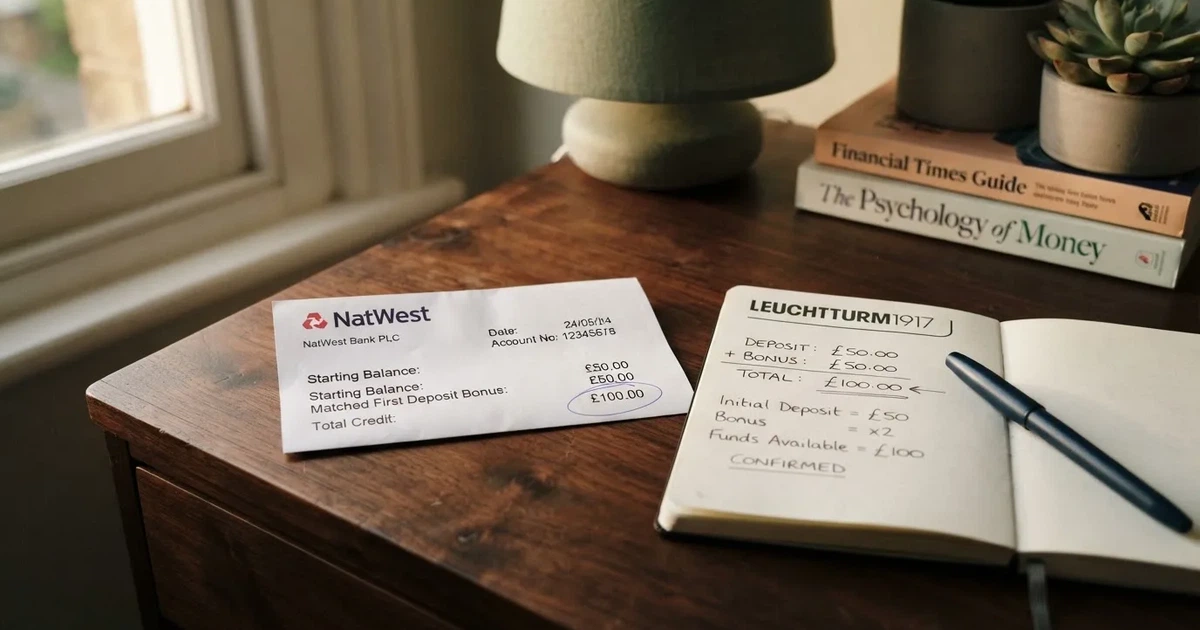
A 100% match bonus looks like the simplest promotion in the business — deposit £100, the casino adds another £100, you play with £200. The shape is simple. What sits inside that shape is what this page is about: a wagering cap introduced on 19 December 2025 that resets how every UK operator writes its bonus terms, a credit-card ban that has ruled out roughly one in six ways a player used to fund the first deposit, and a self-exclusion check that runs before any bonus can be claimed. The match itself has not changed; the rules wrapped around it have.
Data current as of 8 November 2026, verified against the Gambling Commission’s public register.
Table of Contents
- How the UK frames a 100% bonus — licensing, the 10x cap, and the checks that gate it
- Responsible play: limits, GAMSTOP, and what a 100% bonus does to a player’s own budget
- Payments and payout: what actually funds a 100% bonus in the UK
- The 100% bonus itself: what the match pays, and what 10x really costs
- Ten UK-licensed brands compared on the basics
- Choosing a brand when the offer is the same shape
- What offshore means — and what it costs a reader
- Putting it together
- Frequently asked questions
How the UK frames a 100% bonus — licensing, the 10x cap, and the checks that gate it
The Gambling Commission is the only body that can issue a remote casino operating licence to a brand taking customers in Great Britain. The Commission’s public register is the test. It listed 139 businesses holding an active remote casino operating licence on 18 September 2026, and the same register’s domain list held 1065 active and 361 white-label domain entries that day — a white-label site trades under another company’s licence rather than its own, so the brand a player sees is not always the entity the regulator licensed.
A licence number on the register follows a fixed shape: account-R-number-suffix, where the leading six digits repeat the licence holder’s account number and the R marks a remote (online) licence. Sky Vegas’s entry, 065519-R-339675-002, is one example — the 065519 is Bonne Terre Gaming Limited’s account number, and the same number sits at the head of every domain the company operates. Midnite (042647-R-321653-022, Dribble Media Limited) follows the same pattern.
Two rules govern what a 100% bonus can look like inside that licence. First, since 19 December 2025, wagering requirements on any casino bonus are capped at 10x — meaning a £100 bonus must be turned over no more than £1,000 in qualifying play before it can be withdrawn. Second, since 14 April 2020, credit cards cannot be used to fund any gambling transaction in Great Britain, including credit cards routed through an e-wallet. Debit cards, bank transfers and a defined list of e-money products are unaffected. The Commission’s own estimate at the time of the ban was that around 800,000 UK consumers used credit cards to gamble in 2018, and 22% of online gamblers who paid with credit cards were classed as problem gamblers — the policy reason the rule exists.
Before any bonus can be claimed, the operator must verify the customer’s name, address and date of birth. That check has been in force since 7 May 2019 and runs alongside a GAMSTOP cross-reference — the national online self-exclusion scheme every GB-licensed operator belongs to, with periods of six months, one year or five years that cannot be cancelled early. Anonymous play is not possible at a licensed site, which means the offer a reader sees on a homepage is, mechanically, the second thing the registration flow reaches rather than the first.
Responsible play: limits, GAMSTOP, and what a 100% bonus does to a player’s own budget
From 31 October 2025, an operator must prompt every new customer to set a financial limit before the first deposit lands. The Commission has not set a deposit or loss ceiling — the prompt is the policy. A player who wants to keep the cost of a welcome bonus inside a known ceiling sets one before claiming.

Two limits do sit in statute, and both apply per spin rather than per session. From 9 April 2025, online slots carry a maximum stake of £5 per game cycle for players aged 25 and over; from 21 May 2025, the cap for players aged 18-24 is £2. Game cycle here is the unit of play that resolves a spin — every spin is a cycle, so the cap is per spin. Two further changes sit alongside it: auto-play is banned (since 31 October 2021), a single spin cannot resolve faster than 2.5 seconds, and “losses disguised as wins” — a screen that celebrates a spin whose net result is a loss — are banned.
GAMSTOP is the line a player draws before claiming anything. A six-month, one-year or five-year self-exclusion blocks every GB-licensed operator from accepting the customer’s account, and the block cannot be lifted early. GamCare runs the National Gambling Helpline; GambleAware funds treatment and research. Both names sit in the Commission’s licence conditions as the routes a customer must be pointed to when the operator’s own checks flag a concern. None of these are decorative — the Commission’s social responsibility code requires that each one is offered at the right moment in the customer journey, and the moments are named.
A paysafecard-funded 100% bonus still counts against the player’s own deposit limit. That is the connection between the payments shelf and this one: the card is a voucher, the voucher is money the player chose to spend, the bonus that comes on top of it doubles the spend without doubling the budget. Setting a limit before the deposit is what makes the offer something the player can walk away from, rather than something the bonus walks them into.
Payments and payout: what actually funds a 100% bonus in the UK
A 100% match bonus triggers on the first deposit. The minimum is set by the operator; £10 is the common floor, and a deposit below it often does not qualify. The payment methods that can land that first deposit are narrower than they used to be.
Credit cards were banned for gambling in Great Britain from 14 April 2020, including credit cards routed through an e-wallet. Debit cards and bank transfers are unaffected. Bank transfers within the UK typically move through the Faster Payments Service, launched in 2008 and operated by Pay.UK — it runs 24 hours a day, seven days a week, and most payments arrive instantly or within a couple of minutes, though transfers can occasionally take up to two hours. The scheme sets a £1,000,000 per-transaction limit, but individual banks set their own customer-level limits below that.
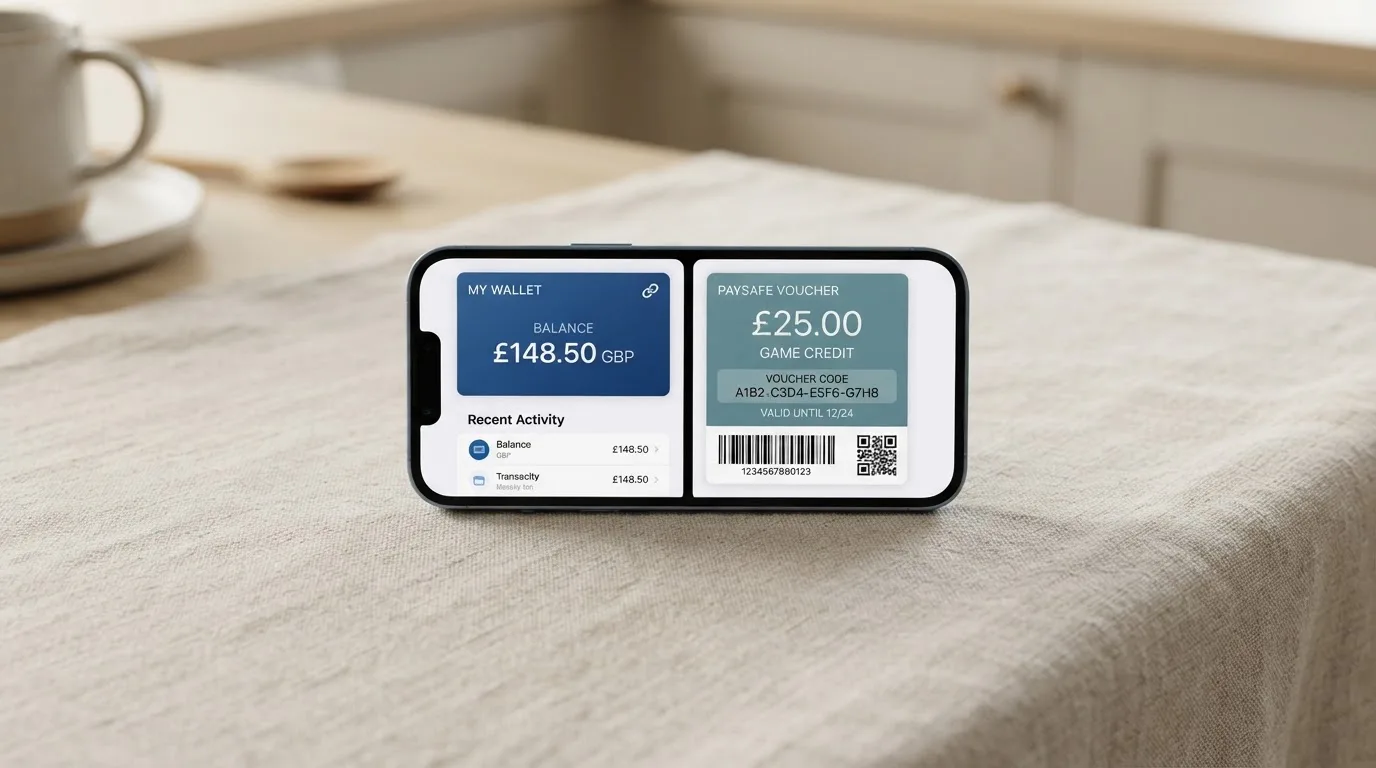
Paysafecard is a prepaid voucher, sold in fixed denominations at retail outlets and redeemed online with a 16-digit code. It is not a credit instrument, so the credit-card ban does not catch it, and it qualifies as a deposit method at most GB-licensed sites. The voucher is single-use: once the balance is spent, the player buys another. Because there is no card account behind it, there is also no card statement showing the gambling spend — a feature some players prefer, and a reason a paysafecard-funded bonus does not show up on a bank statement a partner might see. The same anonymity cuts the other way: the operator cannot run a card-based affordability check, so it falls back on the deposit-level financial vulnerability check the Commission requires.
Apple Pay launched on 20 October 2014 and began supporting UK-issued cards on 14 July 2015. It works through tokenization — the actual card number is replaced with a device-specific tokenised Device Primary Account Number, and each transaction generates a dynamic security code. In a casino context, Apple Pay is still funding a debit card; the ban on credit cards extends to any path that ultimately draws on a credit line, so a card funded through Apple Pay is governed by the underlying card’s status. A debit card reaches the bonus; a credit card does not.
AstroPay, founded in 2009 and headquartered in Uruguay, operates as a global digital wallet and offers online payments, virtual and physical debit cards, and peer-to-peer transfers. Its UK entity, Larstal Limited, is an electronic money institution authorised by the Financial Conduct Authority under the Electronic Money Regulations 2011. AstroPay’s Brazilian, Danish and Isle of Man entities sit under their own regulators. For a UK player, the relevant authorisation is the FCA one — it is what determines whether the wallet can be used to fund a gambling account at all.
Crypto deposits sit outside most of this. The Commission’s rules require verification before the first deposit, and a crypto wallet does not run through KYC in the same way a bank account does — a licensed GB operator that accepts crypto is rare, and where one does it is wrapped in the same name-and-address check that governs every other payment. A “crypto casino 100% welcome bonus UK” therefore tends to belong to an offshore brand, and offshore brands do not run on the 10x cap. That is the trade-off the term hides, and it sits in the next shelf.
Payout speed is set by the operator, not the regulator. A withdrawal to a debit card or via Faster Payments typically lands the same day once the operator’s internal checks have cleared. The Commission does not set a service-level agreement; the published time is what the operator commits to. A 100% bonus that is still being wagered cannot be withdrawn, and the time it takes to clear wagering is the other side of “payout speed” a reader comparing offers should weigh.
The 100% bonus itself: what the match pays, and what 10x really costs
A 100% match bonus is a credit, not cash. The operator credits the player’s bonus balance with an amount equal to the qualifying deposit, up to a cap. Caps in this market commonly sit between £25 and £200 — the cap is the part a reader should look at first, because it is the part that decides whether the match covers the deposit they actually plan to make. A £25 cap on a £100 deposit matches only the first £25; a £200 cap on a £100 deposit matches the lot.
Wagering requirements turn that credited bonus into withdrawable cash. The 10x cap introduced on 19 December 2025 sets the ceiling: a £100 bonus must be turned over no more than £1,000 in qualifying play before any of it can be withdrawn. “Qualifying play” is the operator’s own list — slots usually qualify at 100%, table games at a lower percentage or not at all, and some games are excluded entirely. The actual figure a player needs to clear is the wagering requirement stated in the bonus terms, not the cap.
Mixed-product bonuses — an offer that pays a sports bet and returns casino spins on the same wagering pool — were banned at the same time as the 10x cap. A reader comparing older terms against current ones will see the difference: a 2018-style “bet £10 on the football, get £50 of casino spins” structure does not exist in this market any more. The bonus shelf is a casino bonus shelf, and a casino-only one.
The 10x figure is what makes a session of clearing the bonus meaningful arithmetic. A £100 bonus at 10x means £1,000 of qualifying turnover — which, at a £1 slot spin, is 1,000 spins. At five seconds per spin (the floor the Commission set for non-auto-play in October 2021), that is 5,000 seconds, or roughly 83 minutes of continuous play. The same bonus at a £5 stake clears in 200 spins, or about 17 minutes — but the £5 stake is the maximum a player aged 25 or over may place on an online slot, and the £2 cap for 18-24s sits below it.
The band a player needs to weigh is therefore not one number. For a £100 bonus cleared at the smallest qualifying stake (£1), the work is around 83 minutes. Cleared at the maximum stake a player is allowed to use on the bonus, the work drops to roughly 17 minutes. Both extremes qualify under the 10x cap; neither tells the reader what their own session will look like, because the stake they actually play at sits in between. The right framing is a band, not a number, and the condition that fixes the band is the player’s stake.
Two consequences follow. First, a larger bonus at 10x is more work than a smaller one at the same multiple — the cap is not a flat cost, it scales with the bonus amount. Second, the stake the player picks sits inside the £2 / £5 statutory cap, so even a player who wants to clear the bonus quickly cannot raise the stake past that ceiling without leaving the regulated market. The 10x rule was a deliberate move to slow down the rate at which bonus money turns into action — it works.
Ten UK-licensed brands compared on the basics
The brands below are taken from the Gambling Commission’s public register: every domain is listed against the licence account that runs it, with the remote casino operating licence number. This is a description of who is licensed, not a ranking and not a recommendation, and it carries no bonus terms. Several brands share one licensee; Ladbrokes, Coral and Gala Bingo all sit under LC International Limited, which is one operator for the purposes of the licence — never three.
| Brand | Licence holder | GB remote casino licence | Domain status | Subject support |
|---|---|---|---|---|
| Sky Vegas | Bonne Terre Gaming Limited | 065519-R-339675-002 | Active | — |
| Midnite | Dribble Media Limited | 042647-R-321653-022 | Active | — |
| PokerStars | Stars Interactive Limited | 039108-R-319334-026 | Active | — |
| Unibet | Platinum Gaming Limited | 045322-R-324275-019 | Active | — |
| Ladbrokes | LC International Limited | 054743-R-330863-014 | Active | — |
| BetVictor | BV Gaming Limited | 039576-R-319370-028 | Active | — |
| Jackpotjoy | Gamesys Operations Limited | 038905-R-319430-022 | Active | — |
| 888casino | 888 UK Limited | 039028-R-319297-014 | Active | — |
| Gala Bingo | LC International Limited | 054743-R-330863-014 | Active | — |
| Casumo | Recro Limited | 061549-R-336718-002 | Active | — |
The Subject support column carries an em dash for every brand. The Commission’s register confirms each one as a licensed GB operator; what each one offers by way of a 100% bonus is set by the brand’s own terms page, and no figure the research carries covers that field for any operator in this set. Listing the figure would invent it.
A second column of interest sits outside this table. The Commission also keeps a list of domains flagged as illegal — a different register, accessible from the same site, that names sites operating without a GB licence. A reader who wants to check a brand that does not appear in the table above has a one-step route: search the Commission’s register for the domain. A site not on the register is, by definition, not one of the 139 licensed businesses operating on 18 September 2026, and the protections described in this page — GAMSTOP, the 10x cap, the affordability checks — do not run there.
Sky Vegas
Sky Vegas’s domain sits on the Commission’s register under licence 065519-R-339675-002, held by Bonne Terre Gaming Limited. Sky’s broader business carries a TV-broadcaster heritage, and the casino product is one of several verticals the parent runs. For a reader choosing between the brands in this set on licensing alone, Sky Vegas carries the same weight as any other entry: GB-licensed, GAMSTOP-bound, on the wrong side of an exclusion is excluded. No published 100% bonus terms for Sky Vegas are in the research, so the comparison ends at “is licensed” — what the offer is worth is a question for the brand’s own page.
Midnite
Midnite is listed on the Gambling Commission register under operating licence 042647-R-321653-022. Midnite is one of the newer entrants in the register and runs on a smaller account base than the long-established brands above and below it. A newer GB-licensed operator is bound by the same Commission rules as any other — the 10x cap, GAMSTOP, the affordability prompt — and the difference between Midnite and a 20-year-old brand is product focus and customer base rather than regulatory standing. The brand’s own terms are the source for any 100% match it offers, and the research carries no figure for it.
PokerStars
PokerStars is listed on the Gambling Commission register under operating licence 039108-R-319334-026. The brand is best known for poker, and the casino product runs alongside it. The cross-product structure PokerStars ran in some markets — a sports bet that unlocked casino spins — is exactly the kind of mixed-product bonus the 19 December 2025 rules banned, so any current UK offer sits inside the casino-only frame the Commission now requires. We have not been able to track specific 100% match terms for this brand.
Unibet
Unibet’s UK domain sits under licence 045322-R-324275-019, held by Platinum Gaming Limited. Unibet runs a casino product alongside its sportsbook, and the same licensing structure means a single account covers both. The 10x cap and the mixed-product ban apply to any casino bonus the brand runs in the UK, and the same Commission rules require the affordability prompt before the first deposit. Bonus terms for Unibet are set by the brand itself and we have no definitive figure to report here.
Ladbrokes
Ladbrokes’ domain sits under licence 054743-R-330863-014, held by LC International Limited. LC International is the parent that also runs Gala Bingo in this set — the same licence number, the same account. The Commission treats them as one licensed entity; the two brands are two faces of one licence. A reader who already has a Ladbrokes account and is comparing brands should know that opening a Gala Bingo account is not opening a second operator — it is opening a second product on the same one. The research does not carry 100% match figures for either Ladbrokes or Gala Bingo.
BetVictor
BetVictor’s domain sits under licence 039576-R-319370-028, held by BV Gaming Limited. The brand runs a casino alongside its sportsbook, and the same 10x cap and GAMSTOP enrolment apply. The Commission’s own register is the source for every figure on this page about BetVictor — the brand’s terms page is the source for any 100% bonus it offers, and the research carries no figure for it.
Jackpotjoy
Jackpotjoy’s domain sits under licence 038905-R-319430-022, held by Gamesys Operations Limited. The brand runs a bingo-led product, and the casino sits in the same account. Specific 100% match figures are not currently available for this operator.
888casino
888casino’s domain sits under licence 039028-R-319297-014, held by 888 UK Limited. The 888 brand has a long-established UK presence, and the casino is one of several verticals the parent runs. The same Commission rules apply. No 100% bonus figure is in the research.
Gala Bingo
Gala Bingo’s domain sits under licence 054743-R-330863-014 — the same licence number as Ladbrokes, held by the same LC International Limited. Bingo-led product, casino sits alongside it. The duplication of the licence is the point worth keeping in mind: from the regulator’s perspective, Gala Bingo and Ladbrokes are the same operator, and a reader who already holds one account is, for licensing purposes, holding both.
Casumo
Casumo’s domain sits under licence 061549-R-336718-002, held by Recro Limited. Casumo has built a recognisable product identity around gamification, and the casino runs on its own account. The same Commission rules apply; no 100% bonus figure is in the research.
Choosing a brand when the offer is the same shape
The 10x cap has flattened the UK bonus market. A 100% match at one GB-licensed casino looks much like a 100% match at another, because the wagering ceiling and the mixed-product ban apply to every brand in the table above. What still differs is the cap, the qualifying deposit, the qualifying games, and the time limit on clearing the wagering — and the research does not carry any of those figures for the brands in this set.
The reader-facing comparison therefore falls back on three things research does carry. First, who the licence holder is: the parent company is the entity the Commission licensed, and it is the entity that has to meet the licence conditions. Two brands on the same licence (Ladbrokes and Gala Bingo) are not two operators for the purposes of a complaint, an exclusion, or a redress route — they are one. Second, what the player wants from a 100% bonus: a small match with a small wagering requirement, or a larger match with the same 10x cap that produces a larger absolute turnover target. Third, whether the brand’s product sits on the same vertical the reader is comparing — a poker-first brand and a bingo-first brand are different products, and the casino bonus sits differently inside each.
The point where the comparison stops being mechanical is the wagering-cap calculation in the previous shelf. A £100 bonus at 10x is £1,000 of qualifying turnover; at the £5 maximum slot stake for an adult player, that is 200 spins, or roughly 8 minutes at the 2.5-second-per-spin floor; at a £1 stake, that is 1,000 spins, or roughly 42 minutes. Both extremes qualify; the band between them is where a real session lives. The reader who knows their stake knows the band. The reader who picks the brand without picking the stake is choosing the wrong side of the trade.
For a reader comparing brands on licensing alone — the only field this page can compare on with the figures in hand — every entry in the table is equal. The Commission’s register confirms each one. The choice between them runs through the brand’s own terms and through the player’s own stake, and the page’s job is to make sure the comparison reaches both.
What offshore means — and what it costs a reader
A 100% welcome bonus at a Curaçao-, Malta- or Gibraltar-licensed casino is not bound by the 10x cap, because the 10x cap is a UK rule and the operator is not in the UK. The Commission’s licensing test for “taking customers in Great Britain” is what determines whether a brand has to follow it. A brand without a GB licence has no obligation to apply the cap, the affordability prompt, or GAMSTOP — and has no obligation to apply any of them to a UK player who signs up.
Section 33 of the Gambling Act 2005 makes providing gambling to people in Great Britain without a Commission licence an offence. The Commission disrupts illegal sites — cease-and-desist notices, search-engine delisting, payment and hosting referrals — but does not have ISP-blocking power. The penalty for the player is not legal; the loss is the protection. No GAMSTOP means an excluded player can open an account. No ADR means no approved alternative dispute resolution route. No Commission complaints route means the regulator that licensed the operator will not take a complaint from a UK customer, because that operator is not theirs.
The trade-off is straightforward. An offshore brand can offer a 200% match, a 30x wagering requirement, and a sports bet that returns casino spins — because none of the UK rules apply. A player choosing one is choosing those terms, and is choosing to give up the protections the UK rules buy. That is the cost of the bigger number, and it is the one the offer does not state.
Putting it together
A 100% match bonus at a UK-licensed casino in 2026 is a credit on the first deposit, capped by the operator, turned into cash by wagering it at most 10x the bonus amount. The credit card ban and the verification rules mean the first deposit has to come from a debit card, a bank transfer, an e-money product, or a prepaid voucher — and that the deposit is preceded by a name, address and date-of-birth check and a GAMSTOP cross-reference. The affordability prompt and the £2 / £5 slot stake caps sit alongside the offer rather than inside it. Offshore offers can be larger, and the reasons they can are exactly the reasons a UK player gives up by taking them.
For a reader comparing brands, the comparison runs through three things: the cap (how much of the deposit is matched), the qualifying deposit (the floor that triggers the match), and the stake the reader actually plays at (which sets the time and turnover to clear the bonus). The licence-holder check is one step on the Commission’s register, and it is the step that decides whether the rest of the comparison is meaningful — because a brand not on the register is a brand the rules above do not apply to.
The arithmetic is simple. A £100 bonus at 10x is £1,000 of qualifying turnover. At a £1 slot stake, that is 1,000 spins and roughly 83 minutes of play; at the £5 maximum, it is 200 spins and roughly 17 minutes. Both are inside the cap. The reader who knows their stake has the answer; the reader who doesn’t has a brand choice without a session shape, and that is the wrong way around.
Frequently asked questions
How does a 100% casino bonus work?
A 100% casino bonus credits the player’s bonus balance with an amount equal to the qualifying deposit, up to a cap set by the operator. The credit is bonus money, not cash, and must be turned over at the operator’s stated wagering multiple before any of it can be withdrawn. Since 19 December 2025 the wagering multiple on any UK casino bonus is capped at 10x.
Is there a maximum amount a 100% match bonus will cover?
Yes — every 100% match bonus has a cap, set by the operator. Caps in this market commonly sit between £25 and £200, though specific operators can set them higher or lower. A deposit above the cap matches only up to the cap; the rest of the deposit is the player’s own funds and has no bonus attached.
Can I claim a 100% bonus using paysafecard?
Yes, at most GB-licensed casinos. Paysafecard is a prepaid voucher, not a credit instrument, so it is unaffected by the 14 April 2020 credit-card ban. The voucher is single-use, and the deposit still counts against the player’s own deposit limit and triggers the same affordability checks a debit-card deposit would.
What wagering requirement applies to a 100% deposit match under current UK rules?
The wagering requirement is capped at 10x the bonus amount, since 19 December 2025. A £100 bonus therefore requires no more than £1,000 in qualifying turnover before the bonus can be withdrawn. The exact figure is set by the operator’s terms, but it cannot exceed 10x. Mixed-product bonuses that bundled casino spins with a sports bet were banned at the same time.
Do crypto deposits qualify for the same 100% welcome offer?
A crypto-funded 100% welcome bonus is offered mainly by offshore brands, not by GB-licensed operators. The Commission’s rules require name, address and date-of-birth verification before the first deposit, and a licensed operator that accepts crypto in the UK is rare. A crypto casino offering a 100% welcome bonus is therefore typically outside the 10x cap, outside GAMSTOP, and outside the Commission’s complaints route — the offer can be larger because the protections are smaller.
How long do I have to use a 100% bonus before it expires?
The expiry is set by the operator’s bonus terms, and the Commission does not set a standard window. Typical windows sit between 7 and 30 days from the date the bonus is credited. The wagering requirement must be cleared inside that window, or the bonus balance and any winnings attributable to it are forfeit. The brand’s own terms page is the source for the exact window.