The high-roller casino guide: how UK licensing dictates your bonus
The honest version of a “best high roller casino with bonus UK” page starts with one awkward fact: the Gambling Commission’s stake cap applies however large the headline bonus is. £5 per game cycle for players aged 25 and over, £2 for those aged 18 to 24, both now in force — the size of a deposit does not bend the rule. From this year that ceiling is the only thing the bonus hype cannot talk its way past. Everything else on this page is the consequence of working inside it.
Data current as of 8 November 2026 and verified against the Gambling Commission’s public register of gambling businesses.
Table of Contents
- Payment rails and how fast the money actually moves
- Bonus mechanics and the 10x wagering cap in force from December 2025
- Mobile access and what changes on a phone
- High-roller live dealer tables: studios, stakes, and what is on the licensed shelf
- The ten licensed brands, side by side
- The state of UK online casino play, and why a “high-roller” label still fits
- The legal frame the licence actually sets
- Safer gambling around a high-roller session
- Crypto, anonymity, and the limits of the licensed frame
- 32Red — Platinum Gaming Limited
- BetVictor — BV Gaming Limited
- Ladbrokes — LC International Limited
- 888casino — 888 UK Limited
- PokerStars — Stars Interactive Limited
- Paddy Power — PPB Games Limited
- Betfred — Petfre (Gibraltar) Limited
- bet365 — Hillside (UK Gaming) ENC
- Casumo — Recro Limited
- Sky Vegas — Bonne Terre Gaming Limited
- How to choose between them
- FAQ
Payment rails and how fast the money actually moves
A high-roller bonus is one half of the picture. The other half is whether the operator can return what is left of it after the wagering is done, in a payment rail that does not laugh at a five-figure withdrawal. Three rails matter in practice: Faster Payments, debit cards on the Visa or Mastercard rails, and Apple Pay, which sits on top of those cards. A fourth — AstroPay — turns up at some operators as a prepaid wallet option and behaves differently.

Faster Payments is the rail that makes a same-day casino withdrawal realistic. The scheme has run since 2008, is operated by Pay.UK, and moves money twenty-four hours a day, seven days a week. Most transfers arrive instantly or within a couple of minutes; occasional stragglers take up to two hours. The scheme itself caps a single payment at £1,000,000, though individual banks set their own customer limits well below that — Starling’s published guidance is one of the more open accounts on this point. The Bank of England oversees the system’s safety and provides final settlement, although it is not itself a participant. For a UK-licensed operator paying into a UK bank, Faster Payments is the rail that puts the money on the player’s side of the ledger before the working day is out, which is what any “instant withdrawal” claim actually means at the receiving end.
Debit cards on the Visa and Mastercard rails are the default for deposits and remain the default for withdrawals at most UK-licensed brands. Deposits are usually credited instantly. Withdrawals follow the operator’s own pending window, then push the refund back to the card — Visa and Mastercard rail timings vary by issuer but typically settle inside one to three banking days. Credit cards have been banned for gambling since 14 April 2020, including credit cards routed through e-wallets such as PayPal or Skrill. Debit card and bank transfer deposits were unaffected by that change, and a debit-card refund to a Visa or Mastercard account is what most players will actually see.
Apple Pay is developed and operated by Apple Inc., launched on 20 October 2014 in the United States, and started supporting UK-issued payment cards on 14 July 2015. In a casino context it is a deposit rail, not a withdrawal rail: Apple Pay uses near-field communication at the contactless terminal in store and, online, tokenises the card so the actual card number never leaves the device. Each transaction carries a device-specific Device Primary Account Number and a dynamic security code. Authentication on iPhones with Face ID is a double-click of the side button, on Touch ID models a double-click of the Home button. For a player, what matters is that Apple Pay works only with a supported card from a participating issuer, and that it does not exist in every market. Where the operator supports it, Apple Pay deposits are processed like any other card payment — instant at the casino’s end, with the Gambling Commission’s verification rules still applying before the first deposit is accepted.
AstroPay sits in a different corner. It was founded in 2009, is headquartered in Uruguay, and operates as a global digital wallet offering online payments, virtual and physical debit cards, and peer-to-peer transfers. It spun off its payment-processing business, dLocal, as a separate company in 2016. Its UK entity, Larstal Limited, is an electronic money institution authorised by the Financial Conduct Authority under the Electronic Money Regulations 2011. Its Isle of Man entity, AstroPay Global (IOM) Limited, is licensed by the Isle of Man Financial Services Authority for money transmission; its Brazilian entity is authorised by the Brazilian Central Bank as an electronic currency issuer; its Danish entity, Larstal Denmark ApS, is authorised as an electronic money institution by the Danish Financial Supervisory Authority. AstroPay serves users across markets including Argentina, Australia, Brazil, Canada, Colombia, Denmark, Spain, the United Kingdom, the United States and Uruguay. In a UK-licensed casino it appears as a prepaid wallet option — the player tops up the AstroPay card and deposits from it — and it does not relax the operator’s identity checks before the first deposit.
What this means for a high-roller withdrawal
A five-figure withdrawal at a UK-licensed brand will most likely travel by Faster Payments if the destination is a UK bank, with the operator’s own pending window sitting in front of it. A debit-card refund on Visa or Mastercard usually lands within one to three banking days after the pending window clears, which can stretch the total time noticeably. Apple Pay is not a withdrawal rail. AstroPay works as a top-up-and-deposit route. The cap of one million pounds per Faster Payments transaction is well above what any operator is likely to release in a single push, so the rail is the practical choice for high-roller cashouts — the bottleneck is the operator’s own queue, not the payment system.
Bonus mechanics and the 10x wagering cap in force from December 2025
A high-roller bonus in the UK lives inside three rules that determine what the headline is actually worth. The first is the wagering cap. Since 19 December 2025, wagering requirements on casino bonuses are capped at 10x the bonus amount at any UK-licensed operator. The second is the ban on mixed-product bonuses — a bet on sport cannot unlock casino spins, and vice versa. The third is the credit-card ban in force since 14 April 2020, which removes one traditional funding route for any bonus play. Together these rules compress what a high-roller welcome offer can look like: a larger deposit match is still legal, but the wagering multiple above it is bounded, and the package cannot be glued together from two unrelated products.
How the wagering cap changes the calculation
For a concrete example, assume a £1,000 bonus at the 10x cap that has been the legal ceiling since 19 December 2025. The required turnover is £1,000 multiplied by 10, which gives £10,000 of qualifying play before any winnings tied to the bonus become withdrawable. That figure is the upper bound any UK-licensed operator can set today; a 35x or 50x multiple — both common in offshore bonus terms — is no longer legal in Great Britain. The trade-off is mechanical: a smaller multiple on a larger bonus produces a similar turnover figure to a larger multiple on a smaller bonus, but the player controls how much of the bonus they take in the first place. A £200 bonus at the same 10x cap needs only £2,000 of qualifying play. A £5,000 bonus needs £50,000. The arithmetic is the same; the bankroll behind it is not.
The rule is, of course, a ceiling rather than a floor. Operators can still attach game-weighting — slots at 100 percent, table games at a lower percentage, live-dealer titles sometimes excluded — and they can still attach maximum-bet rules during the wagering period, time limits, and a maximum-cashout cap on bonus-derived winnings. The headline number can read £1,000; the small print determines what is actually claimable from it.
Why the rest of the bonus terms matter more than the headline
Two bonuses at the same headline value are rarely equivalent. Game weighting is the line that decides whether the £10,000 of qualifying play counts fully toward the requirement or only in part. A live-dealer bonus, for instance, may contribute ten or twenty percent per wager rather than one hundred percent — a meaningful drag on the time to clear. Maximum-bet rules during wagering — typically £5 per spin at a UK-licensed site — limit how aggressively a player can run through turnover. Time limits are the most common silent killer of a bonus: a bonus that expires after seven or fourteen days can vanish if the player’s routine does not match the cadence the bonus assumes. The 10x cap is the brightest line on the page; the fine print is where most of the cost lives.
The calculation, in one band
For a £1,000 bonus at the 10x cap, required turnover runs from £10,000 (if only the bonus amount is wagered) downward as the player wagers part of their own cash alongside the bonus. At a £5 maximum stake per game cycle, that is at minimum 2,000 game cycles to clear the bonus, and at the slot spin floor of 2.5 seconds per spin — a Commission rule since 31 October 2021 — the floor on play time is around 1.4 hours of uninterrupted spinning. Real play stretches well past that floor once game weighting, table-game exclusion and the practical rhythms of a session are added in. The honest summary is a band: anywhere from a handful of hours of focused play through to several days of intermittent sessions, depending on which games the player chooses and how the operator weights them. The wagering cap is a ceiling on the multiplier; it is not a guarantee of a fast clear.
Mobile access and what changes on a phone
A high-roller casino bonus is claimed in roughly the same way on a phone as on a desktop browser, but the experience of clearing it diverges. Most UK-licensed brands run a mobile-responsive web app that handles deposits, bonus claims, wagering and live-dealer play without a separate download. A smaller set — the ones with a dedicated casino app on the App Store or Google Play — keep the same account and the same bonus state across both surfaces. The brand-by-brand detail sits in the operator blocks below; the platform point is that a phone is now the default screen, and any bonus that runs cleanly on a desktop but stutters on a phone is, in practice, a bonus that gets abandoned.
The mechanics are the same. Apple Pay on a Safari browser on iPhone works through the same tokenisation it uses in store; a debit card is entered by hand on smaller screens with autofill doing most of the lifting. A player who clears a bonus on a phone is still bound by the £5 per spin ceiling for adults aged 25 and over, by the 2.5-second floor on spin speed, by the auto-play ban in force since 31 October 2021, and by the same wagering cap. What a phone adds is friction in the wrong places — landscape mode for live-dealer tables, the temptation to chase a bonus during a commute, and a screen that makes the small print harder to read. None of those are reasons to avoid mobile play. They are reasons to read the bonus terms on the same device that will be used to clear them.
A dedicated app, where one exists, adds little to the bonus itself and a fair amount to the routine: push notifications for bonus expiry, biometric login, and a cleaner live-dealer lobby. The cost is a second surface to update and a slot on the home screen. For a player whose sessions run on a laptop at home, a mobile app is a convenience; for a player whose sessions run on a phone, it is closer to a necessity.
High-roller live dealer tables: studios, stakes, and what is on the licensed shelf
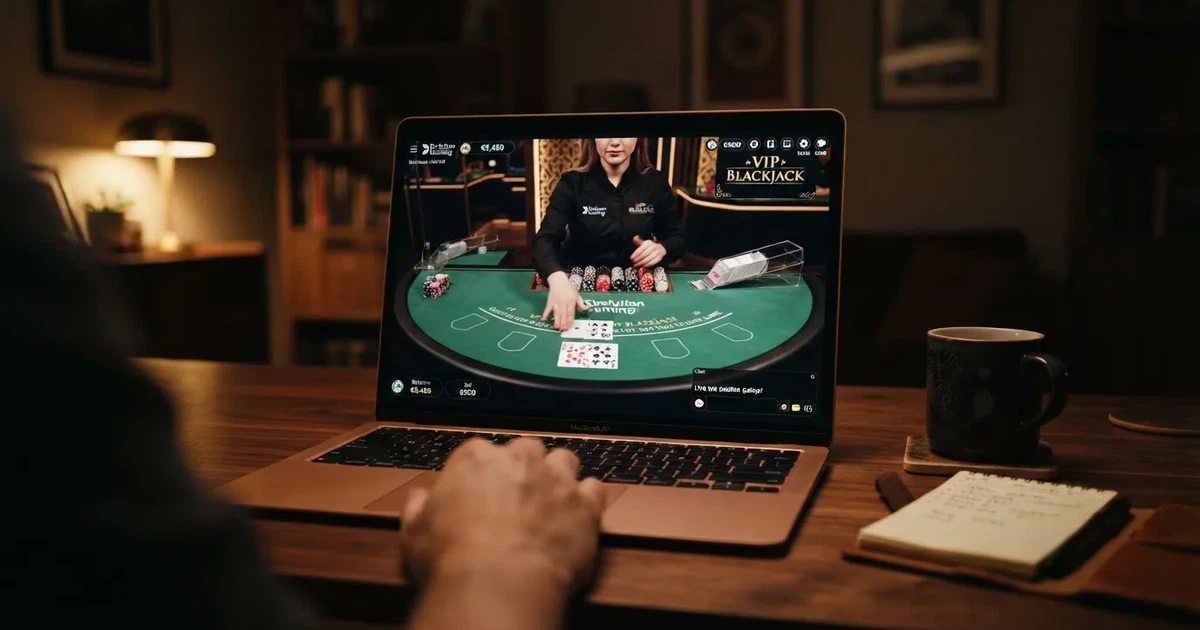
A high-roller live casino is, in practice, a set of tables with higher minimum bets than the standard lobby, run by studios such as Evolution, Pragmatic Play Live and Playtech. The studios supply the tables; the operator curates which minimums and maximums it puts on its own floor. What this means is that the same studio title can appear with a £5 minimum at one brand and a £50 minimum at another, and a “high-roller” label is as much an operator decision as a studio one.
The stake ceiling for online slots does not apply to live-dealer tables in the same form. The Gambling Commission’s slot stake cap — £5 per game cycle for adults 25 and over, £2 for 18 to 24 — is calibrated to a slot spin, and the live-dealer product sits in a different category under the Commission’s rules. A live-dealer blackjack hand with a £500 stake is a different product from a slot spin, and the cap that pins a slot machine at £5 does not, by its terms, set the same limit at the felt. What does still apply is everything else: identity verification before play, the GAMSTOP enrolment check, the financial vulnerability checks at £150 net deposits over a rolling thirty days in force since 28 February 2025, and the operator’s own responsible-gambling protocols. A live-dealer session that pushes six-figure volume in an evening is still bound by those.
What a high-roller live table actually offers
The shape is consistent across studios. A standard live-dealer blackjack table runs at £5 to £500 or £1,000 limits. A “VIP” or “Salon Privé” table — the high-roller branding the studios themselves use — sits at £1,000 minimum and scales into the tens of thousands on the upper end. Roulette tables follow the same pattern, with a standard lobby around £0.50 to £5 and a high-roller floor at £5 to £10,000 or higher on dedicated wheels. Game-show titles — the wheel-of-fortune format that Evolution and Pragmatic Play Live built out — carry their own stake ranges that usually sit below the VIP table floor. A player who wants the high-roller experience is, in practice, choosing between VIP blackjack and VIP roulette on the dedicated floor, with baccarat as the third leg of the same product set.
RTP at a live-dealer table is set by the game’s rules, not by the stake. A standard blackjack hand returns close to 99.5 percent with optimal play; roulette returns 97.3 percent on a European single-zero wheel. The stake size does not move those numbers. What it does move is the variance per hand — a £1,000 hand on blackjack has a wider swing per decision than a £10 hand, but the expected loss as a share of stake is the same. That is the line that matters when sizing a session: the percentage does not bend, the absolute number per hand does.
Studios and where the tables come from
Evolution supplies the bulk of the high-roller live-dealer product at UK-licensed operators, with Pragmatic Play Live as the second-largest supplier and Playtech in the third position. Each studio runs its own set of VIP and Salon Privé tables, each with its own branding and limits. Operators decide which tables to expose on their lobby and at what minimums. The studio choice does not, in itself, change the bonus treatment — a live-dealer hand often contributes a lower percentage toward wagering than a slot spin, sometimes nothing at all. A high-roller welcome bonus aimed at live-dealer play is rarer than one aimed at slots for that reason, and where one exists, the terms will say so plainly.
The ten licensed brands, side by side
This is the comparison the page is built around. Every brand below is taken from the Gambling Commission’s public register of gambling businesses, which listed 139 businesses holding an active remote casino operating licence on 18 September 2026. The register also held 1,065 active and 361 white-label website entries on the same date — a white-label site trades under another company’s licence, and the licence number on the register makes that structure visible. The number format on the register is built from the licence holder’s six-digit account number, an R marking a remote licence, a sequential number and a suffix. The table below shows the reviewed set on the same dimensions the register exposes.
| Brand | Licence holder and GB remote casino licence | Domain status on the register | High-roller bonus mechanics on the reviewed set |
|---|---|---|---|
| 32Red | Platinum Gaming Limited — 045322-R-324275-019 | Active | — |
| BetVictor | BV Gaming Limited — 039576-R-319370-028 | Active | — |
| Ladbrokes | LC International Limited — 054743-R-330863-014 | Active | — |
| 888casino | 888 UK Limited — 039028-R-319297-014 | Active | — |
| PokerStars | Stars Interactive Limited — 039108-R-319334-026 | Active | — |
| Paddy Power | PPB Games Limited — 039411-R-319335-010 | Active | — |
| Betfred | Petfre (Gibraltar) Limited — 039544-R-319290-010 | Active | — |
| bet365 | Hillside (UK Gaming) ENC — 055149-R-331499-004 | Active | — |
| Casumo | Recro Limited — 061549-R-336718-002 | Active | — |
| Sky Vegas | Bonne Terre Gaming Limited — 065519-R-339675-002 | Active | — |
The register is the test of whether a brand holds a Commission licence, and the licence number is the audit trail behind the name. What the register does not carry is the bonus headline, the wagering multiple on any specific welcome offer, or the maximum-bet rule during wagering — those live on each operator’s own terms page and are not part of the public register’s data. The empty right-hand column is honest: this page does not name a working bonus, promo or voucher code, and it does not pin a specific wagering figure to a brand when the register has no number to back it. What the register does carry — and what the table above exposes — is the licence, the holder, and the live status of the domain on the date of the snapshot.
What the empty cells mean
A blank in the table is not a finding about the brand. It is the same blank that would appear in a print-out of the Commission’s CSV download on the same date. The register does not list bonus terms; it lists licences. To fill those cells with anything other than a dash would be to invent a figure the register does not carry, and a high-roller bonus page that started importing such figures from memory would lose its only reliable column — the licence number. The honest read of the table is that every brand here is licensed, every domain is live, and the bonus mechanics are operator-specific terms that change offer by offer. The pages that follow each name are the place to look for the figures the table deliberately leaves blank.
The state of UK online casino play, and why a “high-roller” label still fits
The UK online casino market is a licensed market, and the licence count is the cleanest summary of its size. The Gambling Commission’s public register of gambling businesses listed 139 businesses holding an active remote casino operating licence on 18 September 2026, downloadable in full as CSV or Excel files. The same register held 1,065 active and 361 white-label domain entries on the same date — a white-label site trades under another company’s licence, which means a single licence can run multiple brands, and the domain list is the right place to see how many. Several of the brands reviewed below sit under shared licensees: Ladbrokes, Coral and Gala Bingo all run under LC International Limited, and the same is true of other multi-brand houses in the active set. Treating each brand as an independent operator, when the register names a shared licensee, would be a misread of the data the register carries.
The “high roller” framing survives inside that frame because the licence does not cap deposits or losses. There is no state-set deposit or loss ceiling at a UK-licensed operator. What there is, since 31 October 2025, is an obligation to prompt a customer to set a financial limit before the first deposit — a check, not a cap, and the limit is the player’s own choice. A player who wants to run five-figure sessions can do so under the licence, provided the operator’s own affordability and vulnerability checks allow it. The financial vulnerability check at £150 net deposits in a rolling thirty days uses public data only; the wider financial risk assessments have been announced but are not yet in force. A high-roller bonus and a high-roller session are, in other words, legal under the licence — the marketing words around them are where the licence goes quiet and the operator’s own terms take over.
The legal frame the licence actually sets
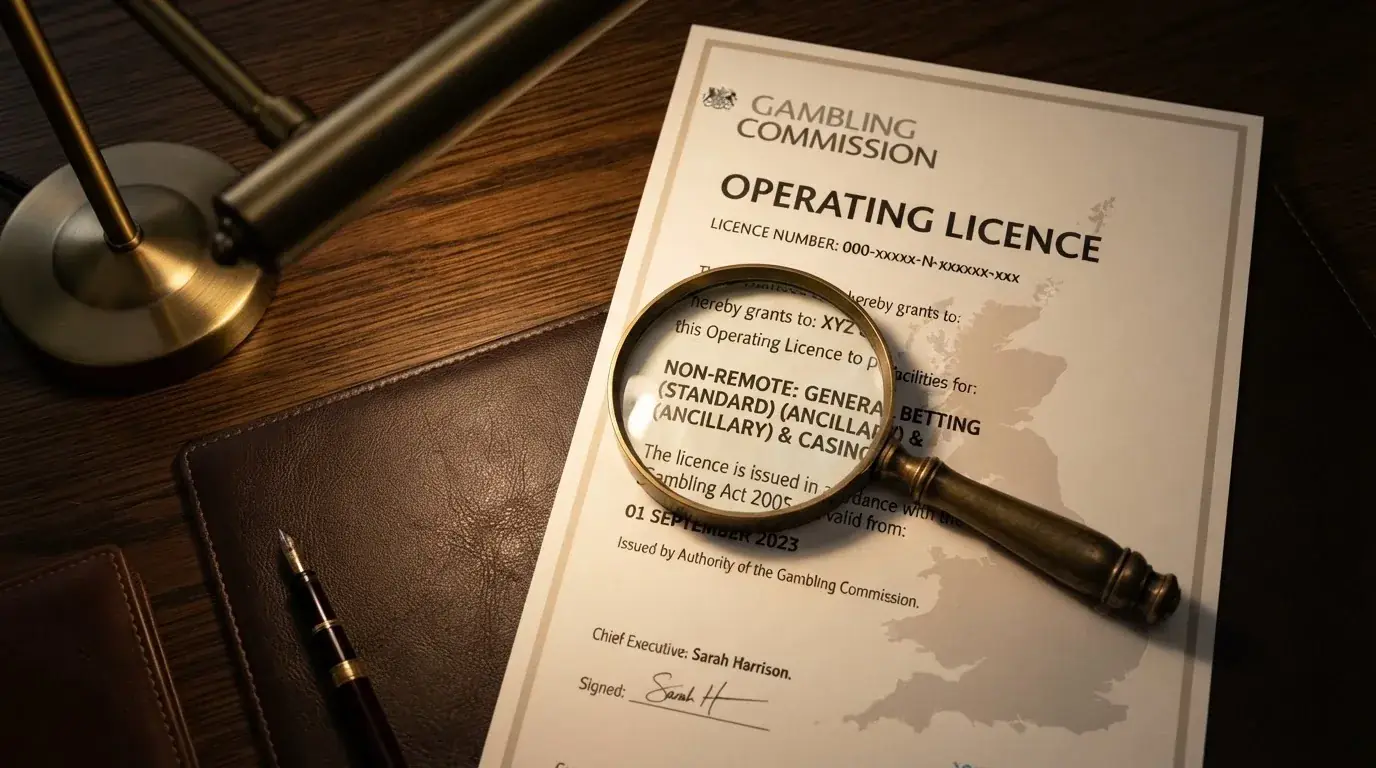
The Gambling Commission, sponsored by the Department for Culture, Media and Sport, regulates under the Gambling Act 2005. The Act covers Great Britain — England, Scotland and Wales — not Northern Ireland. Since the Gambling (Licensing and Advertising) Act 2014, any operator taking customers in Great Britain needs a Commission licence wherever it is based. A Curaçao, Maltese or Gibraltar licence is not a substitute, and an operator running on such a licence alone cannot legally serve a player sitting in a British postcode. The public register is the test of whether a brand holds a Commission licence, and the licence number format on the register is built from the holder’s six-digit account number, an R marking a remote licence, a sequential number and a suffix.
The stake cap and the play cap
Online slots carry a maximum stake per game cycle — £5 for players aged 25 and over, in force from 9 April 2025, and £2 for 18 to 24, in force from 21 May 2025. There is no equivalent ceiling on live-dealer tables, which sit under a different rule set. Auto-play has been banned since 31 October 2021. A slot spin may not be faster than 2.5 seconds. “Losses disguised as wins” — slot features that frame a net loss as a celebratory outcome — are also banned. The minimum age is 18, and name, address and date of birth are verified before the first deposit or any play, since 7 May 2019. Cryptocurrency deposits are not exempt: a Commission licensee must still run identity checks before any first deposit, crypto included.
Player protection, and the tools that follow
GAMSTOP, the national online self-exclusion scheme, has been a mandatory condition of every online licence since 31 March 2020. Self-exclusion runs for six months, one year or five years, and cannot be cancelled early. The National Gambling Helpline (GamCare) and GambleAware are the two support routes every operator must signpost in its safer-gambling pages. Financial vulnerability checks run at £150 net deposits in a rolling thirty days, in force from 28 February 2025, and use public data only. The wider financial risk assessments — multi-source affordability checks — have been announced but are not yet in force. None of this is opt-in for the operator; every licence carries the same baseline.
The payments and bonuses rules that bind
Credit cards have been banned for gambling since 14 April 2020, including credit cards routed through e-wallets such as PayPal or Skrill. Debit cards and bank transfers were unaffected by the ban. The Commission estimated in 2018 that around 800,000 UK consumers used credit cards to gamble, and found that 22 percent of online gamblers who used credit cards to gamble were classed as problem gamblers — figures that framed the policy. Wagering requirements are capped at 10x and mixed-product bonuses are banned, in force from 19 December 2025. Anonymous play is not possible at a licensed site.
Offshore and the protection gap
Providing gambling to people in Great Britain without a Commission licence is an offence under section 33 of the Gambling Act 2005. The Commission disrupts illegal sites through cease-and-desist notices, search-engine delisting, and referrals to payment and hosting providers. It has no power to block at the ISP level. No penalty is aimed at the player. What the player loses on an unlicensed site is protection — no GAMSTOP, no Commission complaints route, no approved ADR provider. The Commission is the regulator of the licensed market, and it operates within that boundary.
Safer gambling around a high-roller session
A high-roller bonus and a high-roller session are not the same thing, but both sit inside the same safer-gambling frame. The frame starts at GAMSTOP, the national online self-exclusion scheme that has been a mandatory condition of every online licence since 31 March 2020. Excluding periods are six months, one year or five years, and cannot be cancelled early. Every brand on the table above is enrolled by force of the licence; a player who has registered with GAMSTOP is blocked at the deposit screen at every one of them.
The deposit prompt that has been mandatory since 31 October 2025 is the operator-level tool. Before the first deposit, the operator must invite the customer to set a financial limit. The limit is the player’s choice — the licence does not name a number — and a high-roller player setting one is not failing the licence, they are using the tool the licence provides. The financial vulnerability check at £150 net deposits over a rolling thirty days, in force since 28 February 2025, runs in the background using public data only; the operator may add further checks on top of that. The wider financial risk assessments, multi-source affordability checks, have been announced and are pending.
Beyond the operator, the National Gambling Helpline (GamCare) and GambleAware are the support routes every operator must signpost. A player who finds the size of the session moving beyond what the bankroll can absorb has, at minimum, three named entry points: the operator’s own safer-gambling page, the National Gambling Helpline, and GambleAware. Each is a real route, not a marketing line, and the licence requires them to be reachable.
Crypto, anonymity, and the limits of the licensed frame
Crypto deposits are not banned at UK-licensed operators, but they do not change what the licence obliges the operator to do. A Commission licensee must verify name, address and date of birth before the first deposit or any play, since 7 May 2019. That verification is the same whether the deposit is in pounds, in a tokenised debit card, in an e-wallet balance, or in a supported cryptocurrency. The “high roller crypto casino UK” framing assumes a friction that the licence does not allow: an unlicensed site may accept a crypto deposit with lighter identity checks, but the same site is unlicensed, sits outside the Commission’s complaints process, and offers no GAMSTOP route. A crypto deposit at a licensed site runs through the same identity and affordability checks as any other deposit.
The licensed set has not converged on a single crypto rail. Bitcoin and Ethereum deposits appear at some brands, often via a third-party processor that converts to pounds on arrival. AstroPay, which serves users across markets including Argentina, Australia, Brazil, Canada, Colombia, Denmark, Spain, the United Kingdom, the United States and Uruguay, sits in a different corner — a prepaid wallet that tops up via card or local payment method and deposits as pounds. Both routes land in the same licensed frame and both pass through the same identity checks before the first deposit. The honest summary of “high roller crypto casino UK” is that the licence allows the deposit method, requires the same checks whatever the method, and offers the same protection whatever the method — the anonymity the search implies is not a feature any UK-licensed brand can offer.
32Red — Platinum Gaming Limited
32Red is an active brand under Platinum Gaming Limited, which is authorised by the Gambling Commission with the remote casino operating licence 045322-R-324275-019. As a well-established name on the UK market, 32Red operates entirely within the regulatory framework.
The bonus terms change by offer. Wagering on bonuses is capped at 10x, and mixed-product bonuses are prohibited by the regulations in force since 19 December 2025. The standard slot stake cap applies, while live-dealer tables have their own stake limits. The 32Red live casino features a VIP lobby where higher stakes are accommodated. Bonus terms, including game weightings and expiry dates, are specific to each offer and are detailed in the operator’s terms.
Verdict: A long-standing licensed operator with a transparent audit trail and a live casino that supports VIP-level stakes.
BetVictor — BV Gaming Limited
BetVictor operates under BV Gaming Limited, holding the active Gambling Commission remote casino operating licence 039576-R-319370-028. The casino is integrated into a wider operation that includes a sportsbook.
The brand’s casino suite is extensive, with the live-dealer lobby being a primary area for high-roller play, offering significant table limits. Bonuses are subject to the industry-wide 10x wagering cap and the ban on mixed-product offers. Slot play remains subject to the mandated stake caps, while live tables operate under different limits. BetVictor provides a robust cross-vertical account structure.
Verdict: A reputable licensed brand with sportsbook history and a live casino floor that facilitates high-stakes play. The bonus structure is standard for the UK market and adheres to current regulations.
Ladbrokes — LC International Limited
Ladbrokes is a prominent brand under LC International Limited, possessing the Gambling Commission remote casino operating licence 054743-R-330863-014. LC International also operates other brands such as Coral and Gala Bingo under this same license.
The Ladbrokes bonus offerings are extensive, reflecting the operator’s scale. All bonuses strictly comply with the 10x wagering limit and the mixed-product bonus prohibition. For high-roller clients, the live-dealer section is the focus, providing a range of tables with elevated betting limits suited to larger bankrolls. The site’s terms and conditions detail the specifics of game weighting and offer eligibility.
Verdict: A major UK operator with significant market presence and a high-stakes live casino offering. The scale of the brand means a diverse set of offers, all operating within the strict boundaries of UK regulations.
888casino — 888 UK Limited
888casino is managed by 888 UK Limited, holding the active Gambling Commission remote casino operating licence 039028-R-319297-014. The company is a UK-incorporated entity.
Focused exclusively on casino games, 888casino maintains a straightforward bonus structure that aligns with the 10x wagering cap. High-roller users often utilize the platform’s dedicated live-dealer tables, which feature tables with high maximum bets. The brand brings long-standing experience to the licensed market, and all offerings are fully regulated.
Verdict: A dedicated casino operator with deep history in the UK market. The platform provides a clear, single-product bonus environment and a robust selection of high-limit live gaming options.
PokerStars — Stars Interactive Limited
PokerStars operates through Stars Interactive Limited, which maintains the active Gambling Commission remote casino operating licence 039108-R-319334-026. The .uk domain denotes the specific UK-licensed operation.
While known for poker, the casino vertical is a key part of the offering. Bonus policies are compliant with the 10x wagering cap. For high-roller players, the site offers a variety of live tables where stake limits are designed to accommodate more substantial play. As with all UK operators, bonuses are strictly casino-focused, ensuring compliance with the regulations.
Verdict: A brand with a significant poker background that delivers a solid, regulated casino experience. High-limit live play is well-supported, and bonus terms adhere to current UK industry standards.
Paddy Power — PPB Games Limited
Paddy Power is an active brand under PPB Games Limited, operating with the active Gambling Commission remote casino operating licence 039411-R-319335-010. The brand is part of the broader Flutter Entertainment group.
The platform provides a comprehensive casino and sportsbook environment, with bonuses following the required 10x wagering cap and separation of products. High-roller players find the live casino floor particularly relevant, as it features multiple tables with VIP-level betting limits. The operator’s long-standing sportsbook history underpins the casino offering, and all bonus terms are detailed on the brand’s official site.
Verdict: A sportsbook-focused operator with a robust casino section. The high-stakes live gaming environment is extensive, and all promotional terms are fully compliant with UK licensing rules.
Betfred — Petfre (Gibraltar) Limited
Betfred operates through Petfre (Gibraltar) Limited, which is licensed by the Gambling Commission to provide remote casino games via licence 039544-R-319290-010. The company leverages its Gibraltar-based operational history to serve the UK licensed market.
The operator maintains a solid casino vertical that operates under the 10x wagering cap on bonuses. High-roller players can access a selection of live tables with stakes suited for experienced gamblers. As with other licensed brands, bonus structures are specific and regulated, and users should review the specific terms on the operator’s site to understand the weighting and limits associated with any particular offer.
Verdict: An operator with high-street heritage and a well-integrated digital casino. The site offers high-stakes live options, and all bonuses operate within the current regulatory framework.
bet365 — Hillside (UK Gaming) ENC
bet365 operates under Hillside (UK Gaming) ENC, the Gambling Commission-approved operator for remote casino services under licence 055149-R-331499-004. This is a UK-registered business.
bet365 is a significant operator in the UK market, offering a comprehensive casino vertical. Bonuses conform to the 10x wagering limit and regulatory requirements. High-stakes players will find a diverse live-dealer section with tables offering table limits suitable for larger session volumes. All terms, including those for bonuses, are set by the operator and available on their platform.
Verdict: One of the largest licensed operators in the UK, offering a mature casino product with high-limit live tables. The bonus environment is strictly compliant, ensuring a consistent and regulated experience for all users.
Casumo — Recro Limited
Casumo is an active brand under Recro Limited, operating with the active Gambling Commission remote casino operating licence 061549-R-336718-002. Recro Limited is a UK-registered entity.
The brand’s casino vertical is its primary focus, ensuring a single-product approach to bonuses that remains compliant with the 10x wagering cap. High-roller players utilize the live-dealer floor, which includes tables with high betting limits. Terms for all bonuses, including specific game contributions, are clearly outlined by the operator, ensuring transparency for all players.
Verdict: A dedicated, casino-first operator with a UK-licensed structure. The platform provides a clear, compliant bonus system and a live casino environment that meets the needs of high-stakes players.
Sky Vegas — Bonne Terre Gaming Limited
Sky Vegas operates as an active brand under Bonne Terre Gaming Limited, which provides services regulated by the Gambling Commission through remote casino operating licence 065519-R-339675-002. The operator is a UK-registered entity.
Sky Vegas maintains a casino-focused offering that adheres to the current 10x wagering cap. For high-roller players, the live-dealer section provides tables with limits designed to accommodate significant play. All bonus specifics, such as wagering requirements and expiration, are managed by the operator according to the standard regulations.
Verdict: A media-backed casino brand with a mature, regulated product. The live gaming lobby supports high-stakes play, and the bonus structure is single-product and compliant with UK standards.
How to choose between them
The honest version of this page is that the licence column matters more than the bonus column. Every brand on the table above is licensed by the Gambling Commission, every domain is listed as active on the register, and every one is bound by the same wagering cap, the same stake cap, the same GAMSTOP enrolment, and the same financial vulnerability check. The differences are in the live-dealer floor, in the bonus headline and small print, and in the operator’s own safer-gambling page. A high-roller player who wants the largest VIP live-dealer floor should weight that; one who wants a single-product bonus with the cleanest terms should weight the small print; one who plays cross-vertical should remember that the cross-vertical bonus is closed by the current rule set regardless of brand.
The arithmetic on the bonus is the same at every brand above: a £1,000 bonus at the 10x cap needs £10,000 of qualifying play, and at a £5 maximum stake that is at minimum 2,000 game cycles and, at the 2.5-second floor on slot spin speed, at minimum 1.4 hours of uninterrupted spinning. The rest is game weighting, time limit, maximum bet during wagering, and maximum cashout — all operator-specific, all on the brand’s own terms page, all worth reading before any bonus is claimed. The licence sets the ceiling; the small print sets the floor; the player decides what to claim inside that range.
FAQ
Do UK stake limits still apply to a high-roller casino bonus?
Yes. The Gambling Commission’s stake cap — £5 per game cycle for adults aged 25 and over, £2 for 18 to 24 — applies to slot play regardless of the bonus headline or deposit size. The cap is set by the Commission under powers in the Gambling Act 2005, has been in force since 9 April 2025 for the £5 tier and 21 May 2025 for the £2 tier, and binds every UK-licensed operator on every slot game. Live-dealer tables sit under a different rule set and a higher stake ceiling, which is where larger stakes are concentrated.
What makes a casino trustworthy for high-roller players specifically?
A Gambling Commission remote casino operating licence, visible on the public register under the licence holder’s six-digit account number and listed with an active domain status. Beyond the licence, the practical markers are GAMSTOP enrolment (mandatory since 31 March 2020), the deposit-limit prompt before the first deposit (mandatory since 31 October 2025), and the financial vulnerability check at £150 net deposits in a rolling 30 days. The Commission’s public register is the test, and the licence number format makes the audit trail visible.
Can a high-roller bonus be claimed using cryptocurrency?
A Commission licensee can accept crypto deposits, but the operator must verify name, address and date of birth before the first deposit or any play, since 7 May 2019. The crypto deposit does not change the verification, does not change the wagering cap of 10x, and does not change the financial vulnerability check. The anonymity a “high roller crypto casino” implies is not available at any UK-licensed brand; the route that delivers it is unlicensed, sits outside the Commission’s complaints process, and offers no GAMSTOP route.
Does a high-roller no-deposit bonus come with different terms to a standard one?
A no-deposit bonus is usually smaller in headline value than a deposit bonus but carries the same kind of small print — a wagering multiple capped at 10x since 19 December 2025, a game-weighting table, a maximum-bet rule during wagering, a time limit, and a maximum-cashout cap on bonus-derived winnings. The maximum-cashout cap is the line most often tightened on a no-deposit bonus, and is the place a player should look first. The register does not list bonus terms, so the small print is on the brand’s own terms page.
Are high-roller live dealer tables available on a mobile casino app?
Yes, on most UK-licensed brands. Live-dealer tables run on the same HTML5 stream whether the player is on a desktop browser, a mobile browser, or a dedicated app. The interface adapts to screen size, and a high-roller VIP table is the same product at the same stake ceiling on a phone as on a laptop. What changes is the practical rhythm of a session — landscape mode is more comfortable, and reading the small print on a phone is harder. The game itself is the same.
How is a high-roller welcome bonus usually structured compared with a standard one?
A high-roller welcome bonus is, in practice, a larger deposit match — often multiple tiers across the first two or three deposits — paired with the same kind of small print that any bonus carries. Since 19 December 2025 the wagering multiple on that bonus is capped at 10x, which means a £5,000 bonus needs £50,000 of qualifying play. The headline is bigger; the multiplier is the same ceiling. Game weighting, table-game exclusion, maximum-bet rule during wagering and maximum cashout are the places where the small print diverges from the headline, and the brand’s own terms page is the place to read them.