First deposit bonuses at UK-licensed casinos: what the licence obliges, what the offer costs, and where the cap bites
Current as of 8 November 2026 · licence and domain status checked against the Gambling Commission’s public register of gambling businesses.
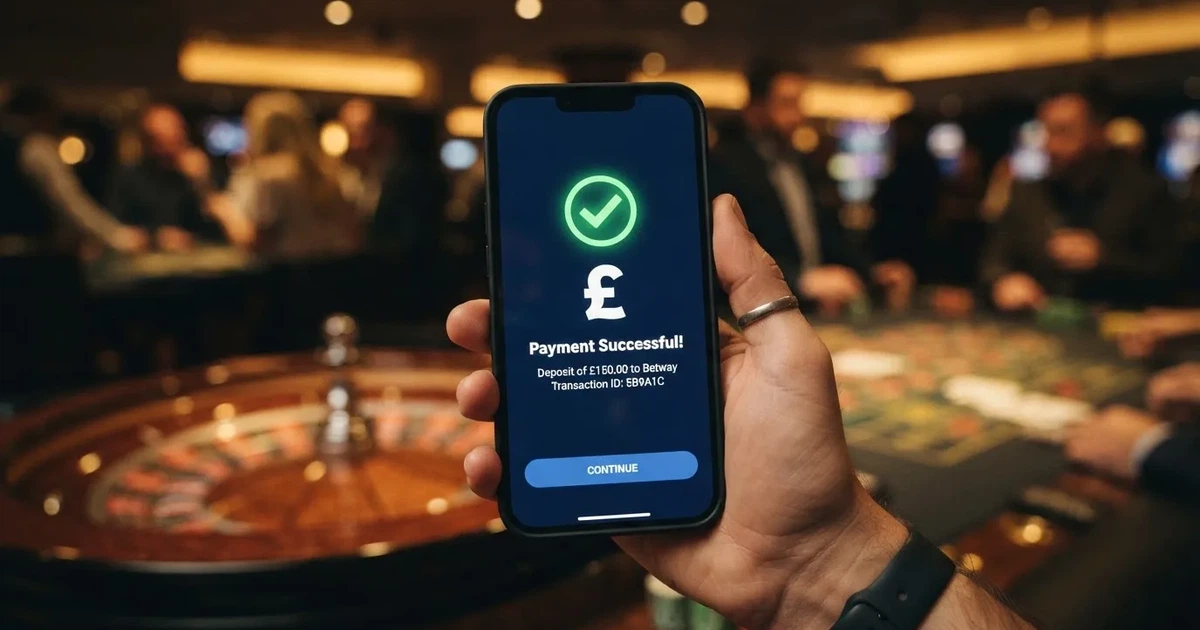
A first deposit bonus is the headline number on a casino’s welcome page. Behind that headline sit a licence, a regulator, a wagering cap that came in on 19 December 2025 and a set of safer-gambling checks the operator must run before the first pound goes in. The licence is not a marketing footnote: it is what makes a dispute answerable, makes GAMSTOP available and stops the site from quietly routing a credit card through an e-wallet. The cap is not a polite headline either: ten times the bonus is the most a UK-licensed casino can now ask a player to turnover before any winnings become withdrawable. These two facts shape every comparison that follows.
What this page sets out is a side-by-side of ten UK-licensed brands holding an active remote casino operating licence, and the consequences that fall out of those two facts for a player choosing between them. It is not a recommendation to deposit; it is information a reader can use before the deposit.
Table of Contents
- Settling the legal frame first
- The safer-gambling checks that run before and after the first deposit
- Cryptocurrency and the identity-check requirement
- Settling into the bonus mechanics: how a first deposit bonus works
- Comparing the ten UK-licensed brands side by side
- What the wagering cap means for a player picking between two offers
- Reading the register for yourself
- Picking between the ten — a closing read
- Frequently asked questions
Settling the legal frame first
The Gambling Commission, sponsored by the Department for Culture, Media and Sport, regulates commercial gambling in Great Britain under the Gambling Act 2005. The Commission’s public register of gambling businesses is the definitive list of who holds a licence; the register can be searched online and downloaded as CSV or Excel files, and as of 18 September 2026 it listed 139 businesses holding an active remote casino operating licence. The full register also recorded 1,065 active and 361 white-label website entries — a white-label site trades under another operator’s licence rather than holding its own.
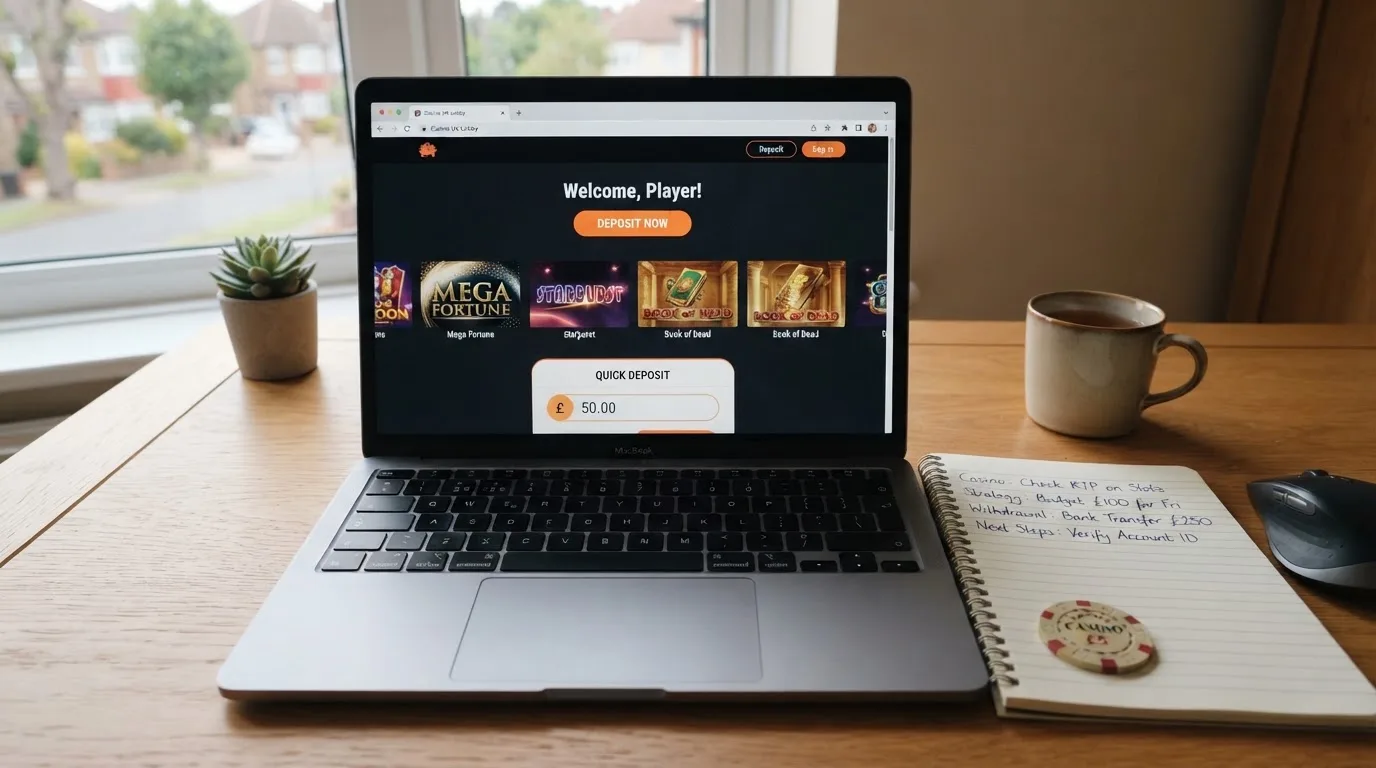
Several large casino brands share a single licence account: Ladbrokes, Coral and Gala Bingo all sit under LC International Limited, and Paddy Power and Betfair both sit under PPB Games Limited. That matters because a complaint, a regulatory action or a self-exclusion event hits all the brands in that group at once. Reading one brand as wholly independent of another when they share a licence account reads better than reality.
A remote casino licence number on the register has the form account—R—number—suffix; the leading six digits repeat the licence holder’s account number, the “R” marks a remote (online) licence and the suffix is the sequential issue number. A reader who knows that shape can confirm the licence without leaving the register; a reader who doesn’t is one search away from doing so. The licence is the whole test of whether a brand is lawful in Great Britain — a Curaçao, Maltese or Gibraltar licence is not a substitute, and a remote licence issued by any other jurisdiction does not authorise play from a British address.
What the licence obliges an operator to do
Holding a Commission licence pulls the operator into a single set of conduct rules called the Licence Conditions and Codes of Practice, or LCCP, plus the Remote Technical Standards that govern the platform itself. Three obligations matter most for a first deposit:

- Identity verification before the first deposit or any play. Since 7 May 2019 a GB-licensed operator must verify the customer’s name, address and date of birth before any deposit, including any cryptocurrency-funded deposit. Anonymous play is not available at a licensed site, whatever the payment method.
- A credit-card ban in force since 14 April 2020. The ban covers any credit-funded route, including credit cards routed through an e-wallet; debit cards and bank transfers are unaffected.
- GAMSTOP participation, mandatory for every online licence since 31 March 2020. A player who has self-excluded through GAMSTOP cannot open an account at any GB-licensed casino for the period chosen — six months, one year or five years — and the exclusion cannot be lifted early.
The credit-card ban and the GAMSTOP tie are not optional. They are licence conditions and the Commission can, and does, suspend or revoke a licence for breaching them. The Commission estimated that around 800,000 UK consumers used credit cards to gamble in 2018, and found that 22% of online gamblers who used credit cards to gamble were classed as problem gamblers; the ban followed in April 2020.
The wagering cap that came in on 19 December 2025
Until December 2025 a welcome package could carry a wagering requirement of thirty, forty or fifty times the bonus. The Commission closed that down. Since 19 December 2025 wagering requirements are capped at ten times the bonus, and mixed-product bonuses — the “bet on sport, get casino spins” construction — are banned. A reader comparing two welcome pages is now comparing ten-times turnover at most, not forty-times turnover.
The cap changes what the offer is worth. Required turnover at a £100 bonus is now £1,000; at a £200 bonus, £2,000. At a £5 stake per spin, £1,000 of turnover is 200 spins and £2,000 is 400 spins, each spin separated by at least 2.5 seconds under the auto-play ban — so the £100 bonus clears in roughly eight and a half minutes of slot play at the cap, the £200 bonus in seventeen minutes. These are not large numbers in time, and that is the point: the cap compresses the clearing time of any welcome bonus to a single session for most players.
The cap applies to the bonus itself, not to a deposit-and-bonus package. A 100% match bonus of £100 on a £100 deposit carries £1,000 of required turnover if both the bonus and the deposit are wagered, depending on the operator’s terms. Reading the small print on what is actually wagered is the difference between £1,000 and £2,000 of required play for the same headline.
The safer-gambling checks that run before and after the first deposit
The licence obliges an operator to do more than verify identity at sign-up. Since 31 October 2025 every customer must be prompted to set a financial limit before the first deposit — there is no state-set ceiling, but the operator must ask. Since 28 February 2025 a financial vulnerability check runs when net deposits reach £150 in a rolling thirty-day period, drawing on public data; the wider financial risk assessment regime is announced but not yet in force.
A licensed operator must also enforce the slot stake limits that came in during 2025: a maximum stake of £5 per game cycle for players aged 25 and over (from 9 April 2025) and £2 for players aged 18 to 24 (from 21 May 2025). A spin may not complete faster than 2.5 seconds; auto-play is banned; losses presented as wins — a slot banner flashing “you won £50” on a spin that netted a loss — are banned. These are technical rules and they bite at the edge cases: a player who tries to clear a welcome bonus at a £10 stake is refused, and a slot that auto-spins faster than the floor is removed from the GB site.
Self-exclusion is not a quiet setting. GAMSTOP registration is irreversible for the period chosen. National Gambling Helpline (operated by GamCare) and GambleAware are the two routes a player can use without going through their operator. The Commission does not run a complaints route for players directly; approved Alternative Dispute Resolution providers handle disputes against operators, and a player who has used that route and remains dissatisfied can refer the matter to the Commission.
A first deposit bonus interacts with these protections in two ways. First, the bonus cannot lift a self-exclusion; GAMSTOP sits above any marketing offer and the operator cannot reverse it. Second, the deposit limit the operator prompts for sets a ceiling on the bonus playthrough — a £50 weekly limit means a £100 welcome bonus will not clear on one deposit, even at the new 10x cap. A reader who plans to claim a welcome bonus is planning to deposit, and the limit is the upper bound on that plan.
What the offshore alternative actually loses
The Gambling Act 2005, section 33, makes it an offence to provide gambling to people in Great Britain without a Commission licence. The Commission disrupts illegal sites — cease-and-desist notices, payment referrals, hosting referrals and search-engine delisting — but it does not have power to order ISP-level blocking in the UK. The penalty is aimed at the operator, not the player. What the player loses is the protection: no GAMSTOP tie, no approved ADR, no Commission complaints route, no enforced stake limit, no credit-card ban, no auto-play ban, no guarantee the wagering requirement is anything close to the new 10x cap.
An offshore brand’s welcome bonus can carry a wagering requirement of forty times the bonus, on slots with no stake ceiling, with no GAMSTOP tie if the player has previously self-excluded. The marketing language is familiar because the market is familiar. The legal frame is not.
Cryptocurrency and the identity-check requirement
A common search thread treats crypto-funded first deposit bonuses as if they sit outside the GB regime. They do not. A GB-licensed casino cannot waive identity verification because the deposit arrives in bitcoin, ethereum or tether; the LCCP verification rules apply to every payment method equally, and a player who has not cleared KYC cannot deposit by any route at a licensed site. What crypto does offer is a different funding rail on the player side — on-chain settlement, no card-issuer intermediary — but the casino side runs the same checks regardless.
Crypto-funded play at a GB-licensed casino is therefore a narrower proposition than the marketing suggests. The player gets the speed and the on-chain audit trail; the operator still verifies identity, still ties the account to GAMSTOP, still applies the 10x wagering cap, still enforces the £5 or £2 slot stake limit. A “no KYC” promise attached to a crypto bonus is, at a licensed site, a contradiction in terms.
The licensed GB crypto offering is also narrower in brand count. Most large GB-licensed brands still take debit cards and bank transfers as the primary funding routes; only a smaller subset accepts crypto directly, and several route crypto through a payment processor rather than holding it on balance. A reader looking for a true crypto-funded first deposit bonus at a GB-licensed casino is looking at a smaller set than the wider licensed market — and that smaller set is the right place to apply the same licensing test the rest of the page applies.
What an e-wallet or voucher route changes
Apple Pay, AstroPay and similar wallet products do not change the verification requirement at the casino. They change the funding rail. Apple Pay tokenises the underlying card — the actual card number is replaced by a device-specific tokenised Device Primary Account Number and a dynamic security code is generated for each transaction, with in-store payments authenticated by NFC against a contactless terminal. Apple Pay launched on 20 October 2014 supporting only US-issued cards, with UK-issued card support from 14 July 2015.
AstroPay was founded in 2009 and is headquartered in Uruguay; its UK entity, Larstal Limited, is an electronic money institution authorised by the Financial Conduct Authority under the Electronic Money Regulations 2011, with further entities licensed in the Isle of Man, Brazil and Denmark. AstroPay serves users across markets including the UK. Neither product erases the casino’s KYC step.
Bank transfers within the UK typically move through the Faster Payments Service, launched in 2008 and operated by Pay.UK, with most payments arriving instantly or within a couple of minutes — though the scheme allows up to two hours. The Faster Payments scheme sets a £1,000,000 per-transaction limit, but individual banks impose lower limits on their customers. The Bank of England is not a direct participant but provides final settlement and oversees the system’s stability. Funding a first deposit by Faster Payments means the deposit is in the casino account in seconds; clearing the casino’s KYC and source-of-funds checks is a separate step, and the welcome bonus cannot be credited until that step completes.
Settling into the bonus mechanics: how a first deposit bonus works
A first deposit bonus at a GB-licensed casino is, after 19 December 2025, a percentage match with a 10x wagering cap. The standard construction is “100% match up to £X”, where the casino matches the first deposit pound-for-pound up to a stated ceiling. A £100 deposit at a 100% match-up-to-£200 offer credits £100 of bonus funds on top of the £100 cash deposit. The bonus funds sit in a separate balance; they cannot be withdrawn until the wagering requirement is cleared, and at the new cap that requirement is £1,000 of eligible-game turnover at most.
The eligible-game list is where the offer narrows. Slots typically count 100% toward wagering; table games and live casino often count 10% or 0%. A player who tries to clear £1,000 of turnover at a live roulette table has actually wagered £10,000 of stake, because live roulette contributes 10% of stake to the requirement. The same offer behaves very differently depending on which game the player clears it on.
A wagering requirement is not the same thing as a playthrough time. The 2.5-second floor on a slot spin means a player clearing 200 spins at a £5 stake — £1,000 of turnover — takes at least 500 seconds of play, roughly eight and a half minutes. A player clearing 400 spins at £2 (the under-25 stake cap) takes at least 1,000 seconds, roughly seventeen minutes. The clearing time is short at the cap; it is also short enough that a player will see most of the volatility of a single slot session play out in that window.
What the maths of a £100 bonus looks like
A £100 first deposit bonus at the new 10x cap requires £1,000 of eligible turnover. At a £5 slot stake that is 200 spins, each separated by at least 2.5 seconds, so the minimum clearing time is roughly eight and a half minutes of slot play. The expected loss over those 200 spins depends on the slot’s RTP. A 96% RTP slot — close to the GB market average for an online slot — has a house edge of 4%, so the expected loss over £1,000 of stake is £40. The £100 bonus is therefore worth £100 of bonus funds against an expected £40 of slot loss; the net expected cost to the player, before any jackpot or big-win variance, is the £40 of slot loss netted against a £100 bonus credit, or roughly a £60 net expected gain. A 94% slot — a less generous title — pushes the house edge to 6% and the expected loss to £60, leaving a £40 net expected gain.
A player who clears the bonus on live blackjack at 10% contribution will have wagered £10,000 of stake to clear £1,000 of turnover, with an expected loss closer to £50 at standard blackjack rules — and the wagering time is measured in hours rather than minutes. The offer is the same headline; the cost depends on which game the player uses to clear it.
The wagering cap is the first thing that has made this calculation readable. Before 19 December 2025 the same offer could carry forty times the bonus in required turnover; at £100 that was £4,000 of slot play and an expected loss of £160 at a 96% RTP, against the same £100 of bonus. The new cap cuts the clearing work by 75% and the expected loss by 75%, with no change to the bonus amount. A reader comparing two welcome offers today is comparing two ten-times turnover packages and the small differences that sit inside them, not the order-of-magnitude differences that used to dominate the comparison.
Comparing the ten UK-licensed brands side by side
The brands below are taken from the Gambling Commission’s public register; each is listed as an active domain of the licence account that runs it. The table summarises the regulatory facts a reader needs to confirm the licence, the operating company and the domain status. Bonus terms, payment methods and game-by-game RTPs are not carried by the register and are not in this table — a reader who needs those reads the operator’s own terms page, which the register itself does not speak to.
| Brand | Licence holder and GB remote casino licence | Domain status on the register |
|---|---|---|
| Unibet | Platinum Gaming Limited — 045322-R-324275-019 | Active |
| Betfair | PPB Games Limited — 039411-R-319335-010 | Active |
| Sky Vegas | Bonne Terre Gaming Limited — 065519-R-339675-002 | Active |
| MrQ | Tek Fox Ltd — 060629-R-337532-004 | Active |
| Betway | Betway Limited — 039372-R-319367-029 | Active |
| PokerStars | Stars Interactive Limited — 039108-R-319334-026 | Active |
| Paddy Power | PPB Games Limited — 039411-R-319335-010 | Active |
| Ladbrokes | LC International Limited — 054743-R-330863-014 | Active |
| BetVictor | BV Gaming Limited — 039576-R-319370-028 | Active |
| Betfred | Petfre (Gibraltar) Limited — 039544-R-319290-010 | Active |
The shared licence accounts in this set matter for the comparison. Paddy Power and Betfair share PPB Games Limited as their licence holder; the same regulatory action or complaint outcome hits both brands. Ladbrokes shares LC International Limited with Coral and Gala Bingo, two further brands not in this set. Reading any of these brands as wholly independent of its sister brands reads better than reality — a complaint or a self-exclusion event is a group-level matter.
A reader choosing between these ten is choosing between ten GB-licensed brands that all satisfy the same set of LCCP conditions, all enforce the 10x wagering cap, all run KYC before the first deposit and all tie to GAMSTOP. The differences that matter at this level are operating-company size, sister-brand overlap and platform age — not the licence itself. Welcome-bonus differences, payment-method differences and game-library differences sit below the licence line and are read from the operator’s own terms.
Unibet — Platinum Gaming Limited
Unibet runs under Platinum Gaming Limited, account 45322, remote casino operating licence 045322-R-324275-019, with unibet.co.uk listed as an active domain on the Commission register. The brand is one of the longer-established European online gambling names in the GB market and the licence account is the same one that runs several other Kindred Group brands. Sister-brand overlap matters because a Commission action on Platinum Gaming Limited is a group-level matter.
Betfair — PPB Games Limited
Betfair runs under PPB Games Limited, account 39411, remote casino operating licence 039411-R-319335-010, with Betfair.com listed as an active domain. PPB Games Limited also holds the licence for Paddy Power, which means the two brands share a single licence account and a single regulatory exposure. A reader treating Betfair and Paddy Power as wholly separate competitors in this set is treating two brands running on the same licence as if they were two licences.
Sky Vegas — Bonne Terre Gaming Limited
Sky Vegas runs under Bonne Terre Gaming Limited, account 65519, remote casino operating licence 065519-R-339675-002, with Sky Vegas listed as an active domain. The licence account is a single-brand holding in this set, with no second brand from this comparison sharing it. Sky Vegas is the casino arm of the Sky broader brand and the licence sits separately from Sky’s broadcast operations.
MrQ — Tek Fox Ltd
MrQ runs under Tek Fox Ltd, account 60629, remote casino operating licence 060629-R-337532-004, with Mrq.com listed as an active domain. Tek Fox Ltd is a smaller-scale licence holder in this set; the brand has built its identity around transparency of bonus terms and lower-wagering promotions. The licence account is single-brand in this comparison.
Betway — Betway Limited
Betway runs under Betway Limited, account 39372, remote casino operating licence 039372-R-319367-029, with Betway.com listed as an active domain. Betway Limited is the operating company for the Betway brand across multiple jurisdictions; the GB licence is a single-brand holding in this set, though the wider Betway group operates under separate licences in other markets.
PokerStars — Stars Interactive Limited
PokerStars runs under Stars Interactive Limited, account 39108, remote casino operating licence 039108-R-319334-026, with Pokerstars.uk listed as an active domain. Stars Interactive Limited is the GB-facing arm of the PokerStars parent group; the licence is one of the older GB remote casino operating licences by issue number. The brand’s primary product is poker, with casino as a secondary vertical.
Paddy Power — PPB Games Limited
Paddy Power runs under PPB Games Limited, account 39411, remote casino operating licence 039411-R-319335-010, with Paddy Power listed as an active domain. Paddy Power shares the licence account with Betfair; a regulatory action on the licence hits both brands. The brand is one of the longer-established names in the GB betting market and the casino vertical is one of several products on the licence.
Ladbrokes — LC International Limited
Ladbrokes runs under LC International Limited, account 54743, remote casino operating licence 054743-R-330863-014, with Ladbrokes.com listed as an active domain. LC International Limited is the merged-entity licence holder for Ladbrokes, Coral and Gala Bingo, three brands that share one licence account. A reader choosing between Ladbrokes and Coral, or Ladbrokes and any other LC International brand, is choosing between brands on a single licence.
BetVictor — BV Gaming Limited
BetVictor runs under BV Gaming Limited, account 39576, remote casino operating licence 039576-R-319370-028, with Betvictor.com listed as an active domain. BV Gaming Limited is a single-brand holding in this comparison. The brand is one of the longer-established independent names in the GB market, founded outside the major bookmaker consolidations.
Betfred — Petfre (Gibraltar) Limited
Betfred runs under Petfre (Gibraltar) Limited, account 39544, remote casino operating licence 039544-R-319290-010, with Betfred.com listed as an active domain. The licence is held by a Gibraltar-registered company, which is permitted under the Gambling (Licensing and Advertising) Act 2014 so long as the Commission licence is held; being Gibraltar-registered does not exempt the operator from any LCCP condition.
What the wagering cap means for a player picking between two offers
A reader comparing two welcome offers after 19 December 2025 is comparing two offers that both sit at or below the 10x cap. The differences that matter are inside that cap, and they sit in three places: the eligible-game list, the contribution rate for non-slot games and the maximum-cashout clause.
The eligible-game list is the biggest single variable. A welcome bonus that excludes the higher-RTP slots — or weights them at 0% — forces the player toward lower-RTP titles, which raises the expected loss per unit of wagering. The headline “100% match up to £200” with an eligible-game list of twenty lower-RTP slots behaves like a different offer than the same headline with a list of forty higher-RTP slots, even at the same 10x turnover.
The contribution rate for non-slot games is the second variable. Live roulette at 10% contribution means a player who prefers live casino has to wager ten times the headline turnover to clear the same requirement. The clearing time moves from minutes into hours, and the expected loss is concentrated in a single game vertical. A welcome bonus is, in this sense, a slots product with a casino façade.
The maximum-cashout clause is the third. A welcome bonus can carry a cap on how much of the bonus-funded winnings can be withdrawn — a £100 bonus with a £500 maximum cashout means a player who wins £5,000 from the bonus has £500 of withdrawable winnings and £4,500 of bonus balance returned to the operator. A cap is not a wagering cap and is not affected by the 19 December 2025 changes; it sits in the operator’s terms and is read from the terms page.
A reader who picks between two offers on the headline match percentage alone has missed the three variables that determine what the offer is worth. The headline is the smallest of the four numbers that matter.
The clearing-time band, stated as a band
The clearing time of a first deposit bonus at the new 10x cap sits in a band, not at a point. The lower bound of the band is the slot-only clearing time at the £5 stake ceiling, which is 2.5 seconds per spin and roughly eight and a half minutes of play for a £100 bonus / £1,000 turnover. The upper bound is the live-casino clearing time at 10% contribution, where the same £1,000 of effective turnover sits behind £10,000 of live-casino stake and runs into several hours of play, capped by the table limits and the player’s own session length.
The clearing time the player experiences is determined by which game they clear on. A player who clears on slots sees the lower bound; a player who clears on live casino sees the upper bound. The same welcome offer produces a single-session experience for one player and a multi-hour experience for another, and the operator’s terms page is what determines which one a given player gets.
What the slot stake cap means for clearing time
The £5 stake ceiling for players aged 25 and over, and the £2 ceiling for players aged 18 to 24, are both below the highest stakes that some welcome bonuses were previously designed for. A 10x turnover at £10 stake was once possible; at the new stake cap it is not. The result is a longer clearing time at the upper end — £1,000 of turnover at £2 takes approximately 21 minutes at the minimum 2.5-second spin duration — but a clearing time that is still single-session for most players.
The stake cap interacts with the eligible-game list. A bonus that allows clearing on a slot with a £5 maximum stake behaves the same as the headline; a bonus that allows clearing on a slot with a £2 maximum stake requires more spins for the same turnover. The eligible-game list and the stake cap together determine the lower bound of the clearing-time band.
Reading the register for yourself
The Commission’s public register is at gamblingcommission.gov.uk and can be searched by operator name or by domain. A reader who wants to verify a licence before depositing can search for the brand name and read the licence account, the licence number and the domain status. The licence number’s structure — account—R—number—suffix — lets a reader confirm a licence format without needing to read the small print on the casino’s own page.
The domain status is the second check. An “Active” domain is one the operator currently runs against that licence; an “Inactive” domain is one that has been deactivated; a “White Label” domain trades under another operator’s licence. A reader who finds an “Inactive” or “White Label” tag on the brand’s domain knows to look more carefully at the relationship between the brand and the licence holder.
The register can be downloaded as CSV or Excel files, which lets a reader compare licence accounts across brands and identify the sister-brand relationships. Paddy Power and Betfair share PPB Games Limited; Ladbrokes, Coral and Gala Bingo share LC International Limited; the rest of this set is single-brand in this comparison. The sister-brand relationship is not a regulatory weakness — both groups hold valid licences — but it is information that shapes what a complaint outcome means.
What a reader who has self-excluded through GAMSTOP will see
A reader who has registered with GAMSTOP cannot open an account at any GB-licensed casino for the period chosen — six months, one year or five years — and the registration cannot be cancelled early. The operator is required to check GAMSTOP before allowing the first deposit. A first deposit bonus is, for that reader, unavailable at any GB-licensed casino; the marketing offer does not lift the GAMSTOP tie.
A reader who is not currently self-excluded can register with GAMSTOP at any time, including after a first deposit bonus has been credited. A welcome bonus does not insulate the player from self-exclusion, and the operator cannot refuse the registration on the grounds that a bonus is in progress. The self-exclusion is forward-looking and the bonus balance is settled according to the operator’s own bonus terms.
Where the offshore route fails the same reader
A reader who has self-excluded through GAMSTOP and then deposits at an offshore casino without a GB licence loses the protection GAMSTOP provides. The offshore casino is not required to check GAMSTOP, and the GAMSTOP tie has no force outside the GB licensing regime. The first deposit bonus on offer may carry a wagering requirement well above the GB cap, on slots with no GB stake ceiling, with no approved ADR for disputes.
The Commission’s enforcement on offshore sites is real — cease-and-desist notices, payment referrals, hosting referrals, search-engine delisting — but it does not include ISP-level blocking in the UK, and it does not penalise the player. The penalty is the operator’s, and the protection the player loses is theirs. A reader who has used GAMSTOP has already taken a step that an offshore casino will not honour.
Picking between the ten — a closing read
The ten brands in this comparison all hold an active GB remote casino operating licence; all run KYC before the first deposit; all tie to GAMSTOP; all enforce the 10x wagering cap; all refuse credit-card funding. The differences that determine which one a given reader picks sit below the licence line: the operating company’s track record, the welcome offer’s eligible-game list and contribution rates, the payment methods supported, the platform’s game library, and the operator’s own history on disputes and complaints.
A reader who has self-excluded through GAMSTOP picks none of them, because none of them is available. A reader with a credit card picks none of them, because credit cards are banned at the GB licensing level. A reader with a £50 weekly deposit limit cannot clear most welcome bonuses on one deposit, regardless of which brand sits behind the licence. These are the three closing conditions on the comparison, and they apply to every brand in the set.
The register is the test; the cap is the ceiling; the self-exclusion tie is the floor. Inside those three lines, the choice is a matter of platform, payment and game library — and the operator’s terms page is the place to read those, not the register.
Frequently asked questions
How is a first deposit bonus usually calculated?
A first deposit bonus is typically a percentage match up to a ceiling, expressed as “100% up to £X”. A £100 deposit at a 100% match-up-to-£200 offer credits £100 of bonus funds on top of the £100 cash deposit. The bonus funds sit in a separate balance and cannot be withdrawn until a wagering requirement is cleared; at the GB-licence level that requirement is capped at ten times the bonus since 19 December 2025.
Can a first deposit bonus be funded with cryptocurrency?
Yes, at the GB-licensed brands that accept crypto as a deposit method. The casino’s KYC and identity-verification obligations apply before any deposit regardless of payment method, so a crypto deposit still requires name, address and date-of-birth verification under the LCCP. A “no KYC” claim attached to a crypto bonus at a licensed site is, in practice, a contradiction in terms.
Does a first deposit bonus require identity verification before it pays out?
Yes. Since 7 May 2019 a GB-licensed operator must verify the customer’s name, address and date of birth before the first deposit or any play, and the verification step sits ahead of the bonus credit. The verification applies to every payment method equally — debit card, bank transfer, e-wallet or cryptocurrency — and anonymous play is not available at a licensed site.
What wagering usually applies to a first deposit bonus in the UK?
Since 19 December 2025, the maximum is ten times the bonus. Before that date, welcome bonuses at some operators carried wagering requirements of thirty, forty or fifty times the bonus; the new cap compresses most clearing times to a single slot session. The cap applies to the bonus itself, not to a deposit-and-bonus package where both are wagered — that detail sits in the operator’s own terms.
Is a first deposit bonus separate from a no-deposit bonus?
Yes. A first deposit bonus requires a deposit and matches or rewards that deposit; a no-deposit bonus is credited without a deposit and typically carries a higher wagering requirement, a lower maximum cashout, or both. The two can appear together in a welcome package — a small no-deposit credit followed by a deposit match — but they are tracked as separate balances with separate wagering requirements.
How long is a first deposit bonus usually valid for once credited?
The validity period is set by the operator’s terms and varies by brand, with a typical window of seven to thirty days from credit. A bonus that expires before the wagering requirement is cleared forfeits the bonus balance and any winnings derived from it; the cash deposit is unaffected. The exact window is on the terms page and is not carried by the Gambling Commission’s public register.