Best Android Casinos in the UK: A Licensed, Mobile-First Read
 Available in GB
The single hardest fact about Android casino play in Britain is that the platform is irrelevant to the legality. A Gambling Commission licence is what lets a site take a UK deposit, and that licence applies whether the player is on a Pixel in a kitchen, a Samsung tablet on a train, or a desktop in an office. The “best Android casino” is therefore not the one with the slickest app icon — it is the one whose underlying operator can answer three questions cleanly: who holds the licence, what does the bonus actually cost to clear, and how quickly does a withdrawal land.
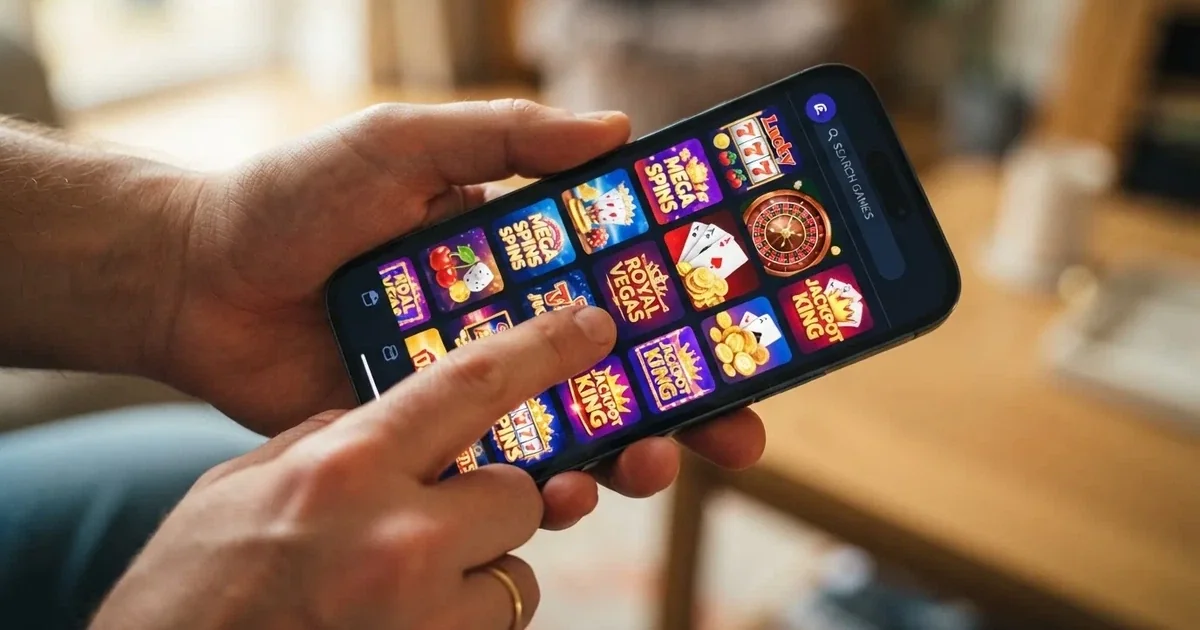
The data is current as of 23 September 2026 and was checked against the Gambling Commission’s public register of gambling businesses.
Table of Contents
- Why a Gambling Commission licence is the first filter
- What an Android casino has to do beyond the licence
- Bonuses on Android: what the 10x wagering cap actually changes
- Mobile experience: app, browser, and the gap between them
- Crypto and anonymity on a UK-licensed Android casino
- Payments and payout speed on Android
- The 18 September 2026 register snapshot
- The ten licensed Android casinos
- Comparison of licensed operators
- Responsible gambling on Android
- Tax and the wider financial frame
- What the wagering-turnover band looks like in practice
- What this ranking does not do
- Frequently Asked Questions
Why a Gambling Commission licence is the first filter
Every online casino taking deposits from players in Great Britain needs a Commission operating licence under the Gambling Act 2005. An Android-only brand, a Curaçao-licensed brand, a Malta-licensed brand — none of these distinctions matters without the UK line in the register. The Commission’s own register is the test: the domain listed there, against an active licence account, is the operator the player is actually dealing with.

The register holds more businesses than any single ranking can review. As of 18 September 2026, the Commission’s public register listed 139 businesses holding an active remote casino operating licence, and the companion domain list recorded 1065 active and 361 white-label entries. A white-label domain trades under another company’s licence — a single licence can sit behind several visible brand names. Jackpotjoy and Virgin Games, for instance, both run on Gamesys Operations Limited’s licence 038905-R-319430-022; Ladbrokes and Coral both sit under LC International Limited’s licence 054743-R-330863-014. Two visible brands, one licence holder, one set of player-protection rules.
A remote casino licence number has a recognisable shape: a six-digit account number, the letter R marking a remote (online) licence, a four-digit serial, and a two-digit suffix. The licence 039544-R-319290-010, for example, breaks into account 39544 (Petfre (Gibraltar) Limited), the R flag for online, the serial, and the suffix. Anyone reading a casino’s footer can run those numbers back to the register and confirm the licence is in date.
There is no second tier. A site without a Commission licence is offering its product illegally to players in Great Britain under section 33 of the Gambling Act 2005. The player is not committing an offence by using one — but the player also loses every Commission-baked protection: no GAMSTOP enforcement, no Commission complaints route, no approved alternative dispute resolution, no automatic participation in the national self-exclusion scheme.
What an Android casino has to do beyond the licence
A UK-licensed online operator, on Android as on any other device, has obligations the app icon never advertises:

- Identity checks before the first deposit. Name, address and date of birth have been verified since 7 May 2019, in line with the Commission’s customer-identification rules. A player cannot deposit anonymously.
- Mandatory GAMSTOP enrolment. Every online licence carries the self-exclusion scheme as a condition. Six months, one year or five years; the period cannot be cancelled early.
- Age 18 minimum. Verified at the same step as identity.
- A deposit-limit prompt before the first deposit. In force from 31 October 2025, the operator must surface a financial-limit setting rather than let a new account run open.
- A financial vulnerability check at £150 net deposits in a rolling 30 days (from 28 February 2025), run against public data. A wider financial risk assessment framework is announced but not yet in force.
The platform change from desktop to Android does not move any of those requirements. What it does change is the surface — how the player reaches the cashier, how they hold the phone one-handed on a commute, how the site loads on a patchy 4G signal. The licence is the same; the device experience is not.
Bonuses on Android: what the 10x wagering cap actually changes
A welcome bonus on a UK-licensed casino used to carry wagering requirements of 30x, 40x or 50x the bonus. From 19 December 2025, the Commission capped those requirements at 10x the bonus amount, and banned mixed-product bonuses — the kind that offer a sports free bet plus casino free spins in the same envelope. The cap sits on wagering only, not on the bonus size or the structure of the offer; a casino can still hand a player a fat headline sum, but the route to turning that sum into withdrawable cash is now shorter and more legible.
Take the standard shape of a welcome package as an example. A casino offering a £100 bonus with the maximum-permitted 10x wagering asks the player to put £1,000 of qualifying play through the bonus before withdrawing the bonus-derived winnings. At a £1 spin stake, that is 1000 spins. At the slot game’s mandated minimum spin interval of 2.5 seconds, 1000 spins take roughly 42 minutes of uninterrupted play — far less than the same bonus would have demanded under the old 40x regime, which would have asked for £4,000 of play and around 2 hours 47 minutes at the same stake and interval. The headline number on the offer has not changed; the work the bonus asks of the player has shrunk to roughly a quarter of what it used to be.
The cap does not retire the rest of the bonus architecture. Free-spin winnings still carry their own wagering, often the same 10x applied to the spin value rather than the bonus cash. Maximum-cashout caps still apply on no-deposit offers. Game-weighting rules — slots at 100%, table games at 10% or 0% — still narrow where the wagering can be cleared. What changed is the multiplier: at 10x, a player can read the cost of a bonus in minutes rather than days, and decide accordingly.
For no-deposit offers on Android, the same 10x cap applies, but the bonus itself is small and the maximum-cashout cap is what usually defines whether the offer is worth claiming. A £10 no-deposit bonus with a 10x wagering requirement asks for £100 of qualifying play and caps the cash-out at, say, £50 — leaving the player with the choice of whether a short session against a strict ceiling is the kind of bonus they want. The no-deposit shelf is the busiest free-spin shelf on UK Android casinos, and it is also the shelf where the headline “free” most clearly earns its quotation marks.
Free spins on Android work the same way they work anywhere else: a fixed number of spins on a named slot, at a fixed stake per spin, with the resulting winnings either paid as bonus funds (subject to wagering) or as cash (subject to the small print). What the 10x cap did was remove the worst cases — a “100 free spins” line that hid 50x wagering on the resulting winnings — without removing free spins from the welcome shelf.
Mobile experience: app, browser, and the gap between them
There are two ways an Android player reaches a UK casino: a dedicated app distributed through the Google Play Store, or a mobile browser pointed at the operator’s responsive website. The Play Store policy on real-money gambling in the UK tightened materially in recent years, and several big brands responded by switching to a direct-download APK distributed from the operator’s own site, or by leaning harder on the browser experience.
A dedicated app, when it exists, has three practical advantages: a saved login, push notifications for bonus drops and tournament starts, and a layout tuned for one-handed thumb use on the home screen. The trade-offs are storage space, an extra step to update when the operator pushes a change, and the fact that not every brand keeps its Android app current — older versions linger on players’ phones longer than the iOS equivalents.
A mobile browser, on the other hand, requires nothing to install. The site loads inside Chrome or another browser, scales to the screen, and the player keeps the same login from any device. Where the brand’s mobile site is well-built, the browser experience is close to indistinguishable from the app: same lobby, same cashier, same live-dealer tables. Where it is poorly built — usually a thin wrapper around a 2018 desktop layout — the browser reveals it within ten seconds of tapping through.
What separates a strong Android casino from a weak one is rarely the app-versus-browser choice. It is three things: how quickly the lobby loads on a mid-range Android phone over a typical UK 4G connection, whether the cashier is fully populated on mobile (a common cut is to leave withdrawal methods off the mobile cashier and force a desktop visit), and how cleanly the slot games launch. A game that drops back to the lobby on first load, or that requires a portrait-to-landscape flip before the reels appear, is the game the player will avoid.
Touchscreen handling matters most at the live-dealer tables. The chip-stack selector, the bet-confirm button, and the side-bet panel all live inside a few square centimetres of glass. A well-built Android live table treats the screen as a touchscreen first and a small monitor second; a poorly built one stacks the same chip selector it uses on desktop, then expects a thumb to find it.
Crypto and anonymity on a UK-licensed Android casino
There is a marketing idea that an Android casino can be played “with crypto, no ID”. At a UK-licensed site, both halves of that idea are wrong. Crypto deposits at a licensed operator go through the same identity check as a debit-card deposit, because the operator’s licence conditions do not let the cashier skip customer due diligence for any funding source. A player who deposits in Bitcoin or Ethereum is identified, screened, and enrolled in GAMSTOP just like a player who deposits in pounds.
What licensed sites do offer, increasingly, is the option to hold a balance in a cryptocurrency rather than in pounds. The conversion happens at deposit or at withdrawal, the operator’s payment processor runs the on-chain leg, and the player sees a pound balance in the cashier. The convenience is real — a player who already holds Bitcoin does not need to top up a debit card — and the regulatory position is unchanged: the player is identified, the funds are traceable, and the operator’s licence binds them in the usual way.
An offshore brand running on a Curaçao or Anjouan licence will sometimes market “no verification” alongside crypto deposit. The marketing is, in those cases, accurate at the point of registration, and the player gets exactly what was advertised. What the player does not get is the UK regulatory layer — no GAMSTOP enforcement, no Commission complaints route, no approved ADR. A player self-excluded from a UK site through GAMSTOP can still open an offshore account on the same phone, because the offshore site is not connected to the scheme. That is the trade the offshore brand is selling, and it is a trade the player should make knowingly.
The plain version of the position: on a UK-licensed Android casino, crypto deposits exist where the operator has built them in, and identity checks exist in every case. The combination “crypto, anonymous, UK-regulated” is not on the shelf.
Payments and payout speed on Android
UK players fund their accounts with debit cards, bank transfers, and a handful of e-wallets. Credit cards have been banned for gambling since 14 April 2020 — including credit-card-funded e-wallet deposits — and the ban is one of the cleanest rules the Commission has written. Visa Debit, Mastercard Debit, Apple Pay, Google Pay, PayPal, Skrill, Neteller, Trustly, AstroPay, and a bank transfer through the Faster Payments Service cover the typical cashier.
Bank transfers within the UK run through Faster Payments, the Pay.UK-operated scheme launched in 2008. The service runs 24 hours a day, 7 days a week, with most payments arriving instantly or within a couple of minutes; the occasional transfer takes up to two hours. The scheme’s per-transaction ceiling is £1,000,000, though individual banks impose lower customer-level limits. The Bank of England is not a direct participant but oversees the system and provides final settlement. For an Android player cashing out to a UK bank account, Faster Payments is what is doing the work in the seconds after the operator releases the funds.
Apple Pay sits on most UK Android casinos’ cashier as a deposit option for users who hold an iPhone or a Mac with a saved card — it is a deposit path, not a withdrawal path. Apple Pay protects card data through tokenisation: the actual card number is replaced by a device-specific tokenised Device Primary Account Number, and each transaction generates a dynamic security code. In-store authentication runs over NFC; on a phone with Face ID, the side button is double-clicked; on a phone with Touch ID, the Home button. The technology is solid, and the user’s card is never directly exposed to the merchant. UK cards were supported from 14 July 2015; the service launched on 20 October 2014, US-only at first. Apple Pay is not available in every market, and not every issuer supports it. A 2020 European Commission investigation looked at whether Apple had used control of iPhone NFC hardware to block rival payment apps from contactless access; a US Consumer Financial Protection Bureau rule finalised in November 2024 brought large nonbank digital wallet operators — Apple Pay among them — under bank-like federal oversight. None of this changes the deposit experience for a UK Android player, who sees Apple Pay in the cashier when the operator has wired it in.
AstroPay is the alternative the cashier sometimes surfaces for players who do not want a UK card on file. The company was founded in 2009 and is headquartered in Uruguay. It operates as a global digital wallet offering online payments, virtual and physical debit cards, and peer-to-peer transfers. Its UK entity, Larstal Limited, is an electronic money institution authorised by the Financial Conduct Authority under the Electronic Money Regulations 2011; its Isle of Man entity, AstroPay Global (IOM) Limited, holds a money-transmission licence from the Isle of Man Financial Services Authority; its Brazilian arm, Astro Instituição de Pagamento Ltda, is authorised by the Brazilian Central Bank as an electronic currency issuer; and its Danish arm, Larstal Denmark ApS, is authorised by the Danish Financial Supervisory Authority. AstroPay spun off its payment-processing business, dLocal, as a separate company in 2016. The regulatory sprawl tells the player two things: the wallet is a regulated financial product in the markets where it matters, and the same wallet can be used across several of those markets.
Payout speed on Android is the same metric as payout speed on desktop, because the cashier does not change with the device. The player’s perception of speed is shaped by three things: how quickly the operator approves the withdrawal internally (the manual review queue), how the operator routes the funds (Faster Payments to a UK bank account is the fastest path), and whether the operator has a pending-period window during which a withdrawal can be reversed. A well-run UK Android casino releases withdrawals in under four hours; a poorly run one sits on the request for a day and a half. The platform is rarely the bottleneck.
The 18 September 2026 register snapshot
The Commission’s public register can be searched online and downloaded in CSV or Excel. The download covers every active licence account, every linked domain, and the current status — Active, Inactive, or White Label — for each domain. As of 18 September 2026, the snapshot used to verify every brand in the ranking below held 139 businesses with an active remote casino operating licence and 1065 active plus 361 white-label domain entries.
The brands ranked below were each checked against that snapshot: the licence account, the licence number, and the domain status (active or white-label) are recorded in the comparison table that runs through this page. A reader who wants to re-run the check can pull the Commission’s CSV and reproduce every licence line.
The ten licensed Android casinos
Every brand in this list holds an active Gambling Commission remote casino operating licence and is listed on the public register. The ranking reflects the Android-specific reading: licence standing first, then mobile experience, then the bonus and payments shape. Two brands can share a licence holder — Jackpotjoy and Virgin Games both run on Gamesys Operations Limited’s licence; Ladbrokes and Coral both run on LC International Limited’s. Where two visible brands share a single licence, the player is dealing with the same operator behind two skins, and the player-protection rules — GAMSTOP, vulnerability checks, deposit prompts — are the same on both skins.
Betfred
Petfre (Gibraltar) Limited holds the licence 039544-R-319290-010 on account 39544; Betfred is listed as an active domain. The brand has a long UK high-street history and an Android app that has matured over several iterations. For a player who wants the bookmaker-casino mix on one wallet — sports, slots, live casino — Betfred is a clean licensed choice.
Verdict: pick Betfred when the brand-name familiarity matters more than the newest mobile interface, and when one wallet across sports and casino is the point of the account.
Jackpotjoy
Gamesys Operations Limited holds the licence 038905-R-319430-022 on account 38905; Jackpotjoy is listed as an active domain. The brand’s roots are in bingo, and the slot catalogue reflects that lineage. The Android experience is browser-first; there is no Google Play Store app, and the mobile site is what carries the player.
Verdict: Jackpotjoy suits a player who came for bingo and stayed for the slots — the mobile experience is the secondary surface, and the catalogue is the primary reason to be there.
William Hill
WHG (International) Limited holds the licence 039225-R-319373-015 on account 39225; William Hill is listed as an active domain. William Hill has run a UK gambling business for decades and the Android app reflects that history: dense, functional, and built for the high-frequency user. The cashier is fully populated on mobile, which is not the universal case across the market.
Verdict: William Hill is for the player who wants the long-standing UK bookmaker experience on a phone, with the cashier that does not force a desktop visit for withdrawals.
kwiff
Eaton Gate Gaming Limited holds the licence 044448-R-323408-017 on account 44448; Kwiff is listed as an active domain. Kwiff is a younger brand and its mobile product is built around a single differentiating mechanic: surprise odds boosts that arrive unpredictably. The Android app is the primary surface.
Verdict: pick kwiff for the surprise-boost mechanic and the app-first design; the licence is in date and the mobile product is the reason to download rather than browse.
PokerStars
Stars Interactive Limited holds the licence 039108-R-319334-026 on account 39108; Pokerstars is listed as an active domain. The brand is the largest online poker operator and the casino product sits beside the poker client in the same app. For a player who plays both poker and slots, the single-wallet Android experience is the draw.
Verdict: PokerStars fits a poker-first player who also wants a casino product on the same licence, with one wallet and one GAMSTOP enrolment across both.
Ladbrokes
LC International Limited holds the licence 054743-R-330863-014 on account 54743; Ladbrokes is listed as an active domain. Ladbrokes sits alongside Coral and Gala Bingo under the same licence holder, and the Android experience is built to the same template across the three skins. The cashier is fully populated on mobile.
Verdict: Ladbrokes is for the player who wants the long-standing UK bookmaker on a phone, and who is happy to take the Coral/Gala Bingo product set as a bonus rather than as the reason to download.
Paddy Power
PPB Games Limited holds the licence 039411-R-319335-010 on account 39411; Paddy Power is listed as an active domain. Paddy Power’s Android product carries the brand’s promotional identity forward, with bonus offers and money-back specials routed through push notifications on the app.
Verdict: Paddy Power fits a player who wants the promotional-heavy UK bookmaker on a phone and who treats the push-notification cadence as a feature rather than noise.
Unibet
Platinum Gaming Limited holds the licence 045322-R-324275-019 on account 45322; unibet.co.uk is listed as an active domain. Unibet’s Android product sits inside a broader Nordic-rooted operator and the casino is one product line among sports and poker. The mobile cashier is well built and the live-dealer tables run cleanly on a recent Android phone.
Verdict: Unibet suits the player who wants a multi-product operator on a phone and is comfortable with the European-rooted design.
Virgin Games
Gamesys Operations Limited holds the licence 038905-R-319430-022 on account 38905; Virgin Games is listed as a white-label domain. The white-label designation means Virgin Games runs on the same licence as Jackpotjoy. The casino product is the only product — there is no sportsbook — and the mobile experience is browser-first.
Verdict: Virgin Games is for the casino-only player on Android who is happy to take the Gamesys product set and the licence holder behind it.
Casumo
Recro Limited holds the licence 061549-R-336718-002 on account 61549; Casumo is listed as an active domain. Casumo is the most design-led of the brands in the ranking and the Android product reflects that — a clean mobile interface, a gamified loyalty structure, and a slot catalogue that is curated rather than exhaustive.
Verdict: Casumo is for the player who wants the design-led Android casino experience and is comfortable with the loyalty structure that runs on top of the slots.
Comparison of licensed operators
| Brand | Licence holder | Remote casino licence | Domain status | Subject support |
|---|---|---|---|---|
| Betfred | Petfre (Gibraltar) Limited | 039544-R-319290-010 | Active | No-data |
| Jackpotjoy | Gamesys Operations Limited | 038905-R-319430-022 | Active | No-data |
| William Hill | WHG (International) Limited | 039225-R-319373-015 | Active | No-data |
| kwiff | Eaton Gate Gaming Limited | 044448-R-323408-017 | Active | No-data |
| PokerStars | Stars Interactive Limited | 039108-R-319334-026 | Active | No-data |
| Ladbrokes | LC International Limited | 054743-R-330863-014 | Active | No-data |
| Paddy Power | PPB Games Limited | 039411-R-319335-010 | Active | No-data |
| Unibet | Platinum Gaming Limited | 045322-R-324275-019 | Active | No-data |
| Virgin Games | Gamesys Operations Limited | 038905-R-319430-022 | White Label | No-data |
| Casumo | Recro Limited | 061549-R-336718-002 | Active | No-data |
Responsible gambling on Android
Every brand in this ranking is enrolled in GAMSTOP. A player who has self-excluded through the scheme cannot open an account on any of them — the check runs at registration, before the first deposit. The self-exclusion period is six months, one year, or five years, and cannot be cancelled early. For a player who has not self-excluded, the same protections sit at the account level: a deposit limit prompt before the first deposit, a reality check during play, and a financial vulnerability check at £150 net deposits in a rolling 30 days run against public data.
The broader framework sits with GamCare, which runs the National Gambling Helpline, and GambleAware, which funds treatment and research. The Commission’s role is licensing and enforcement, not treatment. A player who has decided to stop gambling and wants the strongest available lever should self-exclude through GAMSTOP, not through the individual operator — GAMSTOP closes every UK-licensed site at once, while an operator-level exclusion closes only that one brand.
The age restriction is 18, enforced at registration. A player who is under 18 cannot deposit on any UK-licensed Android casino. There is no path around the verification step; the licence conditions bind the operator to it.
Tax and the wider financial frame
UK players pay no tax on gambling winnings. The tax sits with the operator, which pays Remote Gaming Duty on its gross gaming yield. The rate rose from 21% to 40% from 1 April 2026, which is the operator’s problem rather than the player’s. The change has no direct effect on what the player keeps; it shifts the operator’s economics, which may or may not show up in the bonus shelf over time.
For self-employed players and professional gamblers, the tax treatment is different and is not within the scope of this page. A player whose gambling is a trade should take advice from an accountant rather than from a casino ranking.
What the wagering-turnover band looks like in practice
The 10x cap is a ceiling, not a floor. UK Android casinos run welcome bonuses with wagering multiples anywhere from 0x (cash-only offers) to 10x. The band the player meets in practice looks like this: a £50 bonus at 10x wagering asks for £500 of qualifying play, which at a £1 spin is 500 spins or roughly 21 minutes at the 2.5-second slot interval. A £200 bonus at 10x asks for £2,000 of play, which is the same shape at four times the volume — about 83 minutes. A £100 bonus at 0x (cash-only) asks for nothing beyond the bonus credit itself, because there is no wagering to clear. The cost of clearing, in time, scales linearly with the bonus size at a fixed stake; the cost of clearing, in pounds, sits in the difference between bonus and cash-only. The wider the gap between bonus and cash-only on the same deposit, the more the bonus is doing the work of inflating the headline return rather than paying for play.
The cap is the regulatory floor; the casino decides where on the 0x-to-10x band any individual offer sits. A player comparing two welcome packages should read the wagering multiple first, the bonus amount second, and the free-spin allocation third. A 10x offer on a smaller bonus is more often the better deal than a 10x offer on a larger bonus, because the larger bonus is asking for more volume of play to clear — and the volume is where the house edge lives.
What this ranking does not do
This is not a recommendation to play. It is a description of what each UK-licensed Android casino is, what licence it sits behind, what its mobile product looks like, and what the bonus and payments shapes look like. The decision to play is the player’s, and the decision should be made with the GAMSTOP and deposit-limit tooling already in place at the account level.
This is also not a ranking of offshore brands. A player who wants a Curaçao-licensed crypto-only casino will not find one in this ranking, and a player who wants one should know what is being given up — the GAMSTOP enrolment, the Commission complaints route, the vulnerability check at £150 net deposits, and the broader UK regulatory framework that sits behind every brand here.
This is a snapshot of the 18 September 2026 register, and the snapshot will drift. The Commission’s CSV is updated continuously, and any licence line in the table above can move from Active to Inactive between this page’s publication and the next register download. A reader who is about to deposit should pull the register on the day, confirm the licence line, and only then proceed.
Frequently Asked Questions
Do I need to download an app to play at an Android casino?
No. Every UK-licensed operator runs a responsive mobile site that carries the full cashier, slot catalogue, and live-dealer tables. A dedicated Android app exists for some brands — Betfred, William Hill, PokerStars, kwiff, Casumo, and others — and the app is usually faster on a repeat visit, but the browser path is not a reduced experience.
Can I deposit with cryptocurrency on an Android casino?
Where the operator has wired crypto into the cashier, yes — and the deposit still goes through the same identity check as a debit card. A player depositing in Bitcoin or Ethereum at a UK-licensed site is identified, screened, and enrolled in GAMSTOP just like a debit-card depositor. The crypto option is a funding source, not a path around the licence conditions.
How quickly do withdrawals process on an Android casino?
It depends on the operator’s internal approval queue. A well-run UK Android casino releases withdrawals to a UK bank account via Faster Payments within four hours; a slower operator can take a day and a half. The Faster Payments scheme itself runs 24/7 with most payments arriving instantly or within two hours, so the operator’s queue is the bottleneck rather than the rail.
Do Android casinos offer the same welcome bonuses as the desktop site?
Yes. The bonus offer is the same product on the same licence, and the device does not change what is on the shelf. What does change is the wagering multiple: from 19 December 2025, the Commission capped wagering at 10x the bonus amount and banned mixed-product bonuses. A £100 bonus at 10x on a £1 spin asks for 1000 spins, roughly 42 minutes at the 2.5-second slot interval.
How responsive are touchscreen controls on an Android casino site?
The strongest Android casinos treat the screen as a touchscreen first, with chip-stack selectors and bet-confirm buttons sized for a thumb. The weakest ones stack the same chip selector used on desktop and ask a thumb to find it. The difference shows in the first ten seconds at a live-dealer table.
Must an Android casino be Gambling Commission-licensed to accept UK deposits?
Yes. Under the Gambling Act 2005 and the Gambling (Licensing and Advertising) Act 2014, any operator taking deposits from players in Great Britain needs a Commission operating licence wherever it is based. The platform — Android, iOS, desktop — is irrelevant to the requirement. A Curaçao or Malta licence is not a substitute.
Prepared by the rtpslotsguide editorial staff.