Slot tournaments at UK online casinos in 2026: how leaderboards work and what a UK licence does for the prize pot
A slot tournament is a different way of playing the same slots. Instead of a quiet solo session, several hundred or several thousand players feed the same game over a fixed window, and the casino ranks them on a leaderboard by who turned a set number of spins into the most points. The prize money goes to the top of that table. British players only get to play in this format on casino sites and apps that the Gambling Commission has licensed for online play in Great Britain, and every Commission-licensed operator has to run under the same stake and wagering rules — so the format is the same across the market, but the leaderboard mechanics and the prize structures are not.

Current as of 8 November 2026 · verified against the Gambling Commission’s public register of gambling businesses.
Table of Contents
- Tournament incentives: what the prize money is actually worth
- Slot tournament formats: which titles and studios sit on the leaderboards
- The ten best UK slot tournament casinos: how they line up
- The shape of the UK licensed market: who can run a tournament for British players
- How a UK licence governs tournament play
- Responsible play around competitive leaderboards
- Crypto and anonymity: the line a UK licence draws
- Payments and payout speed: how a tournament prize reaches the player
- The cost of a £200 tournament prize under the 10x cap
- Frequently asked questions
Tournament incentives: what the prize money is actually worth
The word “tournament” dresses up what is, in plain terms, a ranked points chase with cash on top. The casino picks a slot (or a small set of slots), opens a window that might last an afternoon, a day, a weekend or a month, hands every entrant the same number of spins or the same starting credit, and pays out the top scores from a fixed prize pool. Some runs add free spin bundles, deposit match top-ups or loyalty points; the named cash prize is what matters, because that is the only part a player can bank.
A tournament incentive is only worth what the wagering requirement attached to it allows a player to withdraw. From 19 December 2025 the Commission capped bonus wagering at 10x across the whole licensed market — a £100 tournament prize now demands £1,000 of qualifying play before the money can be withdrawn, not the 30x or 40x that used to sit on similar promotions. The 10x ceiling is the most consequential single rule the market has had in years, because it means the same bonus terms now appear across nearly every brand, which makes the comparison much simpler and the operator-by-operator difference much smaller.
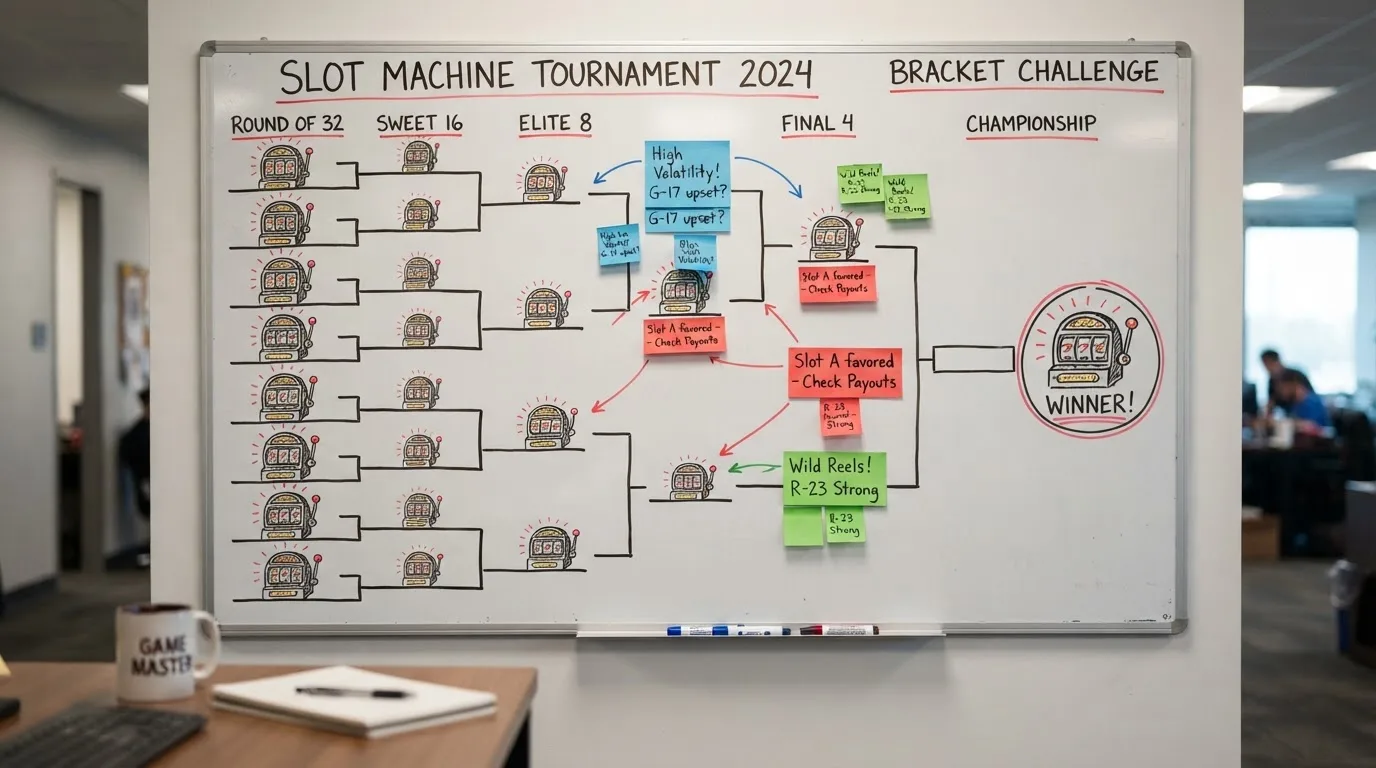
Stakes inside a tournament have to fit inside the game-cycle cap that applies to online slots generally: £5 per spin for players aged 25 and over, £2 per spin for 18-24-year-olds. A tournament run that lets a player push the stake to the cap turns more money through the same number of points, which is why high-stake runs tend to come with smaller spin allowances and low-stake runs with bigger allowances. Both routes are legal; both are pointed at different bankrolls.
Free and no-deposit tournaments
A “no-deposit tournament” means a player does not have to fund the account to take part. The casino either gives every entrant a small bundle of free spins on the chosen game, or opens a freeroll where the buy-in is waived. A freeroll pays real money, but the wagering that money has to clear before it withdraws is set by the brand running it. No-deposit tournament slots are the easiest entry point on the market, because the downside is bounded — the worst case is the time spent, not the money lost.
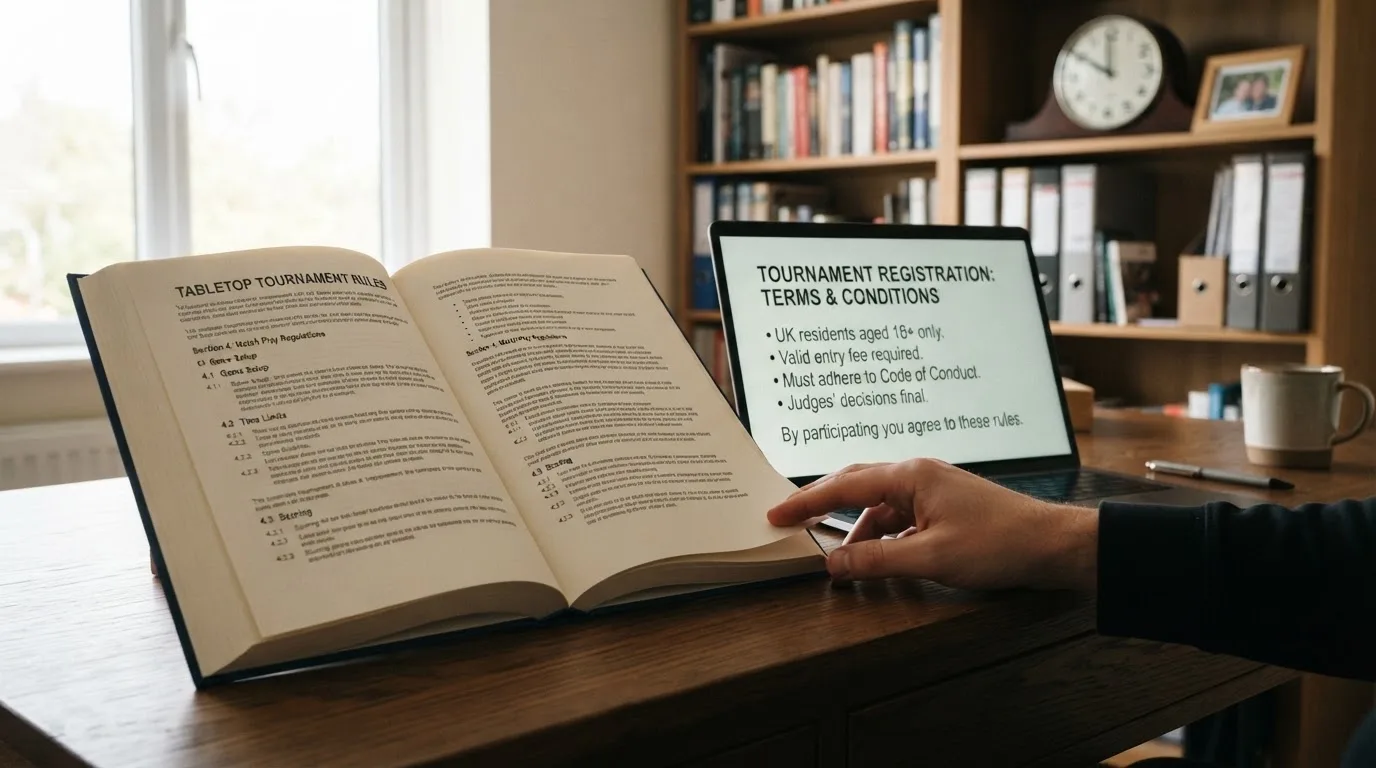
Free tournament slots are common at UK-licensed brands because they pull players through the door without a deposit card on file. They are also the kind of promotion that has changed the most under recent Commission rules. Mixed-product offers that hand a player casino spins on the back of a sports bet were banned alongside the 10x wagering cap, which has narrowed the structure a tournament can use as an incentive. The market has responded with leaderboards that run on free-spin points instead, and the prize pot tends to sit lower than the equivalent deposit-funded run because the entry barrier is lower.
The wagering cap in practice
The 10x wagering cap is the one number every tournament incentive now sits underneath. A £500 prize pool on a leaderboard pays out, for argument’s sake, £200 to the winner. The £200 carries a 10x wagering requirement — £2,000 of qualifying play — before it is withdrawable, at the maximum legal slot stake of £5 per spin that is 400 spins, which on a typical slot plays out in roughly 17 minutes at the Commission’s 2.5-second minimum spin interval. The same £200 bonus at a 30x rate — the kind of number that sat on this market two years ago — would have demanded £6,000 of play, which at £5 a spin is 1,200 spins or about 50 minutes of continuous play. That is the change the December 2025 rule actually buys: a third of the time, and a third of the turnover, for the same headline prize.
The cap does not apply to winnings from stakes a player has funded themselves; it applies to bonus funds and free-spin winnings the casino has handed over. A tournament prize paid out as bonus funds falls under the cap; a tournament prize paid out as cash, if any brand still does that, does not. The split is worth noticing on a leaderboard’s terms page, because “prize paid as bonus funds” is the more common phrasing in the current market.
Slot tournament formats: which titles and studios sit on the leaderboards
Most UK slot tournaments are run on a small set of well-known titles, because the format works best when several thousand players can hit the same game at once without the game slowing. Pragmatic Play’s Drops & Wins network sits at the top of that list — it runs across every Pragmatic slot simultaneously, with weekly and monthly leaderboards that pay cash on the top scores. NetEnt’s Reel Races, played on legacy NetEnt titles such as Starburst and Gonzo’s Quest, run on a faster cadence of around fifteen minutes per race, with smaller prizes and many more of them.
Live-game tournaments are rarer, but Evolution runs occasional live-game-show leaderboards — Crazy Time, Monopoly Live — on a similar mechanic. Live-dealer blackjack and roulette tournaments do exist, but they tend to be brand-run rather than provider-run, and the prize structure is more like a deposit-match race than a leaderboard. Live-dealer formats also have a different stake model from slots — the per-round stake is not bound by the £5 / £2 game-cycle cap, so live tournaments often run with much higher stake levels and a much smaller entrant pool.
How the leaderboard counts points
The most common ranking metric is the total win across a fixed number of spins, but two operators running “total win” leaderboards will count wins very differently. Some divide the total win by the total stake to get a multiplier, which favours small-stake high-variance play; others weigh wins by their stake size so a £5-spin win counts more than a £0.10-spin win, which favours the opposite. The terms page will say which one applies. A third metric — number of spins triggering a feature — rewards the same slots playing very differently from the first two, and rewards games with frequent small features rather than rare large ones.
A useful rule: the simpler the metric, the smaller the bankroll needed to compete. Total-win leaderboards with a fixed spin count can be played with a small bank and a long horizon; multiplier-weighted leaderboards favour players who can ride out variance with a fixed stake.
The ten best UK slot tournament casinos: how they line up
The ten brands below all hold an active GB remote casino operating licence and run slot tournaments for British players. They are not ranked by prize size or by leaderboard fairness — those figures vary from one promotion to the next — but by how the licences and domains sit on the public register as of 18 September 2026, and by what the licence account tells a player about the company behind the brand. Every brand on the list has to take part in GAMSTOP, and every one of them runs under the same 10x wagering cap and the same £5 / £2 stake limits.
The full operator set and its licence details:
| Brand | Licence holder and GB remote casino licence | Domain status on the register | Subject support |
|---|---|---|---|
| Paddy Power | PPB Games Limited · 039411-R-319335-010 | Paddy Power listed as active | — |
| Ladbrokes | LC International Limited · 054743-R-330863-014 | Ladbrokes listed as active | — |
| MrQ | Tek Fox Ltd · 060629-R-337532-004 | MrQ listed as active | — |
| Coral | LC International Limited · 054743-R-330863-014 | Coral listed as active | — |
| bet365 | Hillside (UK Gaming) ENC · 055149-R-331499-004 | bet365 listed as active | — |
| Betfred | Petfre (Gibraltar) Limited · 039544-R-319290-010 | Betfred listed as active | — |
| Casumo | Recro Limited · 061549-R-336718-002 | Casumo listed as active | — |
| 888casino | 888 UK Limited · 039028-R-319297-014 | 888casino listed as active | — |
| Jackpotjoy | Gamesys Operations Limited · 038905-R-319430-022 | Jackpotjoy listed as active | — |
| Gala Bingo | LC International Limited · 054743-R-330863-014 | Gala Bingo listed as active | — |
Three of the ten — Ladbrokes, Coral and Gala Bingo — sit under the same licence account, LC International Limited, with the licence number 054743-R-330863-014. The domains are listed separately because they trade to British players as separate brands, but the licensed body behind them is one company. A player who self-excludes through GAMSTOP against one of the three is self-excluding against all of them, and a complaint lodged with the Commission about one is handled as a complaint about the holder of the licence account that sits behind it.
Paddy Power
Paddy Power runs weekly Drops & Wins tournaments on Pragmatic Play slots, with a network-wide prize pool paid across participating brands and a smaller Paddy Power-only freeroll layer running on top. The 10x wagering cap sits on every cash prize paid as bonus funds, and the brand does not run live-dealer leaderboards. The licence is held by PPB Games Limited under account 39411, with the remote casino operating licence 039411-R-319335-010; Paddy Power is listed as an active domain. For a player who wants a known network mechanic on a UK-licensed site and is comfortable with the standard 10x wagering cycle, Paddy Power is the conservative read.
Ladbrokes
Ladbrokes runs both Drops & Wins and its own brand-run slot tournaments on a monthly cadence, often on NetEnt and Play’n GO titles. The brand shares a licence account with Coral and Gala Bingo under LC International Limited, which means self-exclusion, complaints and safer-gambling settings apply across the three at once. Ladbrokes is listed on the Commission register as active. The same £5 / £2 stake cap applies to tournament spins as to any other online slot spin in the British market.
MrQ
MrQ runs shorter, lower-prize tournaments — typically weekend runs with a few hundred pounds at the top of the leaderboard — on a smaller set of titles than the larger networks. Tek Fox Ltd holds the licence under account 60629, with MrQ is listed as active. The brand’s smaller scale means a player competes against a smaller entrant pool, which can lift the realistic chance of a paid placement; the trade-off is the smaller headline prize.
Coral
Coral runs the same network-level tournaments as its sister brands Ladbrokes and Gala Bingo, and also runs occasional Coral-only freerolls tied to the football calendar. The licence account is LC International Limited, account 54743, and Coral is listed as active. Players who already have a Ladbrokes or Gala Bingo account and want a different promotional rhythm at a sister brand will find the experience broadly similar, but the brand’s tournament calendar is its own.
bet365
bet365 runs a quieter tournament calendar than the other brands on this list, with promotions concentrated on free spin bundles rather than headline leaderboards. Hillside (UK Gaming) ENC holds the licence under account 55149, with bet365 is listed as active. For a player who wants a UK-licensed site with a wide slot catalogue but is not specifically chasing leaderboard play, bet365 is one option; for the player who wants the highest tournament cadence on a brand-run mechanic, bet365 sits behind the network brands on this measure.
Betfred
Betfred runs occasional slot tournaments alongside its sportsbook promotions, with a smaller catalogue than the major network brands. Petfre (Gibraltar) Limited holds the licence under account 39544, and the brand is listed as active. The brand’s tournament cadence is lighter than the network operators — a player who values a packed promotion calendar will find more on the Drops & Wins brands, and a player who values a brand with a more focused offering will find Betfred reasonable.
Casumo
Casumo runs a regular tournament calendar with a focus on multi-game “Reel Races” and provider-led leaderboards. Recro Limited holds the licence under account 61549, with Casumo is listed as active. The brand’s tournament mechanics vary the most from week to week, so a player who wants variety in how a leaderboard counts points finds more to compare here than on the network-level brands.
888casino
888casino runs slot tournaments on a weekly cadence, often on exclusive 888-branded titles. 888 UK Limited holds the licence under account 39028, with 888casino is listed as active. The brand’s tournament calendar sits between the network operators and the smaller brands — more frequent than Betfred, less headline-heavy than the Drops & Wins network.
Jackpotjoy
Jackpotjoy runs slot tournaments alongside its bingo product, with promotions that often bridge the two formats. Gamesys Operations Limited holds the licence under account 38905, with Jackpotjoy is listed as active. The tournament calendar is denser than the smaller brands on this list; a player who wants to mix slot play with the bingo product will find a stronger bridge here than on the pure-slot brands.
Gala Bingo
Gala Bingo shares its licence account with Ladbrokes and Coral under LC International Limited, account 54743, and runs tournaments that often bridge the slot and bingo products in the same way Jackpotjoy does. Gala Bingo is listed on the register as active. Players who already have a Ladbrokes or Coral account and want the bingo side of the same licence account will find Gala Bingo the natural next door.
The shape of the UK licensed market: who can run a tournament for British players
The Gambling Commission’s public register is the whole test of whether a brand is licensed to take British players. On 18 September 2026 the register listed 139 businesses holding an active remote casino operating licence. That is the universe of operators legally permitted to run slot tournaments for players in Great Britain — every brand on the list above is drawn from it, and every brand not on it that markets slot tournaments to British players is doing so without a Commission licence, which puts the player outside the protections that licence buys.
The register also keeps a domain list that records each website against the licence account that runs it, with one of three statuses: Active, Inactive or White Label. On 18 September 2026 the domain list recorded 1,065 active and 361 white-label entries. A white-label site trades under another company’s licence, which means the player is still playing under a Commission licence, but the operator behind the branding is different from the licence holder. The brand a player signs up to may not be the company the Commission holds accountable if something goes wrong — the licence holder is. Players who want to know who they are actually playing with can look the domain up on the public register and read the account number and licence number back from the listing.
A remote casino operating licence number on the register has the form account-R-number-suffix, where the leading six digits repeat the licence holder’s account number and the “R” marks a remote (online) licence. Every licence number in the operator table above follows that pattern. The suffix at the end of the licence number identifies the type of licence the Commission has issued; the same licence holder can hold several licence numbers under the same account, one per product.
How a UK licence governs tournament play
The Gambling Commission regulates online gambling in Great Britain under the Gambling Act 2005, which covers England, Scotland and Wales but not Northern Ireland. The Gambling (Licensing and Advertising) Act 2014 brought every operator taking British customers inside the Commission’s remit, wherever the operator is based — a Curaçao, Maltese or Gibraltar-issued licence is not a substitute. The Commission’s published Licence Conditions and Codes of Practice (LCCP), the social responsibility code and the Remote Technical Standards set the rules every licensed operator runs under.
A slot tournament run by a licensed operator for British players falls inside those rules. The £5 per-spin cap for players aged 25 and over (from 9 April 2025) and the £2 per-spin cap for 18-24-year-olds (from 21 May 2025) apply to tournament spins exactly as they apply to any other online slot spin, because a tournament spin is still a game cycle. Auto-play is banned and a slot spin may not run faster than 2.5 seconds, which means a tournament that hands out a thousand free spins will take at least 42 minutes to play through, and most tournaments set the spin allowance so that the spin-cap on the slot interval is the binding constraint rather than a player’s thumb.
The 10x wagering cap introduced on 19 December 2025 sits on tournament prize money paid as bonus funds. Mixed-product bonuses — “bet on sport, get casino spins” — were banned in the same rule change, which has narrowed what a tournament can use as a hook. The minimum age for any gambling product in Great Britain is 18; name, address and date of birth have to be verified before the first deposit or any play, and a licensed operator cannot offer anonymous play. The verification has run since 7 May 2019.
Limits on what a player can deposit
There is no state-set deposit or loss ceiling in Great Britain. The operator must prompt the customer to set a financial limit before the first deposit (from 31 October 2025), but the limit is the player’s call. Financial vulnerability checks run automatically at £150 of net deposits in a rolling 30-day window (from 28 February 2025) using public data only; wider financial risk assessments have been announced but are not yet in force.
The Commission banned the use of credit cards to fund gambling across all online and offline products in Great Britain from 14 April 2020, except non-remote lotteries paid face-to-face. Debit cards and bank transfers were unaffected. The Commission’s own research found that around 800,000 UK consumers used credit cards to gamble in 2018, and that 22% of online gamblers who used credit cards to gamble were classed as problem gamblers. The ban is the reason no licensed operator will accept a credit card deposit to enter a slot tournament — there is no credit-card route through a UK-licensed site.
What the player keeps on a win
Players pay no tax on gambling winnings in the UK; the operator pays Remote Gaming Duty, which was raised from 21% to 40% from 1 April 2026. The duty sits on the operator’s side of the counter, not the player’s. A £500 tournament prize is £500 in the player’s hands before the wagering requirement; the duty has already been paid by the operator out of its margin.
Responsible play around competitive leaderboards
A leaderboard is, by design, a mechanism that pushes a player past their planned session length. The format rewards continued play within a fixed window; a player who stops early forfeits position. The National Gambling Helpline, run by GamCare, and GambleAware are the two support services every UK-licensed casino will signpost, and they are the right place to start if tournament play is starting to push past the budget that was set.
GAMSTOP is the national online self-exclusion scheme and a mandatory condition of every online licence since 31 March 2020. Self-exclusion periods are six months, one year or five years, and they cannot be cancelled early. A player who has registered with GAMSTOP cannot enter a slot tournament at any UK-licensed operator for the period of the exclusion; the system blocks the registration at the brand rather than the player having to remember to stay away. Setting a self-exclusion is irreversible for the chosen period, which is the point.
Setting a time limit before entering a tournament is the cheapest and least intrusive of the safer-gambling steps a player can take, because most tournament mechanics are run over a fixed window anyway. A player who decides in advance that they will play the tournament for one hour, regardless of leaderboard position, has set a hard edge that the format cannot push past. A reality-check prompt will appear automatically at intervals the operator has to set, and a player can set a deposit limit, a loss limit or a session time-out at any licensed brand’s safer-gambling page.
Crypto and anonymity: the line a UK licence draws
Anonymous play is not possible at a UK-licensed site. The Commission has required name, address and date of birth verification since 7 May 2019, ahead of the first deposit or any play, and the verification step cannot be skipped. A slot tournament at a UK-licensed operator is a verified-account product, and the verification runs on the standard KYC pipeline.
Cryptocurrency deposits are not a payment route that any major UK-licensed casino offers for tournament entry. The licensed operators in this market are regulated by the Commission, which requires payment routes to be traceable to a verified account holder, and crypto sits outside that model for almost every brand. The route a player looking for crypto-funded tournament play tends to find is an offshore casino licensed outside the UK — Curaçao, Anjouan, sometimes Malta — and those operators run on their own house rules. An offshore brand does not take part in GAMSTOP, does not give the player access to the Commission’s complaints route, and does not apply the £5 / £2 stake cap. The freedom from verification is the trade the player is making, and the absence of UK protections is the cost.
A licence issued offshore is not a substitute for a Commission licence for players in Great Britain. The Commission’s stance under section 33 of the Gambling Act 2005 is that providing gambling to people in Great Britain without a Commission licence is an offence. The Commission disrupts illegal sites — cease-and-desist notices, search-engine delisting, payment and hosting referrals — but does not have ISP-blocking power, so unlicensed sites continue to operate and continue to take British players. The player is not the subject of the enforcement; the player is the subject of the loss of protection that comes from playing off-licence.
Payments and payout speed: how a tournament prize reaches the player
A tournament prize is paid out by the same payment route the player used to fund the account, with a few exceptions. The most common route at UK-licensed brands is debit card or bank transfer. UK bank transfers typically run through the Faster Payments Service, launched in 2008 and operated by Pay.UK, which moves money 24 hours a day, seven days a week, and most payments arrive instantly or within a couple of minutes; transfers can occasionally take up to two hours. The Faster Payments scheme sets a £1,000,000 per-transaction limit, though individual banks can and do impose lower limits on their customers.
Apple Pay is supported at several UK-licensed operators for deposits and, in some cases, for withdrawals. Apple Pay is developed and operated by Apple Inc. and launched on 20 October 2014, initially supporting only US-issued payment cards; UK-issued card support began on 14 July 2015. Apple Pay protects card data through tokenization, replacing the actual card number with a device-specific tokenised Device Primary Account Number and generating a dynamic security code for each transaction. Apple Pay in-store payments use near-field communication to communicate with contactless terminals, but for an online casino deposit the tokenisation step is the relevant piece — the casino never sees the player’s card number. Apple Pay is not available in every market, and a supported card from a participating card issuer is required.
AstroPay is available at a smaller number of UK-licensed operators, primarily as a deposit route. AstroPay was founded in 2009 and is headquartered in Uruguay, and operates as a global digital wallet offering online payments, virtual and physical debit cards, and peer-to-peer transfers. AstroPay’s UK entity, Larstal Limited, is an electronic money institution authorised by the Financial Conduct Authority under the Electronic Money Regulations 2011 — so a player depositing through AstroPay is depositing through a regulated UK e-money institution, even though AstroPay itself is a foreign company. AstroPay spun off its payment-processing business, dLocal, as a separate company in 2016. The company’s entities in Brazil, Denmark and the Isle of Man run under their own local regulators.
A tournament prize paid through Faster Payments reaches the player’s bank account typically within minutes; a prize paid through Apple Pay reaches the player’s card typically the same day; a prize paid through AstroPay reaches the player’s AstroPay wallet typically within minutes but the onward transfer from the AstroPay wallet to a UK bank runs on AstroPay’s own processing times rather than the casino’s. The fastest payout routes are the ones that sit on Faster Payments; the slowest are the ones that route through e-wallets with their own onward-payment window.
What to read on a tournament terms page before entering
Three lines on a tournament terms page decide almost everything the player needs to know. The first is the ranking metric — total win, weighted win, feature triggers — and what stake the metric is measured at. The second is the prize payment form — bonus funds, which carry the 10x wagering requirement, or cash, which does not. The third is the wagering requirement itself, which is now capped at 10x across the market but which can still be set at any number up to that cap. A tournament that pays the prize as cash with no wagering requirement is the cleanest form; a tournament that pays the prize as bonus funds with a 10x wagering requirement at the maximum slot stake is the most expensive form under the same cap.
The spin allowance and the spin interval are the next two figures to read. A tournament that hands out 200 spins with a 2.5-second minimum interval gives the player roughly eight minutes of play; a tournament that hands out 2,000 spins at the same interval gives 83 minutes. A player who cannot complete the spin allowance within the tournament window forfeits the unplayed spins, which means the bankroll and the time budget have to fit inside the window before the player enters.
The cost of a £200 tournament prize under the 10x cap
A £200 prize paid as bonus funds with a 10x wagering requirement at the maximum slot stake of £5 per spin — the player is 25 or over — demands £2,000 of qualifying play. At £5 a spin, that is 400 spins. The Commission requires a minimum 2.5-second spin interval, so 400 spins takes at least 1,000 seconds, or roughly 17 minutes. The same prize at the smaller stake tier for an 18-24-year-old (£2 a spin) demands the same £2,000 of qualifying play, but across 1,000 spins, which at the 2.5-second interval runs to roughly 42 minutes.
A wider read across a more typical prize band, with the same stake assumptions:
- A £50 prize at £5 a spin with a 10x wagering requirement: 100 qualifying spins, roughly four minutes at the 2.5-second minimum.
- A £500 prize at £5 a spin with a 10x wagering requirement: 1,000 qualifying spins, roughly 42 minutes.
- A £1,000 prize at £5 a spin with a 10x wagering requirement: 2,000 qualifying spins, roughly 83 minutes.
The 10x cap is the binding number on every band. A player who reads the prize headline at £500 and assumes a 30x wagering requirement, the kind of number the market carried before December 2025, will budget 250 minutes for the same prize and overcommit time against the actual 42 minutes the cap now demands. That is the kind of misreading the cap was designed to remove.
What the band means in plain terms
The wagering turnover band runs from a few minutes for a small cash prize at the top stake to roughly an hour and a half for a larger prize at the same stake, with the spin interval as the binding constraint rather than the player’s stamina. The 10x cap has collapsed the spread — what used to be a 250-minute commitment at the old 30x rate is now a 42-minute commitment at the new 10x rate for the same headline figure. A player whose time budget is the binding constraint finds the post-December market dramatically easier to plan around than the pre-December one. A player whose stake is the binding constraint — someone playing at the £2 18-24 rate — finds the time budget doubled at every band.
The assumption built into every figure above is that the player is wagering only the bonus amount and not making additional deposits during the wagering period. A player who tops up the account during the wagering cycle adds the deposit to the qualifying turnover but does not change the wagering requirement, which shortens the time per pound of qualifying turnover. The 10x cap is a ceiling on how much turnover the casino can demand, not a floor on how much the player has to turn over, and a player who is willing to fund the wagering from their own deposit clears the requirement faster than one who lets the bonus balance do all the work.
Frequently asked questions
How do online slot tournaments work at UK casinos?
A slot tournament is a fixed-window leaderboard on a chosen slot or set of slots, with every entrant given the same number of spins or the same starting credit and the top scores paid out of a fixed prize pool. UK-licensed casinos run them under the same stake caps as any other online slot — £5 a spin for players 25 and over, £2 a spin for 18-24-year-olds — and any cash prize paid as bonus funds carries the 10x wagering cap that has applied across the market since 19 December 2025.
Can I enter a slot tournament without making a deposit?
Yes, at a freeroll. UK-licensed brands run no-deposit tournaments — typically with a small free-spin bundle as the entry stake — and the prize money is real but is paid as bonus funds, which carry the standard wagering requirement. The realistic prize pool on a freeroll is smaller than the equivalent deposit-funded run, and the entrant pool is usually larger, which makes paid placement harder to reach.
What determines my ranking on a tournament leaderboard?
The ranking metric is set by the tournament’s terms and is one of three: total win across a fixed number of spins, total win divided by total stake to give a multiplier, or number of feature triggers. Total-win leaderboards favour high-variance play; multiplier leaderboards favour small-stake high-variance play; feature-trigger leaderboards favour games with frequent small features. The same brand running different tournaments can use any of the three.
How quickly are tournament prizes paid out?
A prize paid as cash typically reaches a UK bank account through Faster Payments within minutes, occasionally up to two hours. A prize paid as bonus funds is credited to the casino account instantly but cannot be withdrawn until the 10x wagering requirement has been cleared. The payment route — debit card, bank transfer, Apple Pay, AstroPay — sits on top of the prize type and does not change whether the prize is cash or bonus funds.
Do crypto deposits count towards tournament entry the same as card payments?
At a UK-licensed operator, crypto is not a payment route for tournament entry; the licensed operators on this list do not offer it. A player looking for crypto-funded tournament play finds it at offshore operators, which run on their own house rules and do not take part in GAMSTOP. The verification step that runs at every UK-licensed brand at the first deposit makes anonymous play impossible, which is the structural reason crypto sits outside the licensed market.
What tips help with slot tournament strategy?
The three lines on the terms page decide more than any tactic: the ranking metric, the prize payment form, and the wagering requirement. A total-win leaderboard is best played at the highest stake the bankroll allows within the £5 / £2 cap; a multiplier leaderboard is best played at a small fixed stake; a feature-trigger leaderboard rewards slots with frequent features over slots with rare big features. A cash prize without a wagering requirement is the cleanest form of a tournament and is worth prioritising where the brand offers one.