Daily free spins at UK casinos: the small bonus that still costs the player
A daily free spins credit is a £0.20-or-so free round on a single slot, dropped into the account of a logged-in player. It costs nothing to claim. It also does not pay out in cash, and the rule that decides how much of it converts into a withdrawable balance is the same rule the rest of the UK bonus market has lived under since 19 December 2025. That is the trade this page exists to make legible.

The headline the marketing team writes, and the reality the cashier processes, sit on opposite sides of the wagering check. A licensed UK casino can offer daily free spins because the Gambling Commission permits small bonus credits, and because the offer structure survives the wagering-rules reset that landed at the end of 2025. The same licence is what makes other features non-negotiable: name and date-of-birth verification before the first play, GAMSTOP exclusion being honoured without exception, and a prompt to set a financial limit before the first deposit.
Data current as of 8 November 2026 and checked against the Gambling Commission’s public register of remote casino operating licences.
Table of Contents
- The licence is the offer
- The 10x rule: what changed the math
- How fast is the payout, and why it doesn’t matter until the wagering clears
- What a daily free spins offer actually is
- Wagering, and what the 10x cap means in practice
- The player protections that travel with the licence
- Off the licence, off the protection
- Reading the terms before claiming
- Ranking the licensed brands that carry the daily format
- The brands behind the licences
- How the maths plays out at the 10x cap
- What the licence doesn’t do
- Gambler protection as a structural feature
- How the choice between brands actually plays
- The frame this page operates inside
- Picking the offer that fits
- Frequently asked questions on UK daily free spins
The licence is the offer
A daily free spins bonus is a marketing product. The thing that decides whether the player gets to claim it is whether the brand running the site holds an active remote casino operating licence, with the player-facing domain listed against the licence account on the public register. Without that, the bonus is not a UK bonus — it is offshore marketing aimed at UK players, and the protection the UK bonus comes with does not travel to it.
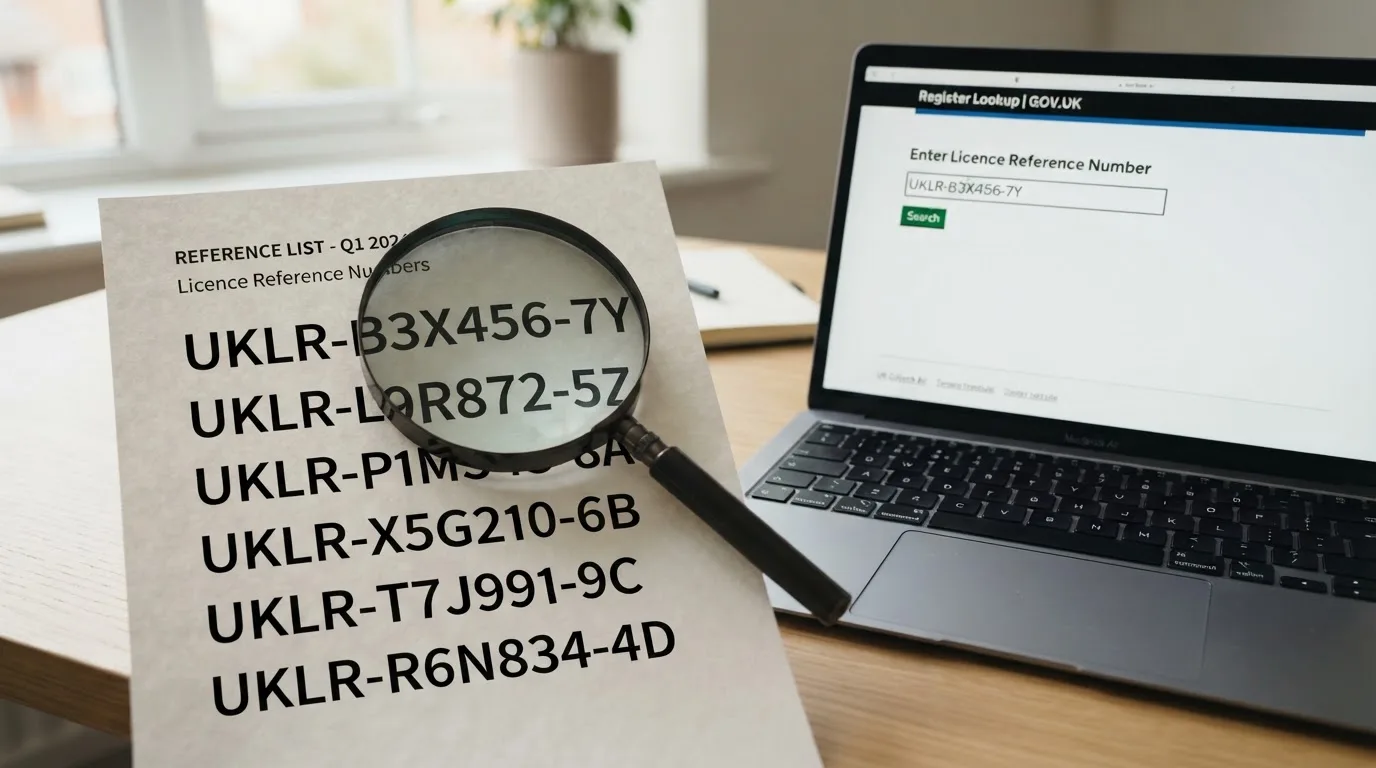
On 18 September 2026, the Gambling Commission public register listed 139 businesses holding an active remote casino operating licence, against 1,065 active domain entries and 361 white-label entries tied to those accounts. A white-label site trades under another company’s licence; an active entry means the domain is currently listed against the licence account that operates it.
A licence number has a fixed shape: it begins with the six-digit licence-holder account, then an “R” for remote, then a serial, then a suffix. So 054743-R-330863-014 is the licence for account 54743, the LC International account that runs both Coral and Ladbrokes, with the R marking it as a remote operating licence and 014 the version suffix assigned by the Commission. That format is how a reader who has never met the operator tells, from the licence alone, which company is responsible for the cashier.
What the licence buys the player is a single chain of recourse. A dispute over a withheld payout goes to the operator’s nominated Alternative Dispute Resolution provider. A pattern of unfair terms goes to the Commission, which has shown it will change the rules industry-wide if the market needs it — the 10x wagering cap of 19 December 2025 is exactly that kind of intervention. An unlicensed site offers none of it.
The 10x rule: what changed the math
Before 19 December 2025, a UK casino could advertise a free-spins bonus whose wagering requirement ran to sixty times the winnings or more, attached to a maximum-cashout cap that swallowed everything above a small ceiling. The 10x cap replaced that. Any wagering requirement on a UK-licensed casino is now capped at ten times the bonus amount, and mixed-product bonuses — a sports bet that pays out as casino free spins, say — are prohibited.
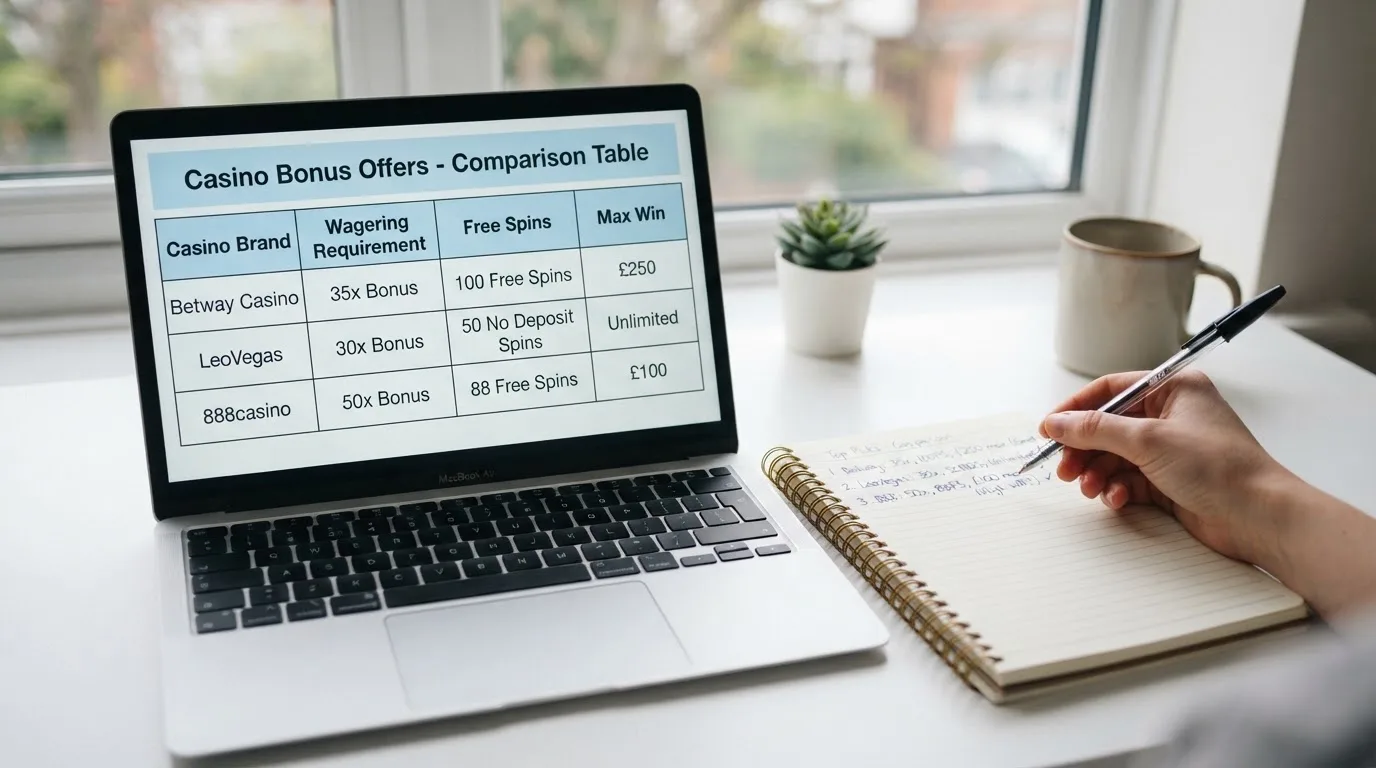
What this does to a daily free spins credit is dramatic. A daily offer typically credits 5 to 20 free rounds on a single slot at a small stake per spin. The winnings from those spins are bonus funds. At the older multiples, a £1 spin returning £10 in bonus funds would need to be turned over sixty times, £600, before any of it was withdrawable; with the 10x cap, the same £10 in bonus funds requires £100 of wagering, the spin’s stake count is lower, and the path to a cash balance is shorter by a factor of six.
The cap is not the same as removing wagering. Free-spins winnings still carry a turnover requirement, and most offers still attach a maximum-cashout figure, so a daily credit does not automatically translate into withdrawable money. But the cost-benefit calculation has swung: a £1 daily free spin whose winnings clear with £100 of qualifying play is now competitive, where at 60x the same arithmetic was a tax on the player.
The rules did not stop there. The Commission had already moved earlier on the structure of a single spin: a £5 stake-per-spin cap on players 25 and over from 9 April 2025, £2 for 18-to-24s from 21 May 2025, a 2.5-second minimum spin duration, and an outright ban on losses-disguised-as-wins — slot audio that celebrates a net-loss spin as if it were a win. The 10x cap sits on top of those, and together they rewrite what a UK online slot experience is.
How fast is the payout, and why it doesn’t matter until the wagering clears
A daily free spins credit does not produce a withdrawable balance on the day it lands. It produces bonus funds locked behind the offer’s wagering check, and a player who tries to withdraw before that check completes either gets the bonus voided or gets the bonus balance converted to a tiny cash balance after the cashier runs the conversion rule.
Once the wagering clears, a UK-licensed cashier with the funds ready will typically route a withdrawal through the Faster Payments Service, which has run 24/7 since launch in 2008 and most payments through it arrive in minutes, occasionally up to two hours, with a £1,000,000 per-transaction scheme limit that the player’s own bank can lower. That is the rail. Whether a withdrawal moves along it within minutes, hours or days is set by two things the player can partly see and partly cannot — the operator’s internal release step (a fraud and source-of-funds review, often overnight), and the receiving bank’s own processing window.
Apple Pay works at the cashier as a wallet fronting a debit card: the card is the funding source, the wallet is the rail, and tokens replace the card number at the terminal so the merchant never sees the underlying PAN. AstroPay sits further along the same spectrum — it is a global digital wallet, it has spun off a payment-processing business into a separate company, and its UK entity is authorised by the Financial Conduct Authority under the Electronic Money Regulations 2011.
What this means for daily free spins is that the deposit rail sets the upper bound on payout speed and the bonus terms set the lower bound. A player who funds through Apple Pay or a UK debit card on Faster Payments has capped their withdrawal wait on the wallet side; nothing in the offer or the licence makes that wait longer. The thing that does make it longer is the wagering requirement on the bonus itself, which is why the 10x cap matters here at all.
A credit card will not work at the cashier. Since 14 April 2020 the Gambling Commission has banned the use of credit cards to fund gambling in Great Britain — across online and offline channels — including credit cards routed through an e-wallet. Around 800,000 UK consumers used credit cards to gamble in 2018, and the Commission’s evidence at the time found 22% of online gamblers using credit cards to fund play were classed as problem gamblers. The ban routed those deposits out of the market; it also closes one of the easier customer-onboarding tricks an unlicensed site uses.
What a daily free spins offer actually is
A daily free spins offer is a small bonus credited automatically once a player logs in, on a slot the operator has nominated, for a stake the operator has set. It is a marketing product, not a prize — the operator has chosen the slot, the spin value and the wagering rules to put a daily touchpoint into the player’s routine. The credit itself is free, in the literal sense: it does not draw on the player’s cash balance, and a logged-in player with no balance can still receive it.
The shape of the offer varies operator by operator. Some run a single-slot credit of 5 to 10 spins at £0.10 to £0.20 per spin. Some scale the credit by tier, so a heavier player in the loyalty programme gets more spins or a higher per-spin stake. Some run the offer only through a promotional opt-in. The thing that does not vary is the regulatory frame: the bonus is a bonus, the wagering rules apply, and the terms attached to the winnings are what the player needs to read before clicking claim.
Two terms recur and are worth their own paragraph. The first is the maximum-cashout cap — a ceiling on what bonus funds convert into after the wagering check, applied to free-spins winnings even when the rest of the bonus terms are reasonable. The second is the eligible-game list — the slots whose playthrough counts toward the wagering requirement, and the slots it does not. A daily credit on a high-volatility game can clear slowly because the wagering contribution from that game is suppressed to 0% on some offers, leaving the wagering check to be met on a lower-RTP slot the operator has chosen.
The third term, less visible, is the time limit. Daily offers tend to expire inside 24 hours from credit if unclaimed, and bonus funds often carry a 7-day or 30-day expiry from the day they were credited. A player who logs in, sees the credit, and goes back to whatever they were doing has already decided the offer’s fate.
A bonus is not advertising. The advertisement is the front of the offer — the spin count, the slot name, the per-spin stake. The bonus is what sits behind it. Reading the second before responding to the first is the only move the player controls, and at a UK-licensed casino the wagering cap, the maximum-cashout rule and the eligible-game list are all required to be displayed before the player opts in.
Wagering, and what the 10x cap means in practice
The wagering check is turnover divided by qualifying stake: every £1 of qualifying slot play counts £1 toward the requirement, and the requirement itself is a multiple of the bonus balance. At the 10x cap, a £5 bonus balance requires £50 of qualifying slot play; a £50 bonus balance requires £500; a £500 bonus balance, unlikely from a daily free-spins credit but possible from a one-off promotion, requires £5,000.
Putting the same arithmetic onto a free-spins daily credit makes the offer legible. Twenty free spins at £0.10 each on a single slot, returning an average £3 to £6 in bonus funds at a typical 96% RTP over a long enough run, generates £30 to £60 of required wagering at the 10x cap. A player at £0.20 per spin on a higher-variance slot can see bonus funds of £10 to £15, generating £100 to £150 of wagering. Either way, the qualifying play is short, single-session territory at minimum stakes — a fraction of what the same offer would have demanded at 60x.
The slot’s RTP sets the size of the bonus balance on average. A 96% slot returns £96 for every £100 wagered across the long run; a daily credit of twenty £0.10 spins puts £2 of qualifying stake into the slot, returning on average £1.92 in spin-outcomes before any wagering check applies. That £1.92 is the bonus balance that triggers the 10x requirement, which works out as £19.20 of further qualifying play before any conversion. The numbers are small. The arithmetic is the same shape as on the welcome bonus, scaled down to a daily format.
What this scale means in practice is that the free-spins daily credit cannot carry a casino’s promotional weight alone. It is a daily touchpoint, a reason to log in, a free trial of a slot the operator would like the player to spend time with. It is also, at the 10x cap, an honest one — the wagering path is short, the maximum-cashout cap is the only material guardrail, and the eligible-game list either lets the offer clear or quietly kills it.
The 10x rule is, in that sense, the difference between a daily credit that converts into a small cash balance and one that never does. A reader looking at two daily free spins offers from two licensed brands should weight them by wagering multiple first, maximum-cashout cap second, eligible-game list third — in that order, regardless of which slot the offer advertises or how many spins the credit carries.
The player protections that travel with the licence
A daily free spins credit is a marketing product; the licence is what wraps it in a player-protection regime. The protection is real, and it is structural — it sits in the operator’s licence conditions, not in the offer’s terms.
Identity. Since 7 May 2019, name, address and date of birth have to be verified before the first deposit or any play. No anonymous play. A player on a daily free spins offer has already been through this check, which is why the offer is credited to a logged-in account rather than handed out in exchange for an email address.
Age. Minimum age is 18 across Great Britain. Northern Ireland is under separate legislation; an operator licensed by the Gambling Commission covers Great Britain (England, Scotland and Wales) and not Northern Ireland, and the Commission itself is sponsored by the Department for Culture, Media and Sport.
GAMSTOP. Every online licence in Great Britain has GAMSTOP as a mandatory condition since 31 March 2020. A player who self-excludes through GAMSTOP cannot reach the daily credit at any licensed brand; the exclusion runs for six months, one year or five years and cannot be cancelled early.
Financial limits. A licensed operator must prompt the player to set a financial limit before the first deposit, in force from 31 October 2025. There is no state-set deposit ceiling; the limit is one the player chooses and the operator must enforce. Financial vulnerability checks kick in at £150 in net deposits over a rolling 30 days, from 28 February 2025, using publicly available data — a soft early-warning before the bigger risk assessments the Commission has signalled but not yet brought into force.
Slot environment. Online slots carry a £5 per-game-cycle stake cap for players aged 25 and over from 9 April 2025 and £2 for 18-to-24s from 21 May 2025. Auto-play has been banned since 31 October 2021. A slot spin may not run faster than 2.5 seconds. Losses-disguised-as-wins are banned.
Help. The National Gambling Helpline runs through GamCare, with GambleAware funding the wider treatment and research infrastructure. A player hitting the helpline is reaching a service funded by the industry and delivered independently of any specific operator.
None of these is a feature of the daily free spins offer. They are conditions of the licence, applied across the cashier, the lobby and the slot itself. A player on a daily free spins offer is inside them whether or not the offer discloses them.
Off the licence, off the protection
A casino without a Gambling Commission licence does not have these features, and an offer on one does not gain them by being advertised at a UK player. Section 33 of the Gambling Act 2005 makes it an offence to provide gambling to people in Great Britain without a Commission licence; the Commission responds by issuing cease-and-desist notices, asking for search-engine delisting, and routing payment and hosting referrals to the relevant intermediaries. It has no power to order ISPs to block. None of those actions are aimed at the player — the player on an unlicensed site is not committing an offence — but the player is also the person with the least recourse when something goes wrong.
What the player loses at an unlicensed site is the chain that the licence provides. GAMSTOP does not extend to it, so a self-exclusion set up in good faith can be ignored by an offshore cashier. A payout dispute has no Commission complaints route and no ADR provider sitting behind the operator’s terms. A credit card ban does not apply, and a player who runs into a licensed self-exclusion can be steered by advertising onto a site whose only loyalty is to the deposit. The Commission’s own estimate at the time of the 2020 credit card ban — 22% of online gamblers using credit cards to fund play were classed as problem gamblers — gives a sense of the population the offshore market is interested in.
A daily free spins offer is the gentlest end of that funnel. It costs nothing to claim and a player who loses interest loses nothing. The cost is the slow drift to a cashier without a licence, where the same daily habit runs without the protection the UK licence would have given it.
Reading the terms before claiming
A daily free spins offer is short — small spin count, small stake, short wagering path — and a player who reads three numbers before clicking claim will know whether the offer is worth the time.
First: the wagering requirement. At the 10x cap that has been law since 19 December 2025, the requirement is ten times the bonus balance. If the offer does not state a multiple, or if it states one higher than 10x, the offer is not what the regulation allows and the player should treat it as a sign to read the rest of the terms carefully.
Second: the maximum-cashout cap. A daily credit whose bonus funds convert into withdrawable money is capped at whatever the offer states. £10, £20, £50 — the figure varies. There is no rule against a cap; there is a rule against hiding the cap behind marketing language that suggests the winnings are uncapped.
Third: the eligible-game list. A daily credit is on one slot; the wagering requirement, however, is met on whichever slots the offer says qualify. A list that excludes the high-RTP slots and qualifies only a small set of low-RTP games is a list that quietly inflates the cost of clearing the bonus.
What the player is not reading, and does not need to, is the licence itself — the licence has already done its work by allowing the offer onto a UK cashier. The terms the player does read are the three that decide whether this particular offer rewards the player’s time.
Ranking the licensed brands that carry the daily format
The brands below are taken from the Gambling Commission’s public register, each as an active domain against the licence account that runs it. Several share an owner — Coral, Ladbrokes and Gala Bingo all sit under LC International Limited — and they are not independent operators for that reason. Every brand on this list is GB-licensed and inside GAMSTOP, which is the floor; the daily free spins market is ungated above it.
The table shows what the register carries for each brand and what it doesn’t. None of the entries below confirms that the brand runs a daily free spins offer — the Commission’s domain list records licence and domain status, not promotional cadence — and the table holds no-data on subject support for that reason. A reader who wants to know whether a brand runs a daily credit should check the brand’s own promotions page; the licence tells them only that the brand is allowed to.
| Brand | Licence holder and GB remote casino licence | Domain status on the register | Subject support |
|---|---|---|---|
| Coral | LC International Limited (account 54743); 054743-R-330863-014 | Active | — |
| Midnite | Dribble Media Limited (account 42647); 042647-R-321653-022 | Active | — |
| 32Red | Platinum Gaming Limited (account 45322); 045322-R-324275-019 | Active | — |
| BetVictor | BV Gaming Limited (account 39576); 039576-R-319370-028 | Active | — |
| MrQ | Tek Fox Ltd (account 60629); 060629-R-337532-004 | Active | — |
| William Hill | WHG (International) Limited (account 39225); 039225-R-319373-015 | Active | — |
| PokerStars | Stars Interactive Limited (account 39108); 039108-R-319334-026 | Active | — |
| Betfred | Petfre (Gibraltar) Limited (account 39544); 039544-R-319290-010 | Active | — |
| Grosvenor Casinos | Rank Interactive (Gibraltar) Limited (account 57924); 057924-R-334666-005 | Active | — |
| Ladbrokes | LC International Limited (account 54743); 054743-R-330863-014 | Active | — |
The table collapses onto three observations. First, the licence identifiers are not duplicated at random — Coral and Ladbrokes share a licence because they share a licence-holder company, and that is a corporate fact rather than an oversight in the table. Second, none of the brands in the reviewed set carries a higher-tier licence than the others; they are all GB-licensed remote casino operating licences, and a player on any of them has the same protection regime. Third, the subject-support column is empty across the board, because the register does not record promotional cadence and no entry here is evidence of a daily offer.
What the table cannot say, and what matters more than the licence identifier, is whether a given brand has built a daily free spins credit into its promotional rotation. That information is on the brand’s own promotions page and changes week to week. A player who wants the offer, not the licence, has to look there.
The brands behind the licences
Coral
Coral sits on a licence that has been operating since the Commission’s remote-licensing regime took effect, and the licence-holder — LC International Limited — runs several of the better-known GB-licensed brands. The active domain status on the register is current. What Coral chooses to promote on any given day is on its own promotions page; the register confirms only that the cashier is GB-licensed and inside the same regulatory frame as the rest of the brands in this table.
For a player weighing a daily free spins credit on Coral, the practical questions are the standard three: what is the wagering multiple, what is the maximum-cashout cap, what is the eligible-game list. The licence itself is not in doubt.
Midnite
Midnite is a smaller brand on a separate licence-holder account — Dribble Media Limited — which makes its operations cleanly traceable to a single accountable company. The remote casino operating licence is current and the domain is active on the register. The cashier is GB-licensed and the daily free spins credit, if offered, runs through the same 10x cap as anywhere else.
The brand’s relative size is what it is worth flagging. Smaller operators do not always carry the same promotional cadence as the larger groups, and a player who prefers a daily touchpoint to a one-off welcome package should check the brand’s promotions page directly.
32Red
Platinum Gaming Limited runs 32Red on its own licence account, separate from the LC International group, separate from the Rank Interactive group. That makes the brand identifiable to a single company for complaints and ADR purposes. The licence is current on the register.
32Red has historically been associated with a more limited promotional rotation than some of the wider groups. A player looking specifically for a daily free spins credit should check the live offer before assuming the cadence is daily. The licence confirms the regulatory frame, not the schedule.
BetVictor
BetVictor runs on a BV Gaming Limited licence and the domain is active on the register. The brand is a fixture in the UK market and has run a mix of welcome offers, free-bet credits and free-spins promotions. Whether the brand runs a daily free spins credit at any given time is a question for the live promotions page; the register confirms only that the cashier is licensed to run one.
For a player who already has a BetVictor account, the daily credit is a marginal reason to log in. For a player choosing between BetVictor and another brand on this list for the daily format specifically, the deciding factor is the offer terms — wagering multiple, maximum-cashout cap, eligible-game list — not the licence.
MrQ
MrQ runs on a Tek Fox Ltd licence, a smaller operator by account size. The licence is current and the domain is listed as active. MrQ has positioned itself publicly as a no-wagering brand on some of its offer types — and where a no-wagering offer exists, the arithmetic is different from the 10x-cap arithmetic on this page. A no-wagering daily credit returns bonus funds as cash without a turnover requirement, which is the best offer shape the regulation currently allows.
For a player choosing on this page’s terms — wagering multiple, maximum-cashout cap, eligible-game list — MrQ is the brand to check first. The licence is clean, the operator is small enough to be identifiable to a single company, and the brand’s promotional positioning suggests the daily credit, if offered, will be on terms more favourable than the 10x-cap baseline.
William Hill
WHG (International) Limited runs William Hill on a long-standing licence account. The brand is one of the largest in the UK market by player base and the licence is current. William Hill has run free-spins promotions in the past, including offers on the welcome package and on event-driven campaigns.
A daily free spins credit on William Hill, if current, sits inside the same 10x cap as the rest of this set. A player who is already a William Hill customer and who logs in daily will see what the brand currently credits; a player choosing William Hill for the daily credit specifically should weigh the offer terms against MrQ and 32Red’s positions on the same axis.
PokerStars
Stars Interactive Limited runs PokerStars on its own account. The brand is best-known for poker, but the licence on the register is a remote casino operating licence, which means the cashier is licensed to run casino products including slots — and therefore daily free spins credits, where offered.
PokerStars’ promotional cadence on the casino side has historically been lighter than the dedicated casino brands, and a player choosing PokerStars for a daily credit should expect to check the promotions page rather than to assume one is running. The licence is in order; the schedule is the question.
Betfred
Petfre (Gibraltar) Limited runs Betfred on its own account, separate from the LC International group and separate from the Rank Interactive group. The licence is current on the register. Betfred has run free-spins promotions tied to the welcome package and to event-driven campaigns; a daily credit is not a brand signature and a player choosing Betfred for the daily credit specifically should check the promotions page first.
The licence’s clean status does the work that licences do: a BetFred daily credit, if current, sits inside the same regulatory frame as the rest of this set. What BetFred chooses to credit, and on what terms, is the brand’s call.
Grosvenor Casinos
Rank Interactive (Gibraltar) Limited runs Grosvenor Casinos on its own account, separate from the LC International group. The licence is current. The brand carries a land-based identity through the Grosvenor casino estate, and the online cashier has run promotional campaigns tied to that identity — not always a daily free spins credit in particular.
For a player who already plays at Grosvenor’s tables, the online daily credit is a marginal reason to log in to the slot product. For a player choosing Grosvenor specifically for a daily credit, the licence confirms the regulatory frame and the offer itself is a question for the live promotions page.
Ladbrokes
Ladbrokes sits on the same LC International Limited licence as Coral, both against account 54743. The shared licence is a corporate fact; a complaint about either brand runs against the same licence-holder, and any ADR action against one is an ADR action against both. The licence and domain are both current on the register.
A player choosing between Coral and Ladbrokes for a daily free spins credit is choosing between two brands under one company, and the differentiator is the offer, not the licence. Check the live promotions page on each and pick by the wagering multiple, maximum-cashout cap and eligible-game list.
How the maths plays out at the 10x cap
A daily free spins credit at a typical UK-licensed casino can be modelled as a band of outcomes, not a single number — because the player’s choice of stake, the slot’s RTP, and the run of outcomes on that slot all vary. What the 10x cap does is compress the band.
A 20-spin daily credit at £0.10 per spin puts £2 of qualifying stake into the slot. At a 96% RTP — the regulator’s published threshold for legal UK online slots — the long-run return on £2 of stake is £1.92. That is the bonus balance the wagering check applies to. At the 10x cap, the qualifying play needed to convert the bonus balance into withdrawable funds is £19.20.
A heavier offer — 10 spins at £0.50 per spin on a higher-variance slot — puts £5 of qualifying stake into the slot, returns on average £4.80 in spin-outcomes at the long-run RTP, and triggers £48 of qualifying play at the 10x cap. The bonus balance is larger; the wagering path is proportionally larger too.
Stretched in either direction, the band sits inside the same shape. The minimum-stake end of the band is ~£20 of qualifying play, the maximum-stake end is ~£50 or more, and within that band the actual bonus balance on any given day depends on the slot, the stake and the run of outcomes. The thing that does not vary is the 10x multiple, and the thing that does vary is the maximum-cashout cap that decides what portion of the cleared balance is actually withdrawable.
A £10 maximum-cashout cap is the most common baseline for a daily free-spins offer. A player who clears £30 of bonus funds and converts them finds £10 in the cash balance and the rest swallowed by the cap. A player who clears £5 converts the full £5. The cap is the boundary that decides whether the offer pays out — not the wagering multiple, on an offer this small.
What the licence doesn’t do
The licence does not create promotional offers. It does not put a daily free spins credit into a player’s account. It does not pay out faster or slower than a competitor’s cashier, except where the licence conditions restrict a particular payment method or a particular rail. The licence is a permission and a constraint; the offer is what the operator chooses to do within it.
A reader looking at two licensed brands for a daily credit should not assume that both run one. The register confirms that both may run one; the promotions page on each confirms whether they do. The brand who runs a credit on 10x with a generous maximum-cashout cap is a stronger offer than the brand who runs a credit on 10x with a tighter cap, regardless of the slot name in the headline.
Gambler protection as a structural feature
A daily free spins credit, like any bonus, can sit at the centre of a gambling harm story. The Commission’s own interventions on credit cards in 2020 — a complete ban on funding gambling by credit card across online and offline channels — were driven by evidence that 22% of online gamblers using credit cards to fund play were classed as problem gamblers. The figure was a regulator telling an industry that a segment of its deposit base was, statistically, a problem population it should not be reaching.
The 10x cap of 19 December 2025 sits inside the same logic. Bonus terms that require sixty times the bonus balance in qualifying play are a tax on the player who can least afford it, and the Commission chose to remove that tax by rule. A daily free spins offer at 10x is one outcome of that rule; it is the kind of bonus a player can clear in a single session without an extended play-through, and that is the point.
GAMSTOP does its own structural work. A player who self-excludes through the national scheme is locked out of every licensed online operator in Great Britain for six months, one year or five years. The exclusion cannot be cancelled early and cannot be circumvented by opening a second account at a sister brand under the same licence-holder. An unlicensed brand does not honour GAMSTOP, which is the structural reason an offshore site remains attractive to a player the scheme has excluded.
The cash ceiling on the bonus is part of this too. The maximum-cashout cap on a daily free spins offer — typically £10 to £20 for a daily offer, larger for a one-off welcome — is the boundary that decides whether a player’s good run converts into a withdrawal or stops at the cashier. The cap is not consumer-friendly in the abstract, but in combination with the 10x multiple it keeps a daily credit honest. A higher cap with a higher multiple would not.
How the choice between brands actually plays
A reader who wants a daily free spins credit is choosing between brands, and the choice reduces to three numbers: wagering multiple, maximum-cashout cap, eligible-game list. The first two are governed by the 10x cap and the operator’s own commercial decision; the third is set by the slots the operator chooses to qualify.
A 10x-multiple offer with a £20 maximum-cashout cap and a wide eligible-game list is the best offer shape the regulation currently allows. A 10x-multiple offer with a £5 cap and a narrow eligible-game list looks the same on the marketing page and pays out worse in practice. Both are legal; both are licensed; both are honest. The reader’s job is to read the second before clicking the first.
The brand choice below that point is settled by other things. A player who already holds an account at William Hill has the cashier set up, the deposit method registered, the slot preference noted. For that player, the marginal cost of checking William Hill’s daily credit and acting on it is lower than the cost of opening a new account at MrQ for the same offer. A new player, choosing from scratch, would weigh MrQ’s stated no-wagering positioning against the rest of the field first, and the LC International brands (Coral, Ladbrokes, Gala Bingo) next because the shared licence means a complaint about one reaches the same company that runs the others.
The frame this page operates inside
The market is what it is. On one side, a small bonus that lands in the account every day, debited of nothing and credited of a small spin on a slot the operator chooses; on the other, a wagering requirement that decides what proportion of the bonus funds convert into withdrawable money, and a maximum-cashout cap that decides whether the conversion actually pays out. The 10x cap has compressed the first side of that into a single-session cost. The maximum-cashout cap has held the second side stable.
What the licence adds is the layer underneath the offer. A player on a UK-licensed daily free spins credit has identity verified, age verified, GAMSTOP-enforced, financial-limit-prompted and slot-environment-controlled. A player on an unlicensed offer has none of those. The frame, then, is this: the daily free spins offer is the marketing, the licence is the floor, and the wagering terms are the trade. Reading the trade before claiming is the only thing the player controls.
Picking the offer that fits
The brands on this list are not interchangeable. A reader who plays slots casually and is happy with a small daily touchpoint will land differently from a reader who plays seriously and weights a no-wagering daily offer above everything else. The first reader is choosing on convenience: an existing account, a familiar cashier, a slot the reader already enjoys. The second reader is choosing on terms: a no-wagering offer beats a 10x offer, all else equal, regardless of the brand running it.
Mid-range players — the centre of the UK slot audience — fall between those two and are best served by a 10x-multiple offer with a generous maximum-cashout cap and a wide eligible-game list, on a brand the player already has an account with. The licence frame does the protection work. The promotional terms do the value work. A reader who reads both gets the offer the regulation is built to deliver.
The summary: a daily free spins offer at a UK-licensed casino is a small bonus, governed by the 10x wagering cap, set inside a licence frame that puts GAMSTOP, identity checks and financial limits on the cashier. The brands on this list all meet the frame; the differences between them are in the promotional choices each operator has made, and on those, the promotions page is the only document worth reading.
Frequently asked questions on UK daily free spins
How do daily free spins without a deposit actually work?
A daily free spins offer credits a small number of spins — typically 5 to 20 — on a single slot chosen by the operator, at a stake set by the operator. The credit appears in the player’s account on login and the winnings from the spins convert to bonus funds. Those funds are not withdrawable until the offer’s wagering requirement has been met, and most offers attach a maximum-cashout cap that limits how much of the cleared balance can be withdrawn.
Do daily free spins come with wagering requirements at UK casinos?
Yes. The Gambling Commission’s social responsibility code caps wagering requirements at 10x the bonus amount from 19 December 2025, but the requirement still applies. The free spins credit itself is free to claim; the winnings from the spins are bonus funds that must be turned over before they convert to a withdrawable cash balance.
Are daily free spins offers only for new players?
No. Most UK-licensed casinos run daily free spins as a logged-in-player incentive rather than a new-player one. A welcome offer is typically a one-off credit at registration; a daily credit is a recurring touchpoint designed to bring an existing player back. Some brands gate the daily credit by loyalty tier or by recent activity, and those gates are part of the offer’s terms.
Which UK-licensed casinos offer daily free spins?
The brands on this page — Coral, Midnite, 32Red, BetVictor, MrQ, William Hill, PokerStars, Betfred, Grosvenor Casinos and Ladbrokes — are all GB-licensed and all licensed to run slot products including daily free spins offers. Whether any of them is running a daily credit on any given day is a question for the brand’s own promotions page, which the operator updates regularly. The licence confirms the brand can run the offer, not that it is currently doing so.
Is there a cap on winnings from daily free spins?
Yes. Most daily free spins offers attach a maximum-cashout cap on the bonus funds that can be converted into a withdrawable cash balance, typically £10 to £20 for a daily credit. The cap is the boundary that decides whether a strong run of spins pays out anything at all — a player who clears £5 of bonus funds converts the full £5, while a player who clears £30 may find only the cap amount in the cash balance. The cap is set by the offer’s terms and is required to be displayed before the player opts in.
Does a UK casino need a Gambling Commission licence to offer daily free spins?
Yes. Any operator providing gambling services to customers in Great Britain needs a Gambling Commission licence, and online casino is a licensable activity. The Commission’s public register records the licence account, the licence number, and the active domains running against it. A daily free spins offer at a brand without that entry on the register is not a UK offer, and the protections that come with the licence do not travel with it.