Low wagering casino bonuses in the UK after the 10x cap: what the offer actually costs you
The phrase “low wagering bonus” used to be a marketing trick. Most deposit bonuses came with a 35x or 40x playthrough on the bonus amount, and operators leaned on the small-print to soften the impression that anything else was possible. That market no longer exists. From 19 December 2025, the Gambling Commission capped wagering requirements on deposit bonuses at 10x for every operator it licences in Great Britain, and the cap sits beside a separate ban on mixed-product bonuses (the “bet on sport, get casino spins” construction that used to launder a high effective wagering through a low one). What counts as low is now a smaller question than it was — and what still separates a genuinely low offer from a merely compliant one is the question this page works through.
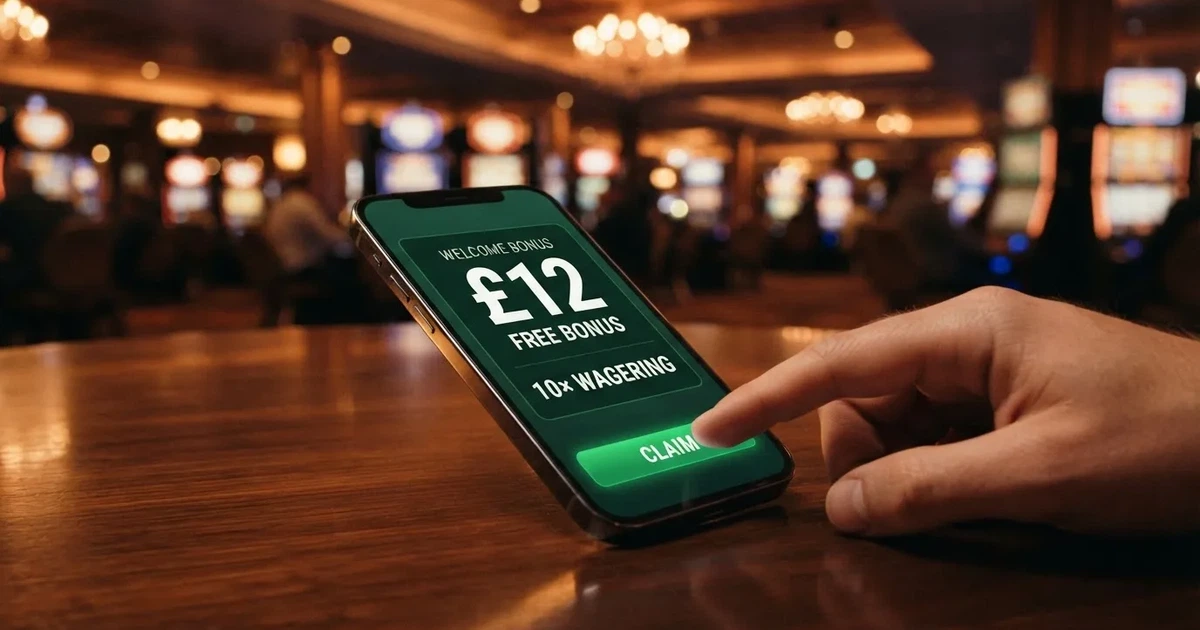
Data current as of 8 November 2026, verified against the Gambling Commission’s public register of gambling businesses and the LCCP conditions in force on that date.
Table of Contents
- Why the 10x cap changed what “low” means
- The legal frame every low wagering offer sits inside
- The protection a UK player actually has
- Payments, payout speed, and the deposit side of a no-deposit bonus
- How a low wagering bonus is actually built
- What a 10x playthrough actually takes in time and money
- The mechanics the bonus page does not usually explain
- How the 10x cap interacts with mixed-product bonuses
- Side-by-side: ten UK-licensed sites and where they sit on a low wagering bonus
- What the register tells you and what it doesn’t
- What to look for in a low wagering offer once the licence is settled
- How the offshore alternative compares
- What changed for the player in 2026
- What a low wagering bonus is worth, in one line
- Frequently asked questions
Why the 10x cap changed what “low” means
Until late 2025, “low wagering” was a relative term. An offer at 20x sat alongside one at 50x, and a marketing writer called the 20x figure low because nothing worse sat near it. The Commission treated that as a problem worth fixing, because a high wagering requirement is one of the cleanest ways to convert a bonus into expected loss without the customer noticing. A £100 bonus at 40x on a 96% RTP slot means £4,000 of turnover before withdrawal — roughly £160 of expected house edge over the playthrough, on top of the £100 the player never actually owned.
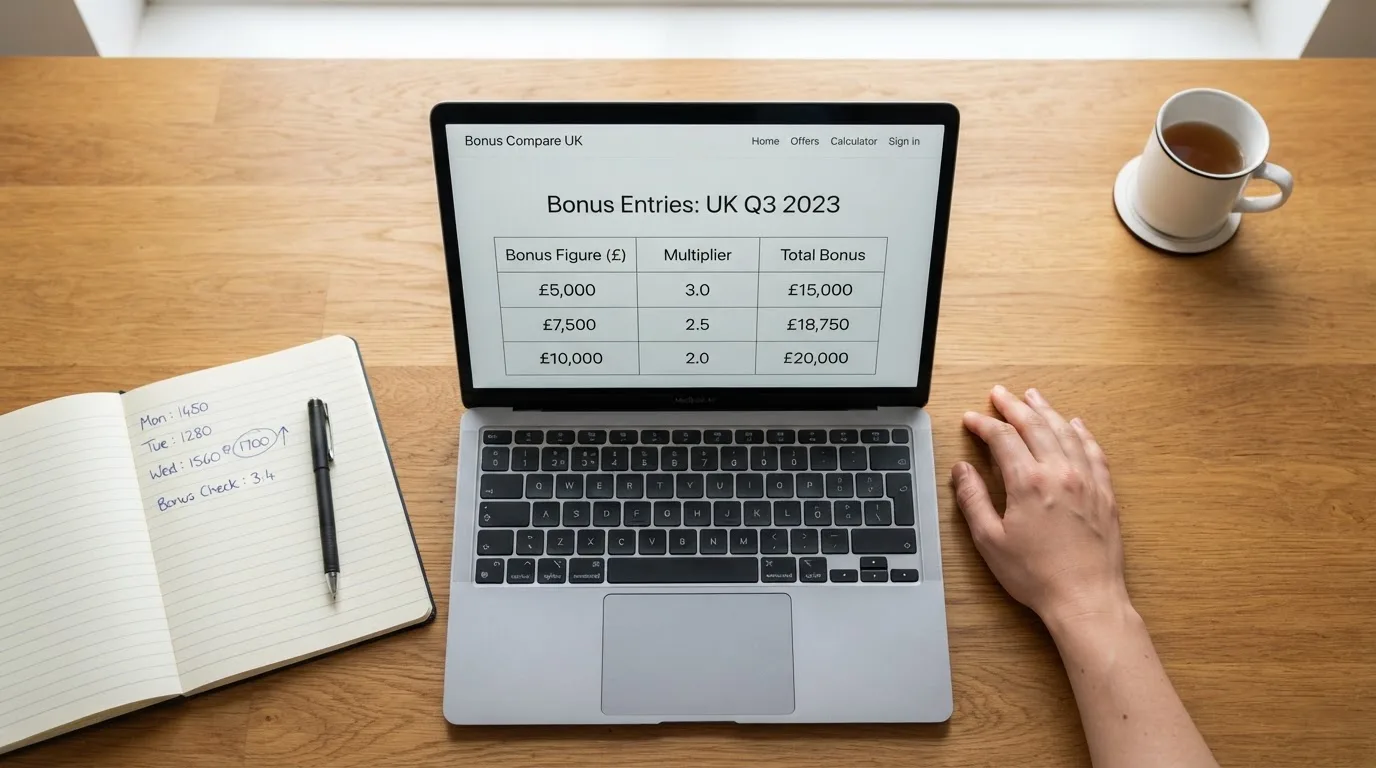
The new code makes that harder by writing the ceiling into the licence conditions. The headline is 10x; the mechanic that matters is what the multiple applies to. Where older offers multiplied the bonus plus the deposit together, current UK rules require the multiple to apply to the bonus alone (deposit-plus-bonus wagering was already restricted and is now narrowed further under the same code). So a £100 bonus at 10x asks for £1,000 of qualifying turnover — and the smaller the multiple, the closer the offer sits to break-even on a typical slot.
There are two things that haven’t changed. The RTP of the game still determines the house edge, and the wagering requirement still measures turnover, not loss. A low multiple shortens the distance between claiming a bonus and being allowed to withdraw; it does not give the player an edge. The 10x ceiling is a cap on marketing excess, not a guarantee of value.
The legal frame every low wagering offer sits inside
Every site that takes a customer in Great Britain on a casino product needs a Gambling Commission operating licence. That licence is the reason a deposit bonus at all can be advertised, and it is the reason the 10x cap exists at all. Two layers are worth separating.

The Gambling Act 2005 creates the framework and the Commission. The Gambling (Licensing and Advertising) Act 2014 closed the loophole that let operators based abroad serve British customers on a Maltese or Curaçao licence alone — a site taking GB play now needs a Commission licence wherever it is incorporated. The public register of gambling businesses is the test of whether a brand holds one. On 18 September 2026 the register listed 139 businesses holding an active remote casino operating licence, against 1,065 active website domains and 361 white-label sites that trade under another company’s licence.
A remote casino licence number has a recognisable shape. It reads account-R-number-suffix — the six-digit account number repeats the licence holder’s, the R marks it as remote (online), and the trailing suffix tracks variations and renewals. MrQ’s domain sits against account 60629 (Tek Fox Ltd) and licence 060629-R-337532-004. bet365 sits under Hillside (UK Gaming) ENC on 055149-R-331499-004. Paddy Power and Betfair share PPB Games Limited on 039411-R-319335-010 — never present them as two separate licensees, because they aren’t. William Hill sits under WHG (International) Limited on 039225-R-319373-015. BetVictor under BV Gaming Limited on 039576-R-319370-028. Sky Vegas under Bonne Terre Gaming Limited on 065519-R-339675-002. Virgin Games is a white-label of Gamesys Operations Limited on 038905-R-319430-022. Gala Bingo under LC International Limited on 054743-R-330863-014. PokerStars under Stars Interactive Limited on 039108-R-319334-026.
The licence carries obligations a player notices at the cashier. Identity is verified before the first deposit — name, address and date of birth — and a £150 net-deposit trigger over a rolling 30-day window runs a financial vulnerability check against public data only (in force from 28 February 2025). Anonymous play is not a thing a Commission-licensed site can offer. The same licence is why GAMSTOP works: self-exclusion periods of six months, one year or five years are a condition of every online operating licence, and the period cannot be lifted early by the customer or the operator.
The protection a UK player actually has
The safer-gambling architecture around a low wagering bonus is older than the 10x cap and largely unchanged by it. Three pieces matter most.
GAMSTOP is the national self-exclusion register and every online operator the Commission licences must take part. A self-exclusion is final for the chosen period; it is not a cooling-off, it is a barrier. The register is the mechanism that makes a single exclusion cover every licensed site at once, which is why no low wagering bonus — however generous — is a substitute for opting out at the source.
Deposit limits are not state-set in the UK. There is no statutory ceiling on a single deposit or on monthly loss. What the licence requires instead is that the operator prompt the customer to set a financial limit before the first deposit (in force from 31 October 2025). The limit is the customer’s to set, and the operator’s to honour. A low wagering bonus that flatters a player into staking more than the limit they set is a marketing failure the Commission can act on, but the limit itself sits with the player.
Reality checks and game speed are also licence-bound. Auto-play on slots has been banned since 31 October 2021; a spin cannot resolve in under 2.5 seconds; “losses disguised as wins” — the construction where a spin pays out less than the stake to a winning tune — are banned on the same basis. The £5 maximum stake per game cycle for players 25 and over (from 9 April 2025) and £2 for 18-24-year-olds (from 21 May 2025) sit in the same family: they cap the rate at which a bonus can be converted into turnover, which directly affects how long a 10x playthrough takes at the table.
Where help sits if any of this goes wrong: GamCare runs the National Gambling Helpline, and GambleAware funds treatment and education across Great Britain. Both are free. Both are independent of any operator.
Payments, payout speed, and the deposit side of a no-deposit bonus
The no-deposit variant of a low wagering offer sits inside the same payments frame as a deposit offer, with one important wrinkle. A no-deposit bonus costs the operator money before the customer has staked anything, which is why the wagering multiple on a no-deposit bonus is typically higher than the 10x ceiling that now binds deposit offers — the cap applies to deposit bonuses, and the no-deposit market still sets its own multiples, often in the 20x-65x range on the bonus amount alone. A reader looking for the cheapest playthrough in absolute terms should still expect to find it on a deposit offer, not on a no-deposit one.
The deposit itself is where most of the practical friction lives. Credit cards have been banned for gambling in Great Britain since 14 April 2020, and the ban reaches credit cards routed through e-wallets as well as direct card deposits. Debit cards and bank transfers are unaffected, and bank transfers within the UK typically clear through the Faster Payments Service — a 24/7 scheme operated by Pay.UK that usually settles within minutes, occasionally up to two hours, with a £1,000,000 per-transaction scheme limit (individual banks set their own ceilings lower). Apple Pay, launched on 20 October 2014 and supporting UK cards from 14 July 2015, protects card data through tokenisation — replacing the actual card number with a device-specific token and a dynamic security code per transaction — and authenticates in-store payments by a double-click of the side button on Face ID models and the Home button on Touch ID models. AstroPay, founded in 2009 and headquartered in Uruguay, runs a UK electronic money institution (Larstal Limited) authorised by the Financial Conduct Authority under the Electronic Money Regulations 2011, with parallel licences in the Isle of Man, Brazil and Denmark.
None of those rails change the maths of a bonus. They change how long the customer waits between depositing and playing, and how long between requesting a withdrawal and being able to spend it. A low wagering bonus is no faster to clear than a high one if the deposit takes three days to clear, and it is no use at all if a withdrawal stalls for the same reason.
How a low wagering bonus is actually built
Three terms determine what a low wagering bonus costs the player. The first is the multiple. The second is what the multiple applies to — bonus alone, or bonus plus deposit. The third is the games the wagering can be cleared on, and the contribution each game makes.
On the multiple, the post-19-December-2025 UK ceiling is 10x on the bonus. An offer at 10x on a £100 bonus asks for £1,000 of qualifying turnover. An offer at 20x on a £50 bonus asks for £1,000 of qualifying turnover too — same distance, half the bonus, same effective cost. The multiple tells you the distance; the bonus tells you the size of the prize at the end of it.
On the basis, the rule that the multiple applies to the bonus alone is what makes the 10x cap materially different from older offers that wrapped the deposit in. A £100 deposit plus a £100 bonus at 10x on the bonus alone is £1,000 of turnover. The same headline at 10x on deposit-plus-bonus would be £2,000 — twice the playthrough for the same headline number. Older comparison tables buried this distinction. The current LCCP does not.
On game contribution, slots typically contribute 100% of each stake to wagering; table games and live casino usually contribute less, sometimes nothing. The fine print is where a 10x offer can quietly become a 20x one in practice. A player who wants to clear the bonus on blackjack at 10% contribution needs to generate ten times the turnover to clear the same £1,000 — and the house edge on blackjack is lower than on a slot, so the expected cost per spin is also lower. The trade is real: a slower clearance at a lower edge is not always the worse deal.
The phrase “low wagering” is therefore doing three jobs at once. It describes the multiple. It implies a basis — bonus alone, not deposit-plus-bonus. It hints at game contribution — and the player who skips the contribution table discovers the cost of skipping it on the first withdrawal request.
What a 10x playthrough actually takes in time and money
A £100 bonus at 10x on bonus alone is £1,000 of qualifying turnover. On a 96% RTP slot at the £5 maximum stake a 25-or-over player is allowed, that is 200 spins — each spin £5, each spin clearing £5 of wagering. At the licence-mandated minimum spin duration of 2.5 seconds, 200 spins take roughly 8 minutes 20 seconds of pure spinning; in practice the time is longer because the player chooses stakes, opens menus, waits for animations, and re-reads the bonus terms they should have read first. A working estimate for clearing this bonus in a single quiet session is fifteen to twenty-five minutes, not the eight the pure-spin math produces.
The expected cost sits at the other end. On a 96% RTP slot, every £1 staked returns 96p on average; the missing 4p is the house edge. Over £1,000 of turnover the expected loss is £40 — and that sits on top of any money the player deposits to fund the bonus-eligible stake. The offer is not a way to win £100 of bonus money. It is a way to spend £40 of expected house edge in exchange for a chance to convert the £100 bonus into withdrawable cash. The arithmetic is honest; the framing rarely is.
There is no figure for what a no-deposit bonus costs in expected loss at the same 10x rate, because the no-deposit market is not bound by the deposit cap and the operator chooses its own multiple. As a working band — derived from typical industry practice and stated only as a band, not as a guarantee — a no-deposit £10 bonus at 35x on the bonus alone asks for £350 of turnover and carries an expected loss in the £10-£15 range on a 96% RTP slot; a £20 bonus at 50x asks for £1,000 of turnover and an expected loss of £30-£45 over the playthrough. These bands are illustrative — the operator sets the multiple and the games that count, and the player reads those terms before staking. What the band shows is the shape of the trade: a no-deposit bonus gives the player the operator’s money at the cost of a longer playthrough at a higher expected loss per pound of bonus.
The sharper line is what changes when the wagering clears. Once the playthrough is complete and the bonus is in the withdrawable balance, the player faces the same game they faced before they took the bonus — and the house edge does not disappear. A player who treats the bonus as a runway to a different game than the one they would have played anyway has spent £40 of expected loss on a different game. That is the cost the headline hides.
The mechanics the bonus page does not usually explain
Three mechanics recur on UK bonus terms, and they decide whether a 10x offer is the bargain it looks like.
Maximum stake while wagering. A bonus term of “£5 maximum stake per spin while the bonus is active” matches the slot stake cap for over-25s anyway, and sits tighter for younger accounts. A term of “£2 maximum stake” is the under-25 cap in another guise. A term that drops the cap to £1 or 50p while wagering tightens the playthrough — fewer spins per minute of clock time, more sessions, more opportunities for the wagering clock to expire.
Maximum cashout from bonus funds. Some no-deposit offers carry a cap on what can be withdrawn from bonus-derived winnings — £50 from a £10 no-deposit bonus is a common shape, sometimes lower. A cap means a run that produces a £200 balance on a bonus can only move £50 of it to cash. The player reads the cap before staking, because the cap converts a long-shot bonus into a short-shot one.
Game weighting. A 100% slots-only weighting is the cleanest version. A weighting that excludes the highest-RTP slots (so wagering can only be cleared on the 92%-94% games) is a worse version, and the bonus page that lists the excluded games by name is the one the player should believe. A weighting that includes live casino at 10% is a third version, slower and lower-edge, with its own cost structure.
A 10x offer is not a uniform commodity. Two offers at 10x can differ by a factor of three or more in expected cost depending on which of these three mechanics each one carries.
How the 10x cap interacts with mixed-product bonuses
The same code change that capped deposit-bonus wagering at 10x also banned mixed-product bonuses. The construction in question was the offer that paid a sports free bet in exchange for a casino deposit, or a casino bonus in exchange for a sports bet — the kind of promotion that bookmakers ran to recycle a customer across products. The Commission treated it as a way to circumvent the spirit of any future cap, so it banned the structure outright.
The practical consequence is that any UK-licensed bonus a player sees in 2026 sits cleanly inside one product. A casino bonus clears on casino games. A sports free bet settles on sports. A bingo bonus clears on bingo. The cross-product deals that used to confuse the wagering math are gone from licensed sites, and any similar offer that surfaces is either offshore or pre-cap legacy.
What it does not do is affect free-spin bundles that come attached to a deposit bonus — those still sit inside the casino product, and the wagering on the spin value runs at the same 10x cap. The ban is on cross-product structures, not on free spins within a casino offer.
Side-by-side: ten UK-licensed sites and where they sit on a low wagering bonus
The table below covers the ten sites the rest of this page works through. Each row carries the brand name, the licence holder and the active remote casino licence number on the Gambling Commission register, the status of the brand’s primary domain as the register records it, and the row’s own position on the low wagering bonus subject. “Subject support” is left undetermined across the set — none of these licence entries say anything one way or the other about the bonus terms a brand currently runs, and the right move on a reader’s behalf is to read the row as a licence-and-domain snapshot, not as a wagering claim.
| Brand | Licence holder (GB remote casino licence) | Domain status on the register | Subject support |
|---|---|---|---|
| MrQ | Tek Fox Ltd — 060629-R-337532-004 | Active | — |
| bet365 | Hillside (UK Gaming) ENC — 055149-R-331499-004 | Active | — |
| PokerStars | Stars Interactive Limited — 039108-R-319334-026 | Active | — |
| Paddy Power | PPB Games Limited — 039411-R-319335-010 | Active | — |
| Betfair | PPB Games Limited — 039411-R-319335-010 | Active | — |
| William Hill | WHG (International) Limited — 039225-R-319373-015 | Active | — |
| BetVictor | BV Gaming Limited — 039576-R-319370-028 | Active | — |
| Sky Vegas | Bonne Terre Gaming Limited — 065519-R-339675-002 | Active | — |
| Virgin Games | Gamesys Operations Limited — 038905-R-319430-022 | White Label | — |
| Gala Bingo | LC International Limited — 054743-R-330863-014 | Active | — |
Two things the table is doing. It is the licence proof that every brand listed takes GB customers under a current Commission licence, and it is the structural map of which brands share a parent company. Paddy Power and Betfair sit under one licence — a single Commission action against the licensee reaches both. Gala Bingo sits under LC International Limited, the same parent as Ladbrokes and Coral, neither of which appears in this set but both of which inherit the licence standing. Virgin Games is the only white-label site in the set — it trades under Gamesys Operations Limited’s licence rather than holding its own.
The row that the table does not fill — “Subject support” — is the most important one in a sense, because it is the row the player cannot use the register to settle. The register proves a brand is licensed. It does not prove the brand is currently running a low wagering offer, what the offer is worth, or whether the offer is the kind of low wagering the player came looking for. That information comes from the brand’s own bonus page, and the player reads it on the day they intend to claim.
What the register tells you and what it doesn’t
The public register is a licence document, not a marketing document. It will tell the player that MrQ is licensed under Tek Fox Ltd; it will not tell the player that MrQ is currently running a £10 bonus with no wagering. That gap is not a defect of the register — the register is doing exactly the job it was designed to do, which is to confirm the legal status of the operator. A reader who treats the register as a bonus guide is using the wrong tool.
Three things the register is genuinely useful for. First, confirming that a brand holds a licence at all — a brand that does not appear on the register is not Commission-licensed, and the protections in the rest of this page do not apply to it. Second, confirming the licence is current — an entry marked Inactive or in the middle of a suspension is not a safe place to deposit. Third, identifying the parent company — useful because a complaint or a regulatory action against the parent reaches every brand under the same licence.
Three things the register cannot do. It cannot tell the player what bonus a brand is running this week, because bonus terms are not licensed conditions; the brand sets them, and the Commission enforces the LCCP conditions that govern them. It cannot tell the player whether a brand pays out withdrawals quickly, because payout speed is an operational fact the register does not measure. It cannot tell the player whether a particular game is available, because the game catalogue is the operator’s choice within the technical standards the Commission sets.
The practical use of the register, on a page about low wagering bonuses, is upstream of the bonus decision. Confirm the licence first; then read the bonus page on the brand’s own site.
What to look for in a low wagering offer once the licence is settled
Once the player has settled the licence question, the offer itself comes down to a short list of specifics.
The multiple. Anything 10x or under on the bonus alone is at the ceiling the LCCP now sets. Anything over 10x on a deposit bonus is either an offshore site, a no-deposit offer, or an older promotion still running. A reader who sees a 35x deposit bonus on a UK-licensed brand in 2026 is reading a stale page.
The basis. Bonus alone is the current rule. Any wording that says “wagering applies to bonus plus deposit” is either a non-deposit market, an offshore market, or a misprint — and any of the three is a reason to read more carefully before depositing.
The games that count. A 100% slots weighting is cleanest. A weighting that excludes named high-RTP titles is worse than the same multiple without exclusions. A weighting that puts live casino at 10% is slower; the player chooses whether to pay the time cost.
The maximum stake while wagering. A cap at the statutory maximum (£5 over-25s, £2 under-25s) is implicit in the licence. A cap below the statutory maximum is a bonus term, and it slows the playthrough.
The maximum cashout on bonus funds. A no-deposit offer without a cashout cap is unusual; the cap is the term the player checks first on a no-deposit offer and second on a deposit offer.
The expiry window. A 30-day wagering window on a 10x deposit bonus is workable. A 7-day window is tight. A no-window offer is rare and worth reading carefully for the small print that introduces one.
What the player is choosing between, at the end of this list, is not which bonus is largest — the 10x cap makes that a smaller variable than it used to be — but which bonus the player can clear without the bonus terms changing the game the player would have played anyway.
How the offshore alternative compares
A site taking GB customers without a Commission licence is operating illegally under section 33 of the Gambling Act 2005. The Commission disrupts those sites — cease-and-desist notices, payment and hosting referrals, search-engine delisting requests — but it has no power to block them at the ISP level. The player is not penalised for using one. What the player loses is the package of protections a UK licence carries: no GAMSTOP coverage, no Commission complaints route, no approved ADR, no LCCP conditions on stake speed or game weighting, and no £5/£2 stake cap.
On the bonus itself, an offshore site is not bound by the 10x cap. A 35x deposit bonus with a deposit-plus-bonus basis and a 7-day wagering window is more common offshore than it was in the UK before December 2025. The trade the offshore bonus offers is a larger headline number against a longer and more expensive playthrough, on a site where the player cannot take a complaint to the Commission and where GAMSTOP does not apply. The 10x cap is the kind of regulation that exists because the alternative was measurably worse for the player; an offshore site offers that alternative back, and the cost is the protection that comes off with it.
What changed for the player in 2026
Three things to carry forward. First, the 10x cap on deposit-bonus wagering that took effect on 19 December 2025 is the single biggest change to UK bonus terms in years, and it is the reason “low wagering” reads differently now — almost everything on a UK-licensed site is, by definition, low wagering compared with what the market used to offer. Second, the ban on mixed-product bonuses that came in alongside the cap means a UK bonus is now cleanly within one product, which makes the wagering math easier to read and harder to fudge. Third, the no-deposit market still sets its own multiples outside the cap, and the cheapest playthrough in absolute pounds-of-bonus remains a deposit offer, not a no-deposit one.
Two things that did not change. The house edge on the game still determines the expected cost of the playthrough, and the 10x cap is a ceiling on marketing excess, not a guarantee of value. A £100 bonus at 10x on a 96% RTP slot still costs the player about £40 of expected loss over the playthrough. That number is the floor under any “low wagering” claim that does the arithmetic.
What a low wagering bonus is worth, in one line
A low wagering bonus is a bonus whose playthrough is short enough that the expected cost of clearing it is small relative to the bonus amount — and in the UK in 2026, the rule defining “short enough” is the 10x cap on the bonus alone, and the expected cost on a typical slot is roughly 4% of the bonus. The offer is a trade, not a gift, and the trade is most favourable when the player would have played the same games at the same stake for the same duration without the bonus.
Frequently asked questions
What counts as a low wagering requirement on a UK casino bonus?
Since 19 December 2025, the Gambling Commission’s LCCP caps wagering requirements on deposit bonuses at 10x the bonus amount. Anything at or below that ceiling qualifies; anything above it is no longer offered on a UK-licensed site for a deposit bonus. No-deposit bonuses are not bound by the cap and often run higher.
Has the UK’s wagering cap on deposit bonuses changed recently?
Yes. The 10x cap came into force on 19 December 2025, replacing a market in which deposit bonuses commonly carried multiples of 30x, 40x or higher. The cap applies to the bonus amount alone, not to the deposit-plus-bonus total.
Can a no-deposit bonus also carry low wagering?
It can, though the no-deposit market sits outside the 10x cap and sets its own multiples, often in the 20x-65x range on the bonus. A no-deposit offer at 20x is a closer comparison to a 10x deposit offer than the headline number suggests, because the bonus amount is much smaller.
Does a lower wagering requirement usually mean a smaller bonus amount?
Sometimes, but not always. The 10x cap equalised the wagering math; bonus size now varies on its own merits. A small bonus at a low multiple and a large bonus at the same multiple ask for different turnover but carry a similar expected cost as a share of the bonus.
Are low wagering bonuses restricted to certain games?
Usually to slots, sometimes to a named list of slots that excludes the highest-RTP titles. Table games and live casino often contribute a reduced percentage to wagering, or nothing. The terms spell out the weighting; a player who skips that table pays for the skip on the first withdrawal.
How is wagering requirement calculated on a deposit bonus?
The multiple is applied to the bonus amount alone under current UK rules. A £100 bonus at 10x asks for £1,000 of qualifying turnover. The playthrough is complete when that turnover has been generated on games that count at 100% (or at whatever weighting the terms specify). The house edge on the chosen game determines the expected cost over the playthrough.